Categories

AIS Décor Glass for Innovative Interior Designs

Though the profession of interior designing is only a 100 years old, history bears testimony to its existence even during the time of the ancient Egyptians who furnished their native mud homes with simple textiles, animal skins, painted urns, and graphic murals. Back in the days, architects doubled up as interior designers to complete their vision. The dawn of interior designing was to rigidly coordinate it with the architecture of buildings. Then, with the 17th CE, the task of interior designing was relegated to the homemaker soon to be taken over by a skilled upholsterer or craftsman in the early 19th CE. And interior designing as we know it today is a separate profession altogether where specialists help people to maximise the efficiency of their space with elements, textures, and colours that enhance their visual appeal.

Interior Designing: Décor that Enhances Life

Gone are those days when interior designing was considered to be a pompous expression for good tastes in decoration – choosing the right colours, patterns, and fabrics. Modern-day interior designing is all that and much more where form and function are taken as a whole – the one dependent on the other – to create meaningful and highly optimised personal and commercial spaces.

In case of personal spaces, the aim is to create interiors that tell the story of the residents without sacrificing on basic and individual functional requirements. Smart interior designing can mean the difference between a house and a home, an environment that is cold and lifeless and one that is comfortable and full of warmth and familiarity.

Breathe New Life into Your Interiors with Lacquered Glass

To create interiors that are a reflection of you and your loved ones without compromising on being progressive and timeless, choose lacquered glass as your one-stop-source. Lacquered glass is a type of modern-day glass innovation in which one of the glass surfaces is painted with high-quality lacquer followed by a process of oven-curing to lock in its unique features. The resulting glass is not only smooth, glossy, and coloured in appearance, but also opaque.

Lacquered glass is not only a treat to the eyes but is also highly functional – It is low-maintenance, UV, heat, and humidity-resistant, durable and long-lasting, and can be processed in a wide number of ways.

There’s a lacquered glass for every homeowner out there. To find out the one that suits your tastes, here are a few innovative ways to include lacquered glass in your interiors –

For the Heart of Your Home

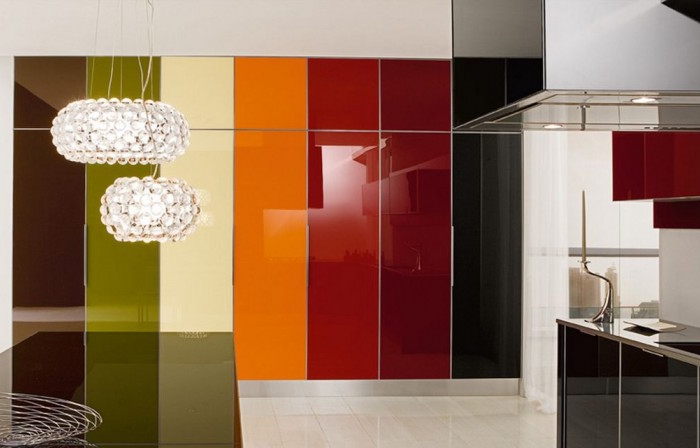
When it comes to designing the most important space of your home – the kitchen where all the magic takes place, Back Painted glass is your one-stop-source both in terms of aesthetics and functionality. The fluid and glossy visual feel of glass when coupled with the vibrant colours of lacquer can be installed in kitchen crockery units, counter-tops, backsplash, and wall panelling to create the kitchen of your dreams. Whether you’re a minimalist, a traditionalist, a classicist, or a modernist; Back Painted glass aesthetic solutions can be customised to your needs. Opt for warm, pastels and nude tones for a light, airy, and uncluttered look or alternate with a pop of bold shades of orange, yellow, and red to radiate an eclectic vibe. You can even choose a single colour palette for your kitchen cabinets while choosing royal metallic shades for your kitchen island and backsplash to create an ambience of grandeur and royalty. You can even have magnetic Back Painted glass marker boards installed in your kitchen to jot down mom’s delectable traditional recipes.

Furthermore, since lacquered glass is scratch, humidity, and heat-resistant, and easy to clean, you have nothing to fear when it comes to installing it in a space that frequently experiences heat and moisture. Plus, allow the kids to make a mess while they help you in your baking projects!

For Your ‘Safe Space’

If there is any room in the house where the ‘Do Not Disturb’ sign works without having to put it on the door, it’s the bathroom. It is a safe haven for many, where the stresses of the day can be washed off and a moment of solitude and contemplation can be experienced. In this sense, a bathroom becomes more than just another room. Your sacred space requires an ambience that sets the tone for peace. Accenting the bathroom design with scented candles, artwork, and pairing towels and toiletries goes a long way in achieving that aura but it is equally important to choose a colour theme that is relaxing. And what could be better than the vibrant world of lacquered glass! You can opt for darker shades of greens and earthy browns or pastels and nudes – both works equally well in creating a calming ambience. You can even get it installed in panels of different sizes and shapes (monotones or motley of colours) for a more fun look. And since lacquered glass is moisture-resistant, you need not worry about installing it in a space where humidity is the norm. Moreover, the smooth, glossy look of glass will bestow the right touch of modernism!

For the Space that Strengthens Bonds

With lacquered glass, the sky is the limit. For taking the oomph factor of your living rooms a notch up, lacquered glass is the ideal option. After all, it’s the space where guests are entertained and friends and family gather together to spend most of their at-home time and hence, is a highly important space in terms of decoration. You can have lacquered wall panels in dark and sleek shades in your living room and even have the television installed in it as lacquered glass can be drilled in. Just make sure to choose colours that are not too bold and do not divert your attention away from the television. Even table-tops can be installed with stunning shades of lacquered glass for a modernistic and chic visual appeal. Plus, since lacquered glass is durable and low-maintenance, there is no need to fear spill-overs during family movie nights. Lacquered glass wall panels can even be used to create a clear demarcation of the living space from the dining space in style. Among other intriguing installations, magnetic lacquered glass marker boards can also be installed to write down important reminders and allow kids to explore their inner-Picasso.

For Your Cosy Haven

According to Feng Shui, the room that is the most important in your home is the one in which you remain unconscious for a good part of the time – your bedroom. Well, for one sleep is vital and hence the space where you sleep must have an ambience that promotes healthy and deep sleep. Moreover, for most people, their bedrooms are the one space they get to call their own and where they can relax after their minds and bodies have been overworked from the chaos of everyday living. Well, adding extra cosy touches to your bedroom is all about accepting the Danish concept of hygge marked by candle lights, soothing textures, four-poster ultra-cosy beds, quilted throw pillows, and ofcourse a calm and neutral colour scheme. To keep the look warm, cosy, and progressive, lacquered glass panels can help you out. Choose calm pastel tones in combination with either of the extremes – whites and beige or black – and witness how your personal hygge culture unfolds right in front of your eyes. Moreover, you can even have lacquered glass floor-to-ceiling cupboards installed in your bedroom – The super glossy finish ad natural reflective property of glass will create a stunning effect that blends trend with elegance.

So you see, lacquered glass can breathe life into each and every one of your living spaces. To make the most of this 360-degree aesthetic glass solution, look no further than AIS Glass! Our AIS Décor can enhance your spaces with its smooth finish and 34 striking shades. Plus, it is high on functionality – AIS Décor is highly durable, long-lasting, heat, UV, and humidity-resistant, low-maintenance, 100% eco-friendly, and is available in a wide variety of processing options. So, without second thoughts, choose décor that enhances life with AIS Décor! Get in touch today.
Categories

Back-Painted Glass: A Perfect Solution for Kitchen Interiors

Kitchens should be designed around what’s really important: fun, food, and life,” said the famous French chef and restaurateur – David Boulud. This is why kitchen interiors should feel both practical and inviting. The sight of scrumptious delicacies and the aroma coming from the kitchen captivates the heart of residents and guests alike. A great way to enhance this beautiful aura is to give your kitchen’s interiors an overhaul – whether you prefer a contemporary or classic aesthetic.

Glass has become increasingly popular among interior designers and architects – in modern interior and architectural projects. Among other members of the glass family, it is back-painted glass that stands out for its aesthetic appeal with its colourful appearance and functional brilliance.

Let’s explore how back-painted glass can transform your kitchen into a stylish and modern space.

1. Enhance Your Kitchen with Back-Painted Glass

A well-designed kitchen can significantly enhance the overall feel of a home. But what if the heart of your home is limited in space? Does that mean you have to compromise on style? Not at all. With the simple addition of back-painted glass, you can transform your kitchen into the stylish culinary space you’ve always envisioned.

2. Upgrade Kitchen Countertops with Back-Painted Glass

While pure white or marble kitchen countertops offer a timeless appeal, they are also a traditional design choice. Plus, maintaining spotless countertops – especially the kitchen island—can be time-consuming. Thankfully, back-painted glass offers a practical alternative. Not only does it provide a sleek, glossy finish, but it is also easy to maintain. You can even let your little ones join your baking sessions without worrying about the mess, as back-painted glass can be cleaned effortlessly with a simple wipe.

3. Use Back-Painted Glass for Stylish Kitchen Backsplashes

If there’s one area in your kitchen that offers endless design possibilities, it’s the backsplash. After all, even routine chores like washing the dishes can feel more enjoyable when you’re greeted by a colourful, visually appealing backdrop and a wide casement window overlooking a garden in full bloom. If you don’t prefer a monochromatic look, there is plenty of room to experiment. Choose glass panels in different colours and sizes to create a striking geometric pattern, or opt for two complementary shades for a cohesive design – the choice is entirely yours.

Moreover, because back-painted glass is low-maintenance and moisture-resistant, you don’t have to worry about spills, stains, or the humidity commonly found in kitchens.

4. Stylish Kitchen Cabinets with Back-Painted Glass

Whether you prefer a sleek, traditional, elegant, or contemporary kitchen, back-painted glass cabinets can complement almost any design style. Available in a wide range of colours, they help you organise your kitchen essentials while enhancing the overall aesthetics of the space. You can choose a shade that complements your backsplash or countertops or opt for contrasting colours to create a bold visual statement. Additionally, the non-porous surface promotes better hygiene and requires minimal effort to keep clean.

5. Add Functional Glass Boards to Your Kitchen

Always juggling your to-do list? With busy schedules becoming the norm, a back-painted glass magnetic board can be a practical addition to your kitchen. Simply mount one near your cooking area to jot down reminders, grocery lists, meal plans, family recipes, or menus for special occasions. Best of all, you can stay organised without disrupting the overall design and aesthetics of your space.

Looking for premium back-painted glass solutions? Choose AIS, one of the top back-painted glass manufacturers in India and an integrated glass company known for high-performance architectural and interior glass solutions. AIS Décor is a premium back-painted glass designed to combine aesthetics with functionality. Manufactured using high-quality lacquer, it is eco-friendly, durable, resistant to humidity and UV rays, and exceptionally easy to maintain. Available in 34 vibrant shades, AIS Décor complements a wide range of interior design styles, from classic and elegant to modern and minimalist.

Whether you’re designing kitchen backsplashes, cabinets, wall panels, or other interior spaces, AIS offers customised back-painted glass solutions to suit your requirements. Get in touch with our experts today to explore the complete AIS Décor range and find the perfect glass solution for your project.

Categories

Myths About Green Building That Everyone Should Know

“A green building should create delight when entered, serenity and health when occupied, and regret when departed.”

Conceptually speaking, a green building is any building designed to eliminate or lower the negative impacts, on both the built and natural environment. Green buildings typically use non-toxic building materials, while the building designs are in response to the specific climatic needs.

Most importantly, green buildings are designed to have a positive impact on the natural environment as well. Even in construction and operation, these buildings focus on improving the quality of life by harnessing natural elements. Put simply – sustainability is at the heart of green building concept.

Origins of Green Building Concept

Besides, sustainability was a significant part of architectural designs in ancient India. The Vedic philosophy even lists five methods which can maximise the use of Panch Mahabhuta or the five basic elements of nature, including – Agni (Fire), Vayu (Air), Avkash (Space), Jal (Water), and Prithvi (Earth)– without causing any harm to nature.

Our ancient builders tried to create a harmony between the five elements when planning buildings and construction, a science they called Vastushastra. The science emphasised open spaces in the centre of the building to promote daylighting and cross-ventilation. Builders usually constructed kitchens in the south-east portion, which received a lower degree of sunrays to avoid high temperatures.

At the same time, ancient builders did not compromise on aesthetics or style, as evident from our rich architectural heritage. Incidentally, the forgotten traditions have witnessed a surprising revival in the emergence of ‘green’ buildings recently. But awareness around green buildings is relatively inadequate while the myths remain in abundance.

Below, we look at six myths about green buildings that you should not believe in.

Myth #1 Green Buildings Are Inefficient in Comparison to Traditional Buildings

Contrary to popular belief, ‘green’ buildings are as efficient as traditional buildings. They are made with far superior technologies and modern practices to ensure sustainable, reliable, and efficient design. Occupants also enjoy comparatively better energy-efficiency and healthier living environment in green buildings.

Moreover, the building materials and techniques employed in construction focus on optimised resource allocation and reduced construction waste. As a result, green buildings cut down operation costs significantly.

Myth #2 Green Buildings are Expensive

Perhaps the most common myth about green buildings, especially amongst the common man. But in truth, sustainability is achievable and affordable. If you consider the overall life-cycle costs, a green building does not cost more than a traditional building.

In fact, green buildings typically have a payback period of one or two years. Your initial investments will let you enjoy reduced energy costs, better indoor air quality, enhanced durability, and healthier indoors. Best of all, green buildings usually have a comparatively higher resale value.

Myth #3 Green Buildings Lack Visual Appeal

The idea of ‘green’ architecture is merely limited to building practices, principles, and methodologies. There is no specific ‘look’ or ‘feel’ to a green building. Nonetheless, most people assume green buildings look wacky and lack visual appeal.

On the contrary, occupants can choose any style or aesthetic they wish to incorporate in the building design. Like any conventional building, green buildings can be absolute head-turners, from both the outside and inside.

Myth #4 “Green” Materials are Not Easily Accessible

Unlike popular opinion, green building materials are available in abundance. Easily accessible, these materials are also affordable, costing no more than the typical building materials. Green products mostly comprise recycled materials and Agri-based products, which can cut down construction costs considerably.

However, such misconceptions continue to arise because of misinformation about green buildings. But with more awareness, the development and demand for ‘green’ raw materials will only increase. Markets for recycled content and sustainable materials will increase steadily.

Myth #5 Green Buildings are Only Trends, Not the Future

Many consider green buildings to be mere trends which arose in response to increasing environmental concerns, primarily because, green buildings became a part of the mainstream quite recently. However, the practice of building ‘green’ has been around for centuries, as exemplified by the introduction to this article.

Presently, as builders face acute resource and waste management crisis, the necessity for green buildings has only grown. Especially as the need for sustainability has increased, green buildings are gaining fast traction in India. Most importantly, as green materials become readily available in local markets, green buildings are sure to take precedence over conventional ones.

To Sum Up

Today, green buildings are becoming popular, sustainable alternatives to conventional ones and residential spaces are no exception. If you are looking for green solutions for your home or office remodels, AIS Glass should be your top pick.

We offer a wide variety of glazing solutions for energy-efficiency and premier aesthetics. Get our unique range of high-performance glass solutions, which are equally secure, stylish, and durable.

Contact us to avail an expert consultation today!

Categories

What Is Float Glass? Meaning, Process and Uses Explained

From shining skyscrapers to contemporary co-ops, and from luxurious villas to swanky offices, glass has become a staple element in modern architecture and design. Not only does it lend a sleek and sophisticated appeal to any space, but it is also engineered to deliver exceptional functionality.

Meeting the diverse and evolving needs of today’s consumers, glass solutions have become a top choice across projects. Whether it is safety and durability, acoustic insulation, or energy efficiency, glass offers versatile performance benefits – all while maintaining an elegance that is truly timeless.

At the heart of all modern glass innovations lies float glass  –  the foundation upon which today’s advanced glass solutions are built. As one of the top glass manufacturers in India, AIS Glass continues to pioneer high-quality float glass and innovative glass solutions for modern architectural needs.

What is Float Glass?

Float glass is a smooth, distortion-free glass that serves as the base material for manufacturing other glass products such as laminated glass, toughened glass, and more. With its natural greenish hue and translucent appearance, it can transmit approximately 87% of incident light. Unlike traditional sheet glass, float glass provides exceptional optical clarity and a crystal-clear view.

The term “float glass” originates from its manufacturing process. In this process, molten glass is poured onto a bath of molten tin, where it floats freely and spreads evenly, resulting in a uniform thickness and a perfectly flat surface.

History of Float Glass

Float glass is the original form of glass – the progenitor of an endless generation of glass solutions. Before learning how it is made, it is important to understand its history. With its invention dating back at least 3,600 years, glass has been a timeless material that has served many generations. However, it was not until the late 19th century that float glass came into existence.

In earlier centuries, glass was made using the blowing and disc methods. Since glass was primarily used for creating windows in those days, flat glass was produced from large discs of crown glass or by blowing glass bottles. The discs were usually cut into pieces, flattened, and then shaped to create windowpanes from the larger surface.

Between 1953 and 1957, Sir Alastair Pilkington introduced the idea of manufacturing float glass to the world. Although Henry Bessemer, a UK engineer, patented early advances in automated glass manufacturing, it was Sir Pilkington who perfected the production of float glass. Bessemer’s original process used a continuous ribbon of flat glass formed between rollers. In contrast, the Pilkington method developed a ribbon of float glass using molten tin, over which molten glass would flow freely under the influence of gravity.

Bessemer’s version was expensive; however, with the efficiency of the Pilkington method, Sir Alastair was able to achieve profitable full-scale sales of float glass by 1960.

Float Glass Manufacturing Process

As the most widely used form of glass in today’s world, it is essential to understand the float glass manufacturing process. It begins with a mixture of raw materials such as sand, limestone, dolomite, soda ash, and salt cake. These materials are melted in a furnace until they fuse together to form molten glass.

In float glass production, molten glass from the furnace is poured into a chamber containing a bed of molten tin. The tin bath is approximately 4 to 8 metres wide and up to 60 metres long. During the manufacturing process, the atmosphere inside the chamber is carefully controlled to ensure proper production of float glass. If you are wondering how float glass is made, tin is used because it has a high density and remains stable and non-reactive in its liquid state at the temperatures required for float glass production, allowing the molten glass to spread evenly and form a smooth, uniform surface.

The glass floating on the tin gradually spreads out and takes a uniform shape, typically ranging from 90 to 140 inches in width, with thickness determined during the manufacturing process.

Once the glass achieves its desired shape, it is polished by fire. It is important to note that only the upper surface – known as the air side or score side – is fire-polished, while the lower surface (the tin side) is left to cool.

For the cooling process, the glass moves from the chamber to a temperature-controlled oven called a lehr. In this kiln, the glass is cooled slowly at a controlled rate in a process known as annealing. Annealing relieves internal stresses, resulting in a strong, uniform, and smooth sheet of float glass. Establishing the correct cooling rate is crucial, as improper temperature control can lead to air bubbles and internal stresses.

Once removed from the lehr, the glass emerges as a continuous ribbon at room temperature. It is flat, has a fire-finished top surface, and features smooth, parallel faces. The glass is then finished using automatic cutters that trim the edges and cut it to the desired length. Float glass can range in thickness from 0.4 mm to 25 mm, depending on specific requirements.

Advantages of Installing Float Glass

Now that we have explored the manufacturing process of float glass, let’s look at some of the key advantages of float glass.

1. Durability

As mentioned earlier, float glass is annealed to relieve internal stress. Although it has a similar thickness to plate glass, it is denser and more uniform, making it a superior choice for both interior and exterior applications.

2. Environment-Friendly

Energy efficiency refers to the ability of glass to regulate indoor temperatures by keeping interiors cooler during summers and warmer during winters. Float glass can also be processed into low-E glass by applying a coating of metal oxides to improve thermal performance.

At AIS Glass, we offer high-performance, energy-efficient glass solutions designed to reduce energy consumption in homes and offices while supporting environmental conservation. AIS Clear Float Glass is 100% recyclable and non-toxic, helping minimise environmental impact. It is also copper- and lead-free, further supporting sustainability efforts.

3. Multitude of Options

As the base material for many glass products, float glass can be further processed into a wide variety of solutions. It is available in different thicknesses, shades, and sizes to meet diverse architectural and consumer requirements.

Various processing techniques  –  including insulating, glazing, laminating, thermal toughening, silk-screen printing, sandblasting, bending, and acid-etching  –  can be applied to AIS Clear Float Glass to achieve the desired aesthetic and functional outcomes.

Applications and Uses of Float Glass

From domestic housing to commercial spaces, float glass is a versatile material that serves numerous purposes. Now that we understand the many benefits of installing float glass, let’s explore some of the creative ways it can be used in residential and commercial environments.

1. Displays

Owing to its crystal-clear transparency, float glass is an ideal choice for display applications. It is commonly used for showroom display cases, retail shop windows, and countertops to protect valuable items such as watches and jewellery, while still showcasing them effectively. AIS Clear Float Glass offers brilliant lustre and a crystal-clear finish, enhancing the aesthetic appeal of spaces with its luminosity.

2. Facades

Nothing conveys affluence and sophistication quite like towering, glistening glass skyscrapers. Float glass, when processed with glazing, becomes both aesthetically appealing and highly functional. Glazing enhances the strength and efficiency of the glass, while float glass itself provides superior clarity and visual charm.

3. Wall Panels

Whether used for creating partitions at home or personal cabins in offices, wall panels are an excellent way to enhance décor and elevate visual appeal. Tinted float glass panels can add a vibrant splash of colour and bring new life to any room. At AIS Glass, we manufacture international-quality tinted float glass with heat-reflective properties using advanced CVD technology. We also offer customisable options, including lacquered and frosted finishes, to help create stylish and dynamic spaces.

And there you have it – a comprehensive overview of float glass. One of the most versatile types of glass available, float glass is an excellent choice for decorating homes and offices. As India’s leading integrated glass manufacturer, AIS Glass strives to go beyond the ordinary and create luxurious spaces. We provide expert guidance from the initial selection process through final installation to help our clients achieve their ideal, picture-perfect spaces. Get your expert consultation today.

Categories

Glass Manufacturing Process: How Glass is Made Explained

The art of manufacturing glass is an old one. It is a process that has been refined for thousands of years. With technology becoming increasingly advanced, glass manufacturers have begun producing float glass that is much sturdier, durable, and compatible with glass processing procedures such as lamination, tempering, acid etching, sandblasting, etc. Skyscrapers shining with glass windows can be seen everywhere today. Homes with large French windows are in-trend. Glass partitions and shower walls are common in almost all homes today. Glass is used in everything from cars to mobile phones.

The History of How Glass is Made

The art of making glass can be traced back to 2600 BC in Mesopotamia. The Egyptians practised making glass around 2500 BC. Artificial glass first appeared in the Egyptian or Mesopotamian civilisation, whereas they used tools made out of volcanic glass obsidian in the Stone Age. Ancient China, however, discovered how to make glass a little later.

Glass beads are known to be one of the earliest products made out of glass. Their creation is thought to be primarily accidental. In the later Bronze Age, glassmaking declined temporarily. Glass was a luxury material back then.

Archaeological excavations suggest the use of glass in England during the Middle Ages. In the 10th century, stained glass found a place in cathedrals and the windows of palaces. After the Renaissance, architectural methods changed substantially, leading to a decrease in stained glass as a building material. Domestic use of glass increased following the Industrial Revolution. 

Vessels, glass windows, and glass beads gained popularity in Europe during this period. During the 19th century, many people preferred glass windows and doors as a decorative option. In the late 19th century, some designers brought back stained glass for decorative windows. It was during this period that Mr. Tiffany discovered several methods to make domed glass handicrafts.People discovered the true versatility of using glass as a building material only in the 20th century. With glassmaking technology receiving an industrial boom, you could produce several different types of glass. Toughened glass, laminated glass, bulletproof glass, and smart glass all boosted the use of glass in buildings. Today, several skyscrapers, small and big homes, and offices use glass in almost all aspects of construction and design.

What are the Different Types of Glass?

Since glass has a wide variety of applications, it is available in different types. Each of these varies in strength and design. In homes and offices, glass is used in everything from large windows to partitions and shower walls. New technology has enabled manufacturers to overcome the typical weaknesses of glass – brittleness, constant transparency, and a complete lack of sound control.

Types of Glass based on Raw Materials

Based on the raw materials used, glass can be classified into the following types:

1. Fused Quartz or Fused Silica Glass

This type of glass is highly resistant to weathering. Its molecules are arranged randomly. This type of glass is used in tube lights and furnaces.

2. Soda-Lime Silica Glass

This type of glass is commonly used in windows and is one of the most prevalent types of glass made anywhere in the world.

3. Sodium Borosilicate Glass

In this type of glass, boron oxide is added. It makes the glass less prone to cracking. It is primarily used to make lab equipment and kitchenware.

4. Lead Oxide Glass

Lead oxide glass has high reflective properties, making it a favourite of jewellery makers. Its crystals reflect light brilliantly.

5. Clear Glass

Also known as float glass, clear glass offers extreme clarity and transparency for unobstructed views, making it the go-to choice for panoramic windows.

6. Tinted Glass

Commonly known as annealed glass, tinted glass is manufactured with a coating or a film to impart its colour and reduce light transmission.

Types Of Value-Added Glass:

Apart from these, ordinary glass has been updated to accommodate various design choices to add value based on your glass needs. Some of the most unique and beneficial value-added glasses include the following:

1. Smart Glass

Smart glass, essentially a privacy solution, is a type of glass that can change its opacity at the click of a button. This type of glass is generally made using ions sandwiched between different glass layers. On the application of electric current, these ions shift positions to change the opacity of glass. Smart glass is widely used in both residential and commercial buildings. Smart glass, like AIS Swytchglass, is also considered to be ecologically efficient due to its ability to prevent/allow lighting and heat in a room.

2. Acoustic Glass

As the name suggests, acoustic glass is used to control sound inside a room, thus taking care of appropriate decibel needs or sound-control needs. It is the trendiest method to soundproof a living space or a commercial office. Acoustic glass is widely used in homes, recording studios, and private offices. This type of glass is ideal for people who do not wish for bulky soundproofing.

3. Frosted Glass

Frosted glass is a privacy-solution value-added glass. It is not entirely transparent, which means it gives the benefit of privacy and partial visibility. It can be used in windows and partitions. Shower screens, doors, cabinet shelves, and false ceilings also employ frosted glass. Frosted glass is used primarily by people desiring privacy, but it can also be a design choice. AIS Krystal Frosted Glass is the perfect way to ensure privacy while adding aesthetic appeal to your living space.

4. Energy Efficient Glass

Energy-efficient glass is used in eco-friendly buildings to maintain a balance between aesthetics and eco-consciousness. It focuses on saving energy as it works by preventing or allowing solar radiation inside a room. AIS Ecosense is an energy-efficient glass curated especially for Indian customers. AIS Ecosense enables a place to stay bright and fresh by limiting the solar energy entering a room. It comes in different varieties and can be used in both exterior and interior architecture.

Apart from these, several other types of glass are frequently used in various industries. These include automotive glass, decorative glass, back-painted glass, and laminated glass. Regardless of the sort, glass is a true blessing to humankind.

How is Glass Made? A Complete Glass Manufacturing Process

At Asahi India Glass Ltd., the highest quality glass manufacturing techniques are used to produce the perfect sheets of float glass. The method used is the PPG process that Sir Alistair Pilkington discovered in 1952 and is still the most trusted float glass manufacturing process. Naturally, it has many steps involved in it, and at each stage, great care is taken to be precise and thorough with the production of glass.

From selecting the right type and ratios of ingredients for glass to assimilating them all scientifically to produce glass as we know it, here we answer the question of how glass is made step by step below:

1. Melting and Refining

To make clear glass, the right set of raw materials is required. This consists of silica sand (SiO2), sodium oxide (Na2O) from soda ash, calcium oxide (CaO) from limestone/dolomite, dolomite (MgO), and feldspar (Al2O3). These ingredients are mixed in the right proportion, and the entire batch is fed into a furnace heated to 1500 degrees Celsius.

To impart colour to the glass, certain metal oxides are also mixed in the batch.

2. Float Bath

The molten material from the furnace flows into the float bath, consisting of a mirror-like surface made from molten tin. This material enters the bath at 1500 degrees Celsius and leaves the bath at around 650 degrees Celsius. Its shape at the exit is like a solid ribbon.

3. Coating for Reflective Glass

After that, if one is producing reflective glass surfaces that help keep indoors cooler, then coating procedures are followed in which either a hard coat or a soft coat is applied to the surface of the glass ribbon at high temperatures.

4. Annealing

Next, a process called annealing is done to remove the internal stresses built up in the glass. This process allows the glass ribbon to pass through a layer that eliminates any pressure on the glass surface and gradually cools it to give it its stress-free, stable form. This makes it easier to cut the glass and shape it accordingly.

5. Inspecting

More than 100 million inspections can be made through acute and advanced inspection technology throughout the glass manufacturing procedure to identify air bubbles, stresses, or grains of sand that refuse to melt. This is essential for quality-proofing the final form of glass.

6. Cutting to Order

Finally, diamond steel is used to trim and cut the glass ribbons into square shapes.

Uses Of Glass in Construction and Architecture

Over the years, glass has become a defining element of modern architecture like no other material. Glass materials distinguish the look and feel of facades and have a crucial involvement in the energy efficiency of buildings.

The usage of glass in the commercial and residential sectors is increasing by leaps and bounds. This versatile material is now considered a symbol of affluence and luxury and has gradually become an architect’s favourite.

Advantages Of Glass in Architecture

Glass can make infrastructure look more stunning and sophisticated. The use of glass in construction enhances the aesthetic appeal of the building. Its use achieves the architectural view for external decoration. When used in interiors, glass saves space too.

Glass cladding in buildings carries out the functional requirements of heat retention, lighting, and energy-saving. It also adds a sense of ingenuousness and harmony to any surroundings.

How are AIS’ Glass Solutions Different from the Rest?

We offer various solutions depending on your project requirements, and we provide customised solutions. to cater to your every need in a glass. We have products that are five times stronger than ordinary glass in the market. allowing architects and contractors to build the best architectural designs.

Why Should You Choose AIS Glass?

Design and durability:

By opting for AIS glass solutions, you are guaranteed to get designs that are durable, aesthetically pleasing, and flexible in nature.

Safety and Security:

Our glass solutions offer better safety and security, making them the best option for use in high-security places.

Noise reduction:

Modern homeowners can also use our solutions to control sound levels and act as an effective insulator. If your office or home is situated near a busy market, railway station, or airport, these solutions can be vital in keeping the sound out.

AIS is India’s leading integrated glass manufacturing company, serving the automotive, architectural, and consumer glass industries with 15 manufacturing plants and 4 sub-assembly units. Our premium-quality glass solutions are crafted with precision and customised to meet the unique requirements of our customers.

Categories

Essential Guide to Cleaning your Windshield

Cleaning a car windshield without the right knowledge can be a challenging job. Using the wrong equipment and method can cause a lot of scratches on your windshield. Here is windshield cleaning guide that we feel can be used to clean different types of glass windshields. Having a clean, dirt and grease-free windshield can offer a safer ride, especially in poor weather conditions.  Without making use of an expensive cleanser, it is possible to get rid of bird droppings, dirt, tree sap and other interference.
Take a look at a detailed guide that can be useful to achieve a spotless and sparkling windshield.

 
Choosing the ideal cleaning solution:
With numerous cleaning solutions on the market, choosing the ideal one can be a daunting task. Besides, the variety of ammonia-based, auto glass cleaners, all-purpose cleaners has catalysed the confusion by several folds.  As a result, people simply pick any solution for window glass types without thinking. I was one of them too, but after several trial and error, I realised that ammonia is harmful and so are the household cleaning solutions.  Hence, make sure you use a cleaner intended for automotive glass that can give the best results.  Such solutions offer a clean streak free windshield that is free from any obstructions.
Choosing other material:
Make sure you use a microfiber cloth to clean the windshield with the ideal cleaning solution. The cloth is made from the tiny wedge-shaped fibres that are 100 times finer than a human hair. As a result, cleaning any kind of dirt can be done easily. Besides, they are also long lasting and can be reused several times to clean different types of glass windshield.
Right way to clean any windshield:
Choosing the right kind of cleaning solution and microfiber cloth is not the end. Implying the right technique is equally important when it comes to cleaning any window glass types. Start of by cleaning the glass with water. Only then make use of the cleaning solution. Scrub water off the windshield in straight lines. Invest in a soft brush and use horizontal and vertical motion without scrubbing too hard. This is done only to loosen the grime.
Glass cleaning solution:
Spray the cleaning solution on the microfiber cloth and begin cleaning. Make sure you work from one side to another to get the best result. After the first clean, the residue is likely to remain. Repeat the procedure until you get it right. Once done, let the glass dry naturally.
By following the above-mentioned guides, you are certain to get a clean windshield.

Categories

Benefits of Green Building that Everyone Should Know

Let’s face it! Human actions and deeds have directly impacted the environment we live in. With the evolving times, we are getting more aware and conscious about how our decisions are taking a drastic toll on our community and surroundings. To adapt and overcome such alarming issues, people are opting for wiser alternatives like green building facilities and establishments. Eco-friendly structures are taking over construction spaces to benefit the environment.

What Does a Green Building Embody?

A green building is any structure or establishment that extends positive impacts especially, with respect to the environment. These buildings are erected with a consciousness to reduce and eliminate critical impacts on climate change and temperature inclination.

The world is coming together to adapt green buildings as a solution to raging issues like climate change, global temperatures, overpopulation and disruption, all addressed under concerning global problems. The current age designers are looking at green buildings as a holistic approach for creating sustainable and thriving communities, and driving economic growth.

Green buildings use energy and resource like heat and water in an efficient manner to enhance and reinforce optimal performance. They thrive on renewable sources of energy like solar power which makes them highly apt in a resource consuming juncture.

They also use pollution and resource limiting methodologies that reflect extreme advantages as well. Their overall design and structure is extremely considerate towards the changing environment in today’s world.

In a nut shell, the concept of green buildings has left an impact on society – economically, physically as well as socially. The idea supports the cause of a healthy, sustainable and smart future by all means.

The world is indicating green buildings in their infrastructure globally. Eco-friendly construction and green building include using resources that are efficient and environmentally friendly. The concept is gaining immense popularity because of its incredible benefits and advantages that are not only limited to environmental impact. Read through the jaw-dropping benefits of green buildings that everyone should know.

Awards a Significantly Uplifted Indoor Quality of Life

It is a given that a well-developed and beneficial infrastructure directly impacts the quality of life of its inhabitants. And, over the past several years, designers and architects have ensured optimal methods of invention to deliver the most beneficial quality of life.

Green buildings improve the same by multiple ways like efficient light input, thermal conductivity to suit healthy performance and improved air quality amongst many other such benefits. Statistics show a terrific health growth of the people who dwell in such establishments. A study report reflects a hundred and one percent increase in mental and physical productivity amongst the people who worked in establishments and offices insulating a green building architecture.

Reduces, Reuses and Replenishes Water

Sounds too good to be true? Well, it is! Green buildings allow efficient ways to consume water right from the very construction of the structure. Their plumbing layouts also help in saving and reusing water to a massive extent. These buildings are known for their effective water sharing installations as well.

Several architectures include specially designed and engineered technologies that ensure the constant reusability of water. In today’s world where water wars are surfacing everywhere, green buildings are erected with a serious focus of managing this vital resource efficiently.

Reduces Strain on Energy Resources

It is no secret that the World is growing rapidly in terms of population and infrastructure. In such cases, it is critical to come up with ways to preserve resources that are required to sustain this massively growing and increasing number.

Green buildings ensure preservation of energy resources by putting a limit on their usage. Ingenious architectures have been including qualified technology that assists the motive of energy preservation and sustenance through green building and establishments.

So Many Benefits, Can’t Come Cheap? Green buildings Do!

Green buildings are known for their ability to save a tonne of money over the longer run. Although the initial cost of creating a green structure can be high in comparison to traditional buildings, their maintenance over several years more than makes up for it.

Lastly, they aid in benefiting not just the makers but, a group of different people in totality. Right from when they are made, green buildings increase the property value for the developers. They also help the tenants that reside in them with utility bills. Don’t forget to remind yourselves that green buildings also help save a decent amount of money with your water and energy bills over the years.

Inculcates Natural and Renewable Resources as a Way of Life

An architect’s primary objective is to create a structure that uses maximum amount of natural and renewable resources like solar energy, wind energy and thermal energy to sustain. This practice helps in preserving our environment by leveraging the natural resources present around us.

Green buildings eliminate the use of toxic resources by vast lengths. What’s more, even the initiating process doesn’t require non-renewable resources like coal or crude oil. Traditional buildings emit large amount of pollution right in the beginning of construction process as they don’t shy away from using copious amounts of coal and petroleum.

Keeps Your Carbon Footprint in Check

Sure, we all want to protect the environment, but how often do we consciously find the time and inclination to do so?But, green buildings do!  Indeed, theyare known for significantly reducing carbon footprint in the environment.

A lot of multinational brands are opting for such structures for a greener future. The global carbon footprint accountability is crossing alarming levels on an everyday basis. The world needs to come together to reduce its contribution towards the overall carbon footprint. Green buildings are a fabulous solution to this worrisome issue.

 Ensures Reflection of a Cleaner Environment

Green buildings not only reduce carbon footprints and limit the usage of non-renewable resources but, also help in working towards cleaner air by eliminating toxic pollutants that revolve around us constantly. They are known for their ability to improve air quality.

With air quality index giving us a tough time, especially in metropolitan cities, opting for green infrastructure will ensure improved air quality and organic life around the city.

Lets You Upcycle Your Way Through Creation

Upcycling or recycling has become a saviour for innovation with a purpose. Architects and designers are on a constant lookout for ways to optimise their structures. Recycling has taken the architectural world by a storm because of its multiple benefits. Reusing existing and available raw materials to build a structure like green building helps in extremely productive ways.

Pitches Unmatched Durability for Owners

Green buildings are a no-brainer decision as they enclose such great deal of benefits. They are a wise investment that go a very long way. It is crucial to understand the profit green structures reel in over an extended period with low maintenance costs, healthy living environment and optimal lifestyle changes. Green materials ensure longer durability and strength as well.

One Step Closer Towards a Smarter Nation

Green buildings are a power packed opportunity for development in so many different ways. They are laying down a strong foundation for the future that is awaiting us. The development of green buildings demand more advanced, educated and skilled labour than just manually functional labours required for traditional building constructions. This is creating a necessity for more qualified professionals, allowing the community to educate themselves for rewarding job opportunities. The overall physical efforts that was being spent towards construction has reduced with the technological efficiency and new age construction.

Encourages Architects to Innovate Towards a Better Future

The world needs better solutions to make up for the constant distress that has been caused by human actions. Green buildings allow designers and architectures to explore boundaries of smart innovation. They extend optimum ways to utilise existing resources to reduce negative impacts on the environment.

Several benefits of green buildings show that it is possible for architects to design establishments that help in sustaining the human kind in effective ways. These green buildings require strong and premium quality resources to build the structure. It is important to approach brands that assist in delivering such high-end resources. One of the leading names is our service under AIS Glass.

At AIS Glass, we believe that green buildings have revolutionised the way we looked at sustainable development under the infrastructure sector. These structures reflect a healthy and beneficial lifestyle for today’s beings, and we want to do our part!

Therefore, at AIS Glass, we strive to deliver top-notch materials to build strong and sustainable structures in the country. Our clientele has appreciated our services and delivery of high-quality products and experiences. Associate with us to create a new sustaining green building that represents quality life filled with better future for its inhabitants.

Leverage the innovative idea of green building and reshape the way we plan our surroundings. Build a better future with efficient and beneficial outcomes.

To know all about our entire product line, log on to our website, or better yet, give us a call today!

Categories

Heat Control Glass: Types, Benefits & Applications

With rising temperatures and increasing exposure to harmful ultraviolet (UV) rays, keeping indoor spaces cool and comfortable has become more important than ever. Excessive heat entering through windows can make homes and commercial buildings uncomfortable, increase dependency on air conditioning, and raise energy bills.

While curtains and blinds may offer temporary relief, choosing the right heat control glass can provide a long-term solution. Heat control glass is specially designed to reduce solar heat gain, block harmful UV rays, and improve indoor comfort without compromising on natural light or ventilation.

Whether for homes, offices, or commercial buildings, installing heat-resistant glass for windows helps maintain comfortable indoor temperatures, protects interiors from sun damage, and improves overall energy efficiency. There are several types of heat control glass available in the market, each designed to address specific requirements. Let’s explore some of the most effective options.

Why is Heat Control Glass Important?

Heat control glass plays an essential role in maintaining indoor comfort and reducing excessive heat buildup caused by sunlight. Here are some key reasons why heat control glass is becoming increasingly popular:

  • Reduces heat gain: Minimises the amount of solar heat entering indoor spaces.
  • Blocks harmful UV rays: Protects occupants and interior furnishings from UV damage.
  • Enhances energy efficiency: Reduces dependency on cooling systems and lowers electricity costs.
  • Improves comfort: Helps maintain a cooler indoor environment, especially during summers.
  • Protects interiors: Prevents fading of furniture, curtains, flooring, and upholstery due to prolonged sun exposure.

Types of Glass for Heat Control

1. Reflective Glass

Reflective glass is one of the most commonly used types of heat control glass for modern homes and commercial buildings. It is designed with a special metallic coating that reflects a significant portion of solar radiation, helping reduce heat gain indoors.

Reflective glass can be used for a wide range of architectural, aesthetic, and energy-efficient applications. Several advanced variants, such as AIS Sunshield Reflective Glass, combine durability with solar control technology to reduce heat entering the building while enhancing energy efficiency.

You can use reflective glass to reduce solar glare and maintain comfortable indoor temperatures in homes, offices, and commercial spaces. Its solar control properties help curb the amount of heat and glare passing through the glass while still allowing sufficient natural light indoors.

Additionally, reflective glass offers protection against harmful UV radiation due to its specialised coating. Apart from functionality, it also enhances the aesthetic appeal of buildings by providing sleek, modern exteriors, making it a practical and stylish option.

Benefits of Reflective Glass

  • Reduces heat gain and solar glare
  • Improves energy efficiency
  • Protects against harmful UV radiation
  • Enhances the aesthetics of building exteriors
  • Suitable for residential and commercial spaces, learn more about uses of reflective glass.

2. Tinted Glass

Tinted glass is another popular type of heat control glass that helps absorb solar energy and control heat transmission. Unlike reflective glass, which reflects solar radiation, tinted glass absorbs a portion of the sun’s energy to reduce heat penetration indoors.

This enables tinted glass to cut down on excessive heat and create a more comfortable indoor environment. It also contributes to enhancing the visual appeal of building exteriors.

Leading manufacturers such as AIS offer Tinted Heat-Absorbing Glass, designed to reduce the amount of heat flowing into buildings, thereby lowering the cooling load on air-conditioning systems and improving energy savings.

Tinted heat-absorbing glass can absorb approximately 30% to 45% of solar heat, depending on its tint, thickness, and colour. Its flexibility in design makes it a preferred choice among architects and designers looking to incorporate modern aesthetics into their projects.

Additionally, tinted glass reduces glare and limits excessive visible light transmission, helping create a soothing indoor environment while offering protection against harmful UV rays.

Benefits of Tinted Glass

  • Absorbs solar heat effectively
  • Reduces indoor temperature and cooling load
  • Controls glare and excessive brightness
  • Enhances privacy and aesthetics
  • Improves energy efficiency, learn more about the benefits of green tinted glass.

3. Solar Control Glass

Solar control glass is specifically designed to reduce solar heat gain while allowing natural daylight to enter a building. It helps maintain indoor comfort by reflecting and absorbing solar radiation without significantly affecting visibility. Learn more about what solar control glass is and its applications in our detailed guide

This type of glass is especially suitable for regions experiencing high temperatures, as it helps keep interiors cooler and reduces reliance on air conditioning systems. Solar control glass also contributes to energy savings and sustainable building practices.

Many premium solar control glasses are engineered to strike the perfect balance between heat reduction, light transmission, and aesthetics, making them ideal for façades, windows, and skylights.

Benefits of Solar Control Glass

  • Reduces heat transmission
  • Allows natural daylight indoors
  • Improves thermal comfort
  • Reduces energy consumption
  • Suitable for modern architecture

4. Low-E (Low Emissivity) Glass

Low-E glass is coated with an invisible metallic layer designed to regulate heat transfer. It reflects heat while still allowing visible light to pass through, helping maintain comfortable indoor temperatures and improve energy efficiency. Learn more about how Low-E glass enhances energy efficiency in our detailed guide.

During hot weather, Low-E glass prevents excessive heat from entering the building, while in colder months, it helps retain indoor warmth. This makes it a highly energy-efficient option for residential and commercial spaces.

Benefits of Low-E Glass

  • Improves insulation
  • Controls indoor temperature efficiently
  • Reduces energy consumption
  • Enhances occupant comfort
  • Supports sustainable building design

How to Choose the Right Heat Control Glass?

Selecting the right heat control glass depends on several factors, including:

  • Climate conditions in your location
  • Building orientation and sunlight exposure
  • Energy efficiency requirements
  • Aesthetic preferences
  • Budget and maintenance considerations

Consulting experts can help determine the ideal glass solution based on your architectural and performance requirements.

Conclusion

Choosing the right type of heat control glass can significantly improve indoor comfort, reduce energy costs, and enhance the visual appeal of a building. Whether you opt for reflective glass, tinted glass, solar control glass, or Low-E glass, each type offers unique benefits tailored to different needs.

AIS offers a wide range of high-performance glass solutions designed to improve thermal comfort and energy efficiency while complementing modern architectural styles. Get in touch with AIS today to find the ideal heat control glass solution for your home or commercial space.

Categories

Design the Perfect Room for Your Baby with Glass

As you get ready to welcome a new-born baby in your life and at your home, it is obvious that you must have given thought to how your baby’s room will look from the inside. The wallpapers, posters, paint, toys, and other accessories must be on the top of your list. However, while ensuring that the room’s interiors are spot on and infant-friendly, it should be noted that the architecture and exterior also plays a huge role in building the room’s ambience.
With the help of uPVC windows and modern day glass applications, you can provide a peaceful, healthy and friendly environment for your baby in his or her room where the child can play, sleep, and pretty much spend most of his nascent life. You should keep in mind various factors and attributes that make a great nursery room for your baby, such as safety, comfortable temperature, lack of solar radiation, proper lighting, and protection from outdoor noise. uPVC solutions help you put a check against all these parameters on the list.

What is uPVC?
uPVC stands for unplasticized polyvinyl chloride, a versatile polymer that is one of the most preferred and beneficial window framing solutions in use. uPVC is available in degree of colours and is very low maintenance as compared to other traditional profiles, such as wood or aluminium. Also, it has very high shelf life, and is aesthetically extremely sound. What’s more, uPVC also offers other advantages necessary for a modern house, such as noise-cancellation, energy efficiency, safety, and security.
What are the various uPVC window solutions that are perfect for a new-born’s room?
With the right match of glass and uPVC profiles, you can create a highly functional living space for your baby.
You can install energy-saving uPVC windows which help you cut down on energy bills by keeping the interior of your baby’s room comfortable and cool in the harsh summers. Glass solutions, such as AIS Ecosense, can help you provide 40-50% protection from outside heat, and filter out the harmful UV radiation.
You can protect your baby from external noise and disturbances by installing noise-cancelling uPVC windows. Specialized acoustic glazing helps in trimming down noise levels by up to 42 dB.
With the help of impact-proof toughened glass solutions installed with robust uPVC framing, you can rest assured that your child will stay safe in his or her nursery. Even if toughened glass shatters, it breaks into harmless micro-granules that rarely cause injury.

Categories

Types of Glass for Building Facades

What is a Glass Facade?

Simply put, glass wrapping the exterior of a building is a glass facade. These building facades are regularly used in modern-day designs due to their simplicity and wide range of design applications.

These facades add glamour and enhance the style quotient of the entire building. However, glass facades are not just for visual aesthetics – they are also highly functional, offering excellent sound and heat insulation.If you are unsure about which types of glass facades to choose for your construction project, a client, or even your own home renovation, we have got you covered. Here is a curated list of facades and glass facade types available to achieve the perfect balance of aesthetics and functionality.

Types of Glass Façade

1. Curtain Wall Facade

These are curtain-like structures that are non-load-bearing and are attached to the floors of the building where the facade is incorporated. Curtain wall facades support only their own weight and not the dead load of the building.

A connection exists between the curtain wall and the building’s columns and floors, allowing the weight of wind to be transferred from the facade to the building itself.

2. Storefront Curtain Wall Facade

This is a non-load-bearing facade primarily designed for ground floors. It is usually built between the ground and the roof of the building above it.

This building facade offers optimal thermal and sound insulation if constructed using specialised glass. It can be easily customised and is quite cost-effective.

3. Framing Facades

  • Unitized Curtain Wall

This type of curtain wall is composed of large units that come pre-assembled and glazed from the factory before shipping to the building site for installation.

Unitized curtain walls form a core component of the building’s exterior, enhancing thermal efficiency, sound insulation, and fire safety.

  • Semi-unitized Curtain Wall

A semi-unitized curtain wall is a type of structural glazing where the primary structural framing components are erected individually, like an erector set. Vertical mullions are attached first to the floor slabs, and the horizontals are then attached to create a grid.

4. Frameless Facades

Frameless facade systems are common in modern architectural glazing. Frameless glazing offers significant design potential and is an excellent way to maximize natural daylight.

5. Tension System

High-tensile cables or stainless-steel rods are used to transfer the load of the facade to the main structure, increasing transparency. The two main types in the industry are tension rod facades and cable net walls

Types Of Glass

What is a glass façade?

  • Laminated Glass – A laminated glass consists of layers of ordinary glass stacked together. Laminated glass is heavier and tougher than normal glass. It provides robust protection from UV rays and excellent insulation from outside noise.
  • Toughened Glass – Also known as tempered glass, this is a more durable form of glass available in various thicknesses. It is ideal for applications requiring fire resistance and high strength.
  • Insulated Glass – Insulated glass unit is a type of glass consisting of two or more panes separated by a thin air film, allowing heat to dissipate more effectively, making it an excellent choice for insulation.
  • Solar Control Glass – Solar control glass is designed to reduce the amount of heat entering a building by absorbing the sun’s rays that fall on the glass panels. To learn more about its applications and benefits, check out our guide to solar control glass
  • Tinted Glass – Tinted glass serves both aesthetic and functional purposes. When sunlight hits it, it also works as an effective insulator.

Find the Perfect Facades with AIS

Manufacturing high-quality glass products for diverse applications has been our speciality for over three decades. In that time, we have refined our craft, making us a leading glass solutions provider in India.

At AIS Glass, we manufacture high-quality toughened glass to build durable and elegant facades with contemporary styling. Our solutions are customisable to meet different customer needs. Get in touch with us and explore our wide range of glass solutions.

Categories

Importance of Soundproof Glass in Modern Architecture

Modern spaces cater to very different demands these days. Gone are the times when the loudest noise in an average person’s life was them raising their voice, or the distant noise of machinery toiling in a factory. Modern architecture has to deal with urban noise. The constant drill of a city at work. Cars, planes, construction, loudspeakers, the voice of the world around us now penetrate not only our waking moments but our sleeping ones too. This is a problem. Studies have found that an excess of noise leads to lower productivity at the workplace and even contributes to low test scores in schools. This is the reason architects actively seek soundproofing solutions for both residential and commercial use. Office buildings, homes, hospitals, movie theatres and even places of worship need to protect their inhabitants from the constant onslaught of the outside world.

How do we achieve soundproofing?

There are five tenets of soundproofing that are always followed to deliver peace and quiet. They are:

Mass

Mass or the thickness of the material is the first layer that breaks down the vibration of sound. As sound is energy, the more mass there is, the more energy is required to make it vibrate. So, the thicker the material, the lesser the sound that passes through.

Mechanical isolation

Mechanical isolation is basically separation of material. As we have established before, sound is energy. So, by mechanically separating the materials and wedging them with an air pocket or a different material further helps dissipate the sound.

Absorption

Soft materials or materials with high absorption capabilities soak up the sound wave’s energy. This weakens the sound further as instead of reflecting it, it dissipates within the material.

Resonance Dampening

Some setups can also dampen the sound by converting the sound energy into heat. This reduces the resonance of the sound.

Conduction

Conduction refers to the transfer of energy from one material to the other. By breaking this flow of energy between materials, we can dissipate sound.

Soundproof Glass

Also known as acoustic glass, fulfils a majority of these tenets by providing a higher level of insulation. What sets soundproof glass apart is its manufacturing. While regular glass is melted, refined, cut, coated and annealed, soundproofing glass requires a few more steps. Two pieces of glass are layered on each other with a specially designed Polyvinyl Butyral (PVB) interlayer between them. This layer works both as an adhesive and an insulator. It holds the 2 panes of glass together. The PVB layer also forms a barrier between the glass panes. It absorbs the sounds and vibrations travelling from one pane to the next. Soundproofing though does not refer to the complete absence of sound, it means a considerable reduction in sound. Depending upon the quality of the glass and its thickness, you could achieve up to 90% of sound insulation.

AIS Acousticglas™

AIS specializes in soundproofing glass. Our AIS Acousticglas™ ensures a flawless single-pane look. The PVB layer is applied in such a way that you cannot see the separation of the two panes. It also reduces external noise by 90%, a marked 60% more than ordinary 5 mm glass. That means your indoors will be nearly devoid of external distractions up to 42-decibel dip in sound intrusion. Depending upon the level of soundproofing required, different grades of acoustic glass, based on size, thickness and grading can be installed. But why do we need soundproofing? Apart from the general sound insulation and the promise of peace and quiet it provides, how else does it deliver on better living?

The Benefit of Soundproofing 

Acoustics

By blocking external noises, you create a better acoustic environment for yourself. You can set up your entertainment room, study room and lounge area such that they become a zone unto themselves. You can look at our complete insulation solutions here <link to website category> and make your dream space a reality.

Peace of Mind

The noise of traffic, people yelling, and street vendors are now a thing of the past. Soundproof your home and don’t let external noises disturb your binge-watching, reading, parties or anything you wish to do inside your home!

Create Dedicated Zones

Now that noise is not an issue, you can create different, isolated zones in your home. One dedicated to studying and reading, one dedicated to watching movies and shows, like a personal home theatre. The possibilities with soundproofing are endless!

Where Should You Implement Soundproofing?

There can be no half-measures while doing soundproofing. You have to establish set goals and depending upon your ideal setup, approach soundproofing. However, listed below are a few places, ideal for sound insulation.

Doors

They are not only the point of entry and exit for the inhabitants, but also for sound. Uninsulated doors are one of the most common points of inflexion as sound seeps in through its edges. That’s why high-quality acoustic glass doors are much preferred in both residential and commercial spaces. They provide greater strength and unmatched soundproofing, enabling you to separate your zones and create undisturbed experiences in each room.

Windows

They are the doors to the outside world. They show us all that exists beyond our walls and bring in all the noises of the world. Incidentally, they are also the most popular application of soundproof glass. High-quality, thick soundproof glass with fused and double-sealed window frames is the best way to insulate any room. The reward and impact that this generates are significant as it helps with acoustics, without compromising on your view.

Wall Separators

A very useful tool when changing the layout of any space. Mostly used in commercial office spaces but most homes have also come to see the benefit of it. Of course, unless they are soundproof they do not serve their purpose effectively. What with all the sound crossing over the separation. Insulated glass wall separators enable its inhabitant to effectively use the space while maintaining privacy and providing a safe space to work and unwind.

Recording studio

Insulation becomes very important for recording studios. When dealing with sensitive equipment that can pick up even the slightest vibration, a neutral audio zone is key. It is recommended to use a combination of insulated wall separators, doors and windows for such spaces.

Hospitals

Sound insulation is important for hospitals not only because of the patients but also because of their equipment and doctors. They house a lot of precision equipment whose results may vary in case of unnecessary sound intrusion. Doctors need an undisturbed space while in surgery or evaluating a patient. And the patients of course need a safe space to recover and get better. Now, it is understandable that one may feel a little lost when actively looking to find soundproofing solutions. Don’t worry, AIS can be your one-stop glass supplier as we have a full suite of integrated soundproofing solutions that you can use to transform any space. Since we started in 1984, we have quickly expanded to become India’s leading glass company in both construction (commercial and residential) and automobiles. Our products always follow the global standards of quality, and we have our own team of highly trained experts who can guide you on your journey of transforming your space.
Categories

Toughened Glass Uses and its Properties

In modern glass technology, toughened glass has emerged as a highly versatile and durable material. This glass is a true marvel, bringing versatility and innovation to the forefront. This article explores toughened glass, uncovering its intricate technology, manifold advantages, and diverse applications.

Understanding Toughened Glass 

Toughened glass, or tempered glass, is far from your typical glass sheet. What sets it apart is the meticulous treatment it undergoes. This specialized process involves subjecting the glass to intense heat and rapid cooling. This process enhances its strength and safety properties. In terms of strength, it becomes remarkably robust, capable of withstanding higher impact forces.

When it does break, it crumbles into small, blunt edged fragments, reducing the risk of injury. Furthermore, toughened glass exhibits resistance to high temperatures, making it suitable for environments with frequent temperature fluctuations. In essence, it’s the unsung glass hero, offering a blend of strength and safety that regular glass can’t match.

Key Properties of Toughened Glass That Set It Apart

  • Exceptional Strength: Toughened glass offers improved strength. It can endure significant impacts without shattering, a feature vital for safety. 
  • Enhanced Safety: Unlike regular glass, toughened glass doesn’t fracture into sharp shards. Instead, it breaks into small, relatively harmless fragments, reducing the risk of serious injury. 
  • Resilience to Heat: This glass can withstand higher temperatures, making it well-suited for environments with fluctuating temperature conditions. 
  • Scratch Resistance: Toughened glass maintains surface durability suitable for demanding applications. 
  • Tailored Versatility: This glass can be customized to meet specific requirements and is available in various thicknesses and sizes. 

To learn more about the properties, benefits, and applications of toughened glass, explore our detailed guide on toughened glass.

Uses of Toughened Glass:

1. Construction:

Toughened glass is a cornerstone of modern buildings, employed in windows, doors, glass partitions, and even as a structural element in contemporary architecture, due to its strength and safety properties. 

2. Automotive Applications:

Tempered glass is commonly used in car side and rear windows, while windshields are typically made using laminated glass. 

3. Elevating Electronics:

Toughened glass is the protective cover of choice for screens in smartphones, tablets, and electronic devices. Its durability makes it suitable for protective screen applications. 

4. Elegant Furniture:

Glass tabletops and shelves frequently feature toughened glass, adding style with durability. 

5. Retail Glamour: 

Retail establishments employ toughened glass in displays to enhance product aesthetics, due to its strength and transparency. 

6. Sporting Safety:

In sports venues, toughened glass safeguards viewers with safety barriers and maintains visibility. 

7. Shower Enclosures:

Toughened glass is commonly used in shower cubicles and bathroom partitions because it offers durability, moisture resistance, and enhanced safety.

8. Balcony Railings & Glass Railings:

Modern homes and commercial buildings often use toughened glass in balcony railings, staircases, and balustrades to provide safety while maintaining unobstructed views. 

9. Kitchen Applications:

Toughened glass is used for kitchen backsplashes, cabinet shutters, and cooktop covers because it can withstand heat and is easy to clean. 

Why Use Toughened Glass?

Toughened glass, also known as tempered glass, is widely preferred for its numerous benefits, making it a top choice across various industries. Its exceptional strength and safety attributes are among its most important advantages. Whether used in the towering windows of a skyscraper, protecting the touchscreen of your smartphone, or serving as the lid of cookware, this glass offers an ideal combination of durability and safety.

This unique material not only withstands significant impacts without shattering but also minimises the risk of injury by breaking into small, relatively harmless fragments when damaged. From modern architecture and automotive applications to electronic displays and interior design, its versatility makes it suitable for a wide range of uses.

Conclusion 

In the world of materials, toughened glass emerges as a captivating innovation. Its unique characteristics and adaptability have etched it into the fabric of our daily lives, promising safety, resilience, and elegance across diverse applications. So, whether you’re gazing through the windows of a skyscraper or swiping through your smartphone, you’re undoubtedly engaging with this exceptional material.

Upgrade to Durable and Elegant Glass Solutions with AIS. Enhance your safety and style with the best tempered glass in India by AIS. Discover the perfect blend of strength and sophistication. Contact us for expert consultation and customised toughened glass solutions.

Categories

How are laminated windshields better?

With 50,000 cars on our roads, safety plays a crucial role. Accidents have been on the rise due to the tremendous increase in the number of vehicles on the road. The rise in accidents led to new developments in safety, particularly in windshields. Laminated glass is a safety glass that doesn’t shatter after an impact, no matter how big or small. It is supposed to be one the most strongest and sturdy types of glass used in the fields of automobiles, architecture and places that need high security like jewellery stores, banks etc.

Unlike normal glass, laminated glass is made by sandwiching a glass sheet between two or more portions of glass. This sheet is known as poly vinyl butyral (PVB), which helps keep the glass from breaking. 

Casualties in accidents were on a steep rise due to windshields not being strong and sturdy. Often, due to the impact of the crash, drivers would get seriously injured as the windshield would shatter since it couldn’t withstand the impact. It is then when manufacturers realized the need for astronger and more durable glass that could stand tough in such situations. And thus, in 1919 they made a glass that was strong enough to take the brute force of such impacts. Even after breaking and being punctured, the laminated glass will stay together because of the chemical PVB. Laminated glass was first used in 1927 in automobiles as a windshield.

Usually, the side and rear windows are made of tempered glass, so they shatter into small pieces after breaking. As the tempered glass breaks into small particles, it is less harmful than breaking into sharp pieces. Thus, windshields are made of laminated glass to protect the driver and the co-driver’s. The laminated glass in the car has two main functions. Firstly, it helps the co driver’s air bag to open up properly. The air bag at the driver’s side usually pops up to the drivers face. But when the passenger’s airbag opens up, it bounces off the windshield and then lands in the required position to safeguard the passenger. The second function it provides is that the driver is saved from deep cuts that would have been caused by the breaking of the windshield on impact. Often while driving, there are many objects like stone, metal etc. that hit the vehicle out of nowhere. Hence this glass very well plays its role in avoiding accidents regarding the same.

So, to conclude, laminated glass may just look like any other ordinary glass, but it really has some extraordinary features.

Categories

How Can You Tackle Air Pollution with Glass?

You would believe that winters in India are welcomed with much celebration as they bring respite from the harsh summer heat. Yet, come November, and suddenly the picture doesn’t look so rosy anymore. Cue the menace of air pollution.
Over the last few years, air pollution levels in urban centres of the country have risen steadily and have now reached alarming levels. This issue is made all the more prominent in the cold weather as fog mixes with the pollutants to give rise to smog – an extremely unhealthy air that we have now become accustomed to breathing.

So, amidst it all, how can glass technology help?
Since one spends the maximum amount of time in a day indoors, either at home or an office, the solution to air pollution lies in staying as far away from it as possible. Such a solution is possible in the realm of architecture wherein our windows and other outlets in the building a sealed and secure enough to prevent any leakage of the polluted air inside. Therefore, all you need is a sophisticated glass window system that will keep you and your loved ones safe from the smog.
Stay safe indoors with Anti-Pollution Windows
Yes, you heard that right. As a leading glass company in India, AIS has always believed in the power of innovation to solve some of the most concerning architectural issues for customers and businesses, be it at homes or offices. With the same spirit of innovation in mind, our experts have created special Anti-Pollution and Anti-Smog Windows retailed by Glasxperts that promise to save you and your loved ones from the damaging effects of air pollution.
The idea, as you might have guessed, revolves around completely sealing air leakages and spaces inside so as to prevent the external environment from leaking inside homes and offices. How is this done? Let’s have a look:

  • Fusion-welded windows with a multi-lock system

High-quality gaskets and joints strongly seal the windows along with exceptional fusion welded joints. Such physical constructs in the specialized window system make it almost impossible for pollutants to enter inside and wreak havoc. Moreover, you can make sure that these windows close extremely tightly with the help of the advanced multipoint locking system in place.

  • Silicon to shut off gaps

A popular material used in various industries, silicon proves its merit in the anti-pollution window in the form of a special sealant that shits down any gaps – both in the window and the adjacent wall.

  • Double glazing in unit glasses

Moving on to the glass, you can rest assured of multi-chambered profiles and multiple layers that make it incredibly difficult for any minute percentage of outside air that has leaked inside to reach beyond the glazing. This advanced technique of providing completely sealed Double Glazing Units also enables the windows to prevent heat and sound to leak inside.

  • The ease of retrofitting

Finally, you might be thinking what a cumbersome and expensive task it would be to remove your existing windows and replace them with special anti-pollution ones. Well, these windows by AIS can be easily retrofitted on any window surface, thus freeing you of all the hassle. Retrofitting essentially means fitting a new window surface on top of the existing one, thus improving the efficiency of the entire system!

Categories

What is Smart Glass and How Does It Help?

Smart glass or switchable glass is a relatively new type of glass that can be turned translucent/opaque and vice versa with a press of a button or with a tap on the application. All of this is possible thanks to the magic of PDLC (Polymer Dispersed Liquid Crystals) that consists of microscopic droplets of liquid crystal, which are suspended in a polymer. In general, the glass changes from opaque to transparent or translucent when some voltage, heat or light is applied to it. Its ability to change the intensity to light transmission makes it a fad in most modern commercial as well as residential buildings out there.

How do smart glass windows work?

Smart glass windows are made with a PDLC layer (polymer dispersed liquid crystal) that consists of microscopic droplets of liquid crystal, which are suspended in a polymer. Naturally in PDLC, without the electrical current, all the molecules are arranged in a random direction to refract and reflect light away from it, thus giving it a frosted look. This is done by having a glass electrode sandwich, an electrochemical layer which is usually made from tungsten oxide, and an electrolyte containing lithium ions. When a particular voltage is applied across the setup, it makes the molecules move into the electrochromic material, changing it from opaque to transparent or translucent depending on the type of glass you are dealing with. Apart from all that, these windows also require an additional anti reflective coating on their exterior to increase the transparency of the window otherwise it can get quite dark.

Benefits of smart glass windows

There are numerous benefits associated with replacing your everyday glass windows with smart glass windows. Some of the major advantages of using smart glass windows in office as well residential environments are:

  • Low maintenance

  • People believe that smart glass windows are a complicated piece of hardware that requires heavy maintenance and they can’t be more wrong. Smart glass windows work on a simple on/off mechanism which can be activated by a flick of a switch, a tap on an application or a simple voice command which makes them not only easy to use but also low maintenance.

  • Better aesthetics

  • Smart glass windows’ ability to change their opacity with the push of a button invites loads of opportunities in residential as well as official places. Apart from its applications as a traditional window, people also use it to increase the aesthetics of their room by placing them smartly and you can do the same with the help of an experienced professional.

  • Enhanced privacy

  • Smart glass is the latest technological marvel in the glass industry thanks to its ability to turn completely opaque from transparent and vice versa. This property of smart glass windows enhances the privacy of a house, office or room without restricting other benefits of a traditional glass window like natural light transmittance or the ability to let the user enjoy the outside world from the comfort and safety of his home.

  • Light transmittance

  • The most important and probably the only job of a traditional glass window is to transmit light to your office or residential building. Smart glass windows transmit as much light as the traditional window but it also provides your house or office with various other benefits that the traditional windows lack. With these windows, you will be able to bask in the sunshine and enjoy the outside view whenever you want and you can change the light transmittance with just the push of a button.

  • Highly Versatile

  • Smart glass windows are known for their highly versatile nature. There was a time when people were sceptical of them and hesitated to equip their houses or offices with them but it’s not the case anymore. It has made its way into almost every place you can think of thanks to the numerous benefits it brings to the table.

Applications of smart glass

There are a number of places in which smart glass windows are being used but you might not have noticed because it’s hard to differentiate a smart glass window from a traditional window. So here are some places where you might have seen smart glass windows in use:

  • Smart glasses are most commonly used as an electric curtain for maintaining the temperature inside your house by controlling the amount of sunlight coming inside.
  • It is used as the glass enclosure of conference halls to enhance privacy. It gets cloudy when the conference hall is being used and gets transparent when it’s idle.
  • One another innovative way of using smart glasses is in the form of advertising. When the glass is opaque an advertisement can be displayed on it.
  • In some countries, it is being used as the walls of a restroom which turns cloudy when it is occupied.
Categories

Incorporate privacy in your space with privacy glass solutions

Glass is synonymous to both residential and commercial fitments. Among the many advantages that glass promises is the promise of privacy. We’ve all dreamt of living in a futuristic home with optimal privacy and customised glass solutions. With the onset of the smart era, it was only a matter of time until our homes and workspace followed suit.

 The Invention of Privacy Glass

With the idea to incorporate smart features into everyday spaces, the smart glass was created. Also known as privacy glass, the introduction of smart glass took the world of interiors by storm and designers embraced this revolutionary product in all areas from commercial shops, restaurants, houses to office spaces.

Privacy glass can be used endlessly in different settings. But before we take a look at some of the smart ways to use smart glass, let’s understand the ground-breaking technology behind it.

How Does Privacy Glass Work?

The privacy glass is based on the Polymer Dispersed Liquid Crystals (PDLC) technology wherein the glass turns from transparent to translucent instantaneously at the flick of a switch. When the polymer-dispersed crystals are connected to a power outlet, the liquid crystals line up and make the glass clear. When the power current is turned off, the crystals get scattered randomly are turn translucent again.

Now that you’ve understood the broad concept of privacy glass, let’s go through some of the ways we can incorporate it in different settings.

Bathrooms

Installing privacy glass for shower cubicles is a great way of avoiding hazardous shower curtains. People especially living on the ground floor may benefit from privacy glass windows as well. It obscures the vision while simultaneously allowing natural light to pour in. Restaurateurs can install privacy glass bathroom cubicles to create an iconic yet functional space. It also helps to utilise maximum space and gives a cramped space the illusion of a bigger washroom.

Glass Panels

While glass doors seem like an elegant choice for conference rooms, they can easily turn into a distraction. When redecorating your office, choose privacy glass divider walls instead of regular glass panels to block out the excessive noise from the bullpen. It also gives you and your clients the privacy you need and leaves a lasting impression. Swanky club owners can use privacy glass partitions to cordon off VIP sections for whereas restaurants can incorporate privacy glass to hold intimate events for high-end clientele without shutting down the restaurant to the general public.

Medical Facilities

A hospital needs to be extremely hygienic especially in the examination and surgery rooms where the patient is most vulnerable to infections. Smart glass is a sanitary alternative to mouldy curtains which could be a breeding grounds for germs and bacteria. It offers medical practitioners the privacy they need without compromising on the health of the patients.

Roofing Solutions

Switchable privacy glass can control the privacy as well as the amount of light that passed through it. If you’ve ever pictured yourself lying in your bed and gazing at the starry sky with your partner, install a skylight to transform your dreams into reality. Several interior designers are installing smart glass roofs in hotel suites for an ethereal experience.

Cabins and Doors

When planning to renovate your old cabin, privacy glass doors can pose a great advantage. Closed cabin doors give employees the feeling that their boss is unapproachable. Smart glass cabins can give you privacy when you need it and also make you seem friendly. If you hate being cooped up indoors, opt for privacy glass front doors to feel connected with the outside world.

Glass Facades

Towering glass buildings with privacy glass have taken the world by storm. Not only do they look classy, but they are also highly energy-efficient. They allow for sunlight to enter the space, reduce the need for artificial lighting and save money on energy bills. The natural light also enhances productivity among the employees while simultaneously blocking out the harmful UV rays. 

Advertising

When privacy glass is in its translucent state, it serves as a high-definition projection screen. You can turn that glass facade into a large media display screen. Restaurant and shop owners can advertise their products on their front door itself by turning it into a display screen. The privacy glass walls in the conference rooms can be used to demonstrate a larger-than-life presentation and impress potential clients.

Windows

Since smart glass is capable of blocking light to a certain extent, installing privacy glass windows in restaurants can help create the perfect ambience. Incorporating privacy glass windows in homes and offices can help block out the street noise and create a peaceful, noise-free environment.

At AIS- India’s leading integrated glass solutions company, we have created the AIS Swytchglas. Made from extra clear glass, it gets activated in less than 10 microseconds and lasts for a minimum of 20,000 cycles and is capable of working in temperatures from -10 to 50 degree-Celsius. You can turn off for complete privacy and turn on for visibility. Get in touch with AIS and avail our wide range of premium glass solutions for maximum satisfaction.

Categories

What Is Laminated Glass? Types, Uses, Benefits and More

What Is Laminated Glass?

Glass has evolved far beyond its humble origins and now offers a wide range of advanced functionalities that were unheard of just a few decades ago. Today, it is a preferred building material among architects and interior designers and is widely used in structures such as skywalks, walkways, flooring, and modern façades. However, one common misconception about glass is that it breaks easily and can cause serious injuries when it shatters. To address such safety concerns, laminated glass was developed as a stronger and safer solution, designed to hold together upon impact and reduce the risk of injury.

If you are looking for reliable safety and security glass for your home windows, laminated glass can be an excellent choice. Many homeowners often search for “what is a laminated glass” when choosing safety glass for their homes. It is a type of safety glass made by bonding two or more layers of glass with a special interlayer placed between them. This interlayer is typically made of polyvinyl butyral (PVB), which firmly holds the glass sheets together.

In the event of breakage, the interlayer keeps the glass fragments attached instead of allowing them to scatter, thereby reducing the risk of injury and improving security. Laminated glass can also be manufactured with multiple glass and interlayer combinations depending on the required strength, safety level, and application.

How Is Laminated Glass Made?

Laminated glass is manufactured by bonding two or more layers of glass together with a flexible polyvinyl butyral (PVB) interlayer. This is done through a heat-and-pressure process in which the chemical bond formed between the glass and the PVB interlayer does not merely join them but bonds them into a single, durable structure.

What Are the Advantages of Laminated Glass?

Laminated glass is generally used for safety and security purposes. This is because even if the glass breaks, the PVB layers make the glass pieces stick to them so that they do not fall out of the window frame. To learn more about the detailed benefits of laminated safety glass, read this guide on benefits of laminated safety glass for your home or business. This is especially useful in households with small children. The PVB layers also reduce the transmission of UV rays into the house, decreasing the likelihood of skin diseases.

It is much more durable than ordinary glass, even though its installation does not require any special effort or time. It can even resist impact from pieces of metal and rocks. Laminated glass is also much less vulnerable to changes in temperature and pressure than ordinary glass. The viscoelastic properties of the specialised PVB interlayer make laminated glass provide good sound insulation. This is an advantage if there are elderly people or pets inside the house.

Types of Laminated Glass

  • PVB Laminated Glass – This is the most common type and uses a polyvinyl butyral (PVB) interlayer. It is widely used in windows, façades, and automobile windshields because of its strong bonding and safety properties.
  • SGP Laminated Glass – This type uses an SGP interlayer, which provides higher strength and rigidity. It is often preferred for structural glazing and applications that require additional load-bearing capacity.
  • Coloured or Tinted Laminated Glass – Available in different colours and shades, this type enhances aesthetics while also helping control glare and sunlight.
  • Acoustic Laminated Glass – Specially designed to reduce outside noise, this type improves indoor comfort and is ideal for homes or offices in busy areas.

For a more detailed explanation of the different laminated glass options available, you can read our guide on laminated glass types.

What Are the Uses of Laminated Glass?

1. Automobile Windshields 

The most common use of laminated glass is in automobile windshields. This is because laminated glass is much stronger than normal annealed glass and does not break easily. On the rare occasion that it does break, it does not shatter into sharp shards; instead, the glass pieces stick together, forming a spiderweb-like pattern and thereby reducing the chances of serious injuries.

2. Safety in Buildings (Fire & Earthquakes)

Laminated glass is a good choice for buildings when it comes to protection against disasters such as fire or earthquakes. Laminated glass is more resistant to fire than ordinary glass, which means it takes longer to shatter, allowing occupants time to escape. During an earthquake, the glass does not shatter immediately or fall out of its frames, making it safer for people to move past windows and exit.

3. Glass Canopies

Glass canopies have become popular in exterior decoration because of their aesthetics and practicality. These canopies are generally made using laminated glass, as it resists harsh weather while allowing natural light to enter and helps keep harmful UV rays at bay.

4. Shopfronts, Doors, and Home Windows

Shop windows and doors are often made of laminated glass so they hold together in case of a break-in attempt. For the same reason, laminated glass doors and windows are also installed in homes.

5. Balcony Railings

Balcony railings are often built using laminated glass because of their impact resistance and aesthetic appeal. Moreover, the glass does not obstruct the outside view, even for small children.

6. Infinity Swimming Pools

Infinity or boundary-less swimming pools are generally constructed using laminated glass because it is shatter-resistant and highly pressure-resistant.

7. Skylights and Structural Glazing

Its resistance to temperature changes makes laminated glass suitable for skylights. Skylights made of laminated glass do not easily break or fall even under extreme weather like hailstorms. Other structural applications include glass railings, curtain walls, façades, and roofs.

8. Glass Floors and Overhead Structures

Buildings with glass floors typically use laminated glass because ordinary glass would break under heavy foot traffic. Overhead glass structures are also made of laminated glass so they do not fall into tiny pieces in case of impact.

9. Protective Display Cases

Protective cases in jewellery shops, art galleries, aquariums, banks, money-exchange centres, and showrooms are made of laminated glass for safety. Laminated glass can also enhance visual appeal as it is available in colourful and fabricated variants.

For a more detailed explanation of laminated glass applications, you can read our complete guide here.

Looking for reliable laminated glass solutions? Look no further than AIS Glass, a trusted provider of some of the best laminated glass in India. Our laminated glass variants are designed to provide safety for your home or office and help you live peacefully without outside noise, especially if you live in a bustling city. At AIS Glass, we pride ourselves on providing reliable glass solutions for homes, offices, shops, automobiles, and more. For end-to-end glass solutions that guarantee both structural integrity and aesthetic value, contact us today.

Categories

Benefits of Switchable Glass Partitions in Offices

Ever had those moments where you craved privacy but after some time, didn’t feel the need for it? What if you could have privacy on demand? Well, there’s a product that can switch its opacity to match your mood and needs – switchable glass. Switchable glass makes it possible for office partitions to give employees privacy they need while making it look modern elegant. It is also called smart glass because of its ability to switch from transparent to translucent obscuring the view, according to the user’s whims. It is one of the best materials to make office partitions.

What is Switchable Glass?

Switchable glass, also known as electrochromic glass or smart glass is glass that can switch between being clear and being translucent just by pushing a button. Switchable glass uses the scientific principle of electrochromism to function. According to this scientific idea, materials change their opacity levels (usually from transparent to opaque and vice versa) when an electric voltage is applied across them. Normally, smart glass has a bluish colour which switches to crystal clear transparency on the passage of an electric current.

The above-mentioned electric current passes through a smart film sandwiched between the two layers of a smart polymer. The smart film consists of a suspension of liquid crystals in a polymer base through which the electric charge passes. Under normal conditions, the liquid crystals are scattered randomly all around the polymer base that scatter light as light tries to pass through, making the window opaque. When the switch is pressed, the electric charge passing through the base makes the liquid crystals arrange themselves into straight lines, allowing light to pass through without scattering, thus making the window completely transparent.

What are the Advantages of Switchable Glass?

Since switchable glass prevents both the heat and the light from the sun from entering in, it is very energy-efficient. Using this type of glass in the summers can reduce the use of the AC in your office exponentially, while less heating would be necessary during the winters.

This type of glass blocks harmful UV rays from the sun too and is available in a wide variety of tints. While UV rays are blocked, natural sunlight coming in through the exterior windows can spread into the whole office since the glass can be made transparent at any time, unlike walls which would block all sunlight.

Apart from providing privacy, switchable glass is quite low maintenance in comparison to traditional blinds and painted walls – blinds collect dust fast and paint can chip off of the walls, making them look worn-down much faster than glass walls. It can simply be wiped clean and carries no risk of any kind of staining.

Why Should I Use Switchable Glass for Office Partitions?

Switchable glass allows employees to customise their own working space according to their personal privacy requirements. This can increase productivity as employees get to make their space their own.

The glass can be turned translucent at the click of a button, which means that an isolated and focused environment can be created for work. Even if there are many cubicles adjacent to each other, people can still have a sense of privacy when doing individual work by turning the partitions translucent. While the darkened state provides privacy, the ability of the partitions to turn transparent makes it easy for employees who prefer open spaces to not feel claustrophobic. Each room also looks bigger when light is allowed to enter instead of it being walled away.

Conference rooms especially benefit from these kinds of partitions since they can be darkened to allow a more focused environment during a serious meeting, while they can be made transparent again during a break to let the attendees relax. If employees need to give presentations during the conference, the darkened glass can also be used as a seamless projection screen. This eliminates the requirement of spending money on a projection screen for each conference room in larger offices.

When it comes to the visual aspect of the office, switchable glass gives an open and modern look to any space, unlike walls and blinds which can make offices look old-fashioned and claustrophobic. If there are multiple stretches of switchable glass used, each pane of glass can be alternated to form a series of transparent and darkened glass and give the office a more unique look without having to spend any extra money. Since sunlight can be blocked at will, any fabric or furniture placed near areas that receive sunlight will not fade as easily as it otherwise would.

Finally, if you ever want to change the layout of switchable glass in your office, this type of glass is portable and can easily be installed without having to close down your office building for an extended period. This makes switchable glass partitions both customisable and convenient.

Find all your switchable glass needs met at AIS Glass. Our smart glass solutions are designed to give you the privacy you need without compromising on much-needed natural light. As the leading provider of glass solutions in India, you can rest assured that our expertise in the field is unmatched. So, get in touch with us today!

Categories

Fire Resistant Glass Uses In Commercial Buildings

Fire safety is a priority for most architects and engineers. Government regulations also require commercial buildings to be completely fire safe. While ensuring fire-safety, you should not have to compromise with the aesthetics of your working space. The best method to keep your building both fire resistant and stylish is to install fire resistance glass.

What is Fire Resistant Glass? 

Fire-resistant glass, also known as fireproof glass or fire safety glass, is a specialized type of glass designed to withstand high temperatures and prevent the spread of fire and smoke. It is a critical component in the construction of commercial buildings as it acts as a barrier, helping to contain fires and protect occupants. 

Benefits of Fire Resistant Glass for Commercial Buildings 

The use of fire safety glass in commercial buildings offers several significant benefits: 

  • Life Safety: The primary purpose of fire-resistant glass is to protect lives. It allows people inside a building to evacuate safely by maintaining visibility and preventing the spread of toxic smoke and flames. 
  • Property Protection: Fire-resistant glass helps minimize property damage by containing fires within specific areas. This can reduce the overall cost of fire-related incidents. 
  • Building Code Compliance: Many building codes and regulations require the use of fire-resistant glass in specific areas, such as exit routes, stairwells, and openings between fire compartments. Compliance with these codes is crucial for commercial buildings. 
  • Insurance Cost Reduction: Installing fire-resistant glass may reduce insurance premiums, demonstrating a commitment to fire safety, which insurers often reward with lower rates. 
  • Enhanced Aesthetics: Modern fire-resistant glass can be aesthetically pleasing, allowing architects to maintain design integrity while ensuring safety. 

Types of Fire-Resistant Glass 

While a wide range of fire-resistant glass options are available, like wired glass, ceramic glass, laminated glass, etc., each designed for specific applications, AIS Boropane stands the test of time. AIS Boropane is a monolithic, fire-rated safety glass that remains transparent even in the event of a fire. What sets it apart is the incorporation of boron trioxide, constituting 15% of its composition, which imparts superior features that make it an exceptional choice for fire protection. 

Features and Benefits of AIS Boropane 

  • Low Coefficient of Thermal Expansion: AIS Boropane exhibits a low coefficient of thermal expansion. This property ensures that the glass maintains its structural integrity for longer, even under extreme heat conditions. 
  • Reliability: When it comes to fire safety, reliability is non-negotiable. AIS Boropane boasts an impressive 120-minute integrity rating, making it a trustworthy choice for complete fire safety solutions. 
     
  • Extra Safe: In the event of a fire, AIS Boropane restricts the passage of flames, smoke, and toxic gases. This not only enhances safety for building occupants but also aids firefighters in their efforts to contain the fire. 
  • Aesthetic Appeal: Beyond its exceptional safety features, AIS Boropane offers clarity that surpasses extra-clear lime-float soda glass. This means you can have both safety and aesthetics in one package, making it ideal for various architectural applications. 
  • Durability: Compared to normal annealed glass, AIS Boropane is three times stronger. This increased strength is due to its low alkaline content, which makes it highly durable and shatterproof. This reduces the risk of breakage during handling, transportation, and installation. 
     
  • Resistance to Breakage: The absence of Ni-Sulphide particles in AIS Boropane eliminates the risk of spontaneous breakage, ensuring long-term reliability and safety. 
  • High Resistance to Chemicals: This fire-rated safety glass is fire-resistant but also anti-corrosive and weatherproof, making it suitable for various applications in different environmental conditions. 
     
  • Eco-Friendly: In an era where sustainability is a growing concern, AIS Boropane is an environmentally friendly option with a low carbon footprint. Choosing this glass enhances safety and contributes to a greener future. 
  • Warranty: AIS Boropane comes with a 5-year standard warranty, giving you peace of mind and assurance of its quality and durability. 

How Fire Resistant Glass Improves Safety and Security 

Fire-resistant glass is a vital component of fire safety systems in commercial buildings. Here’s how it enhances safety and security: 

  • Visibility: Fire-resistant glass allows for continued visibility, aiding in safe evacuation during a fire. This is particularly crucial in stairwells and corridors. 
  • Containment: Fire-resistant glass acts as a barrier, preventing flames and smoke from spreading to other building areas. This containment is essential for the safety of building occupants and firefighters. 
  • Heat Insulation: While fire-resistant glass can withstand high temperatures, it also insulates against heat, helping to maintain lower temperatures on the non-fire side, thus protecting people and property. 

​​Uses of Fire-Resistant Glass in Commercial Buildings 

  • ​​​Server Rooms

Most industries nowadays depend heavily on computerized equipment. As a result, owners tend to dedicate one room to storing all computers and electronic equipment. These rooms, called server rooms, are perhaps the lifeblood of your business. Since computers and other heat-generating electronic equipment are placed in these rooms, there is a considerable risk of accidental fires. Even if a fire breaks out in some other part of your office space, it can damage the computers stored in server rooms. Any exposure to fire can cause the loss of vulnerable data on your computer. To protect your data from physical harm, install fire resistant glass, i.e., AIS Pyrobel, in your server rooms. AIS Pyrobel not only resists fire but also effectively prevents the fire from spreading.

  • Fire-Safe Floors

Most modern commercial spaces have glass floors as a style element. In the event of a fire breakout, ordinary or even toughened glass can shatter easily. It might injure your employees and cause excessive loss of property. To make sure that your floors do not catch fire easily, install AIS Pyrobel. Having fire-resistant glass floors will prevent the fire from spreading to different stories and will give you more time to evacuate. 

​​​
  • ​​​​​​Glass Partitions

Glass partitions make most rooms look sleek, stylish, and open. An increasing number of commercial spaces are now equipped with floor-to-ceiling glass partitions instead of bulky brick or wooden walls. Regular glass does not provide any protection from fire or heat. Even if a small fire initiates in some part of your office, it can spread without resistance and cause glass partitions to shatter. Fire proof glass contains the damage in a small area and is not prone to breakage. On top of that, fire resistance glass like AIS Pyrobel is easier to maintain and reduces noise. 

  • ​​​Stairs’ Entry and Exit Points

In most commercial buildings, staircases are used as fire-safety exits. Therefore, it is crucial to enclose the staircase using fire resistant glass. In the event of an accidental fire, these doors at the staircase entry and exit points will prevent the fire from spreading to the emergency exit. This will make your building safer, sleeker, and more accessible. 

​​​
  • ​​​​​​Doors and Windows

Sometimes, a fire might start outside your building, which will spread very quickly through regular glass windows, shattering them in the process. If you want to minimize the damage caused by external fires, install doors and windows with AIS Pyrobel. AIS Pyrobel prevents the spread of fire inside-out or outside-in, making your commercial space very safe. 

​​​
  • ​​​​​​Lift Enclosures

Almost all multi-story commercial buildings have lifts. Traditionally, metal, or wooden doors were considered appropriate lift enclosures. However, metal and wood are not significantly resistant to fire and heat. Since metal and wood are entirely opaque, you cannot monitor a fire breakout from inside or outside the lift. AIS Pyrobel comes in here to provide optimum fire resistance and complete transparency. Having fire resistant glass in a lift enclosure prevents damage to life and property while also adding sleekness to your office. 

​​​How is Fire Resistant Glass Made? 

Fire-resistant glass is a type of glass that can endure a high range of temperature differentials. It is usually made using soda lime, silica sand, and some added fire-resistant chemicals. 

Boric oxide is usually mixed with the molten glass before subjecting it to a furnace. It lowers the coefficient of thermal expansion of glass, making it resistant to heat shocks. Apart from using boric oxide, several other chemicals and manufacturing methods can produce fire-resistant glass. Aluminosilicate glass containing Aluminium oxide is known to reach about 800 degrees. Aluminosilicate glass is highly resistant to most chemicals. Fused Quartz and High Silica glass provide perhaps the highest degree of fire resistance. Some types can withstand temperatures as high as 1000 degrees.   

Several international ratings determine the resistivity of such glass. 

  1. Class E: Such glass prevents fire, smoke, and flames and keeps the fire contained. 
  1. Class EW: The level to which glass can limit heat transfer and contain a fire. 
  1. Class EI: The ability of glass to prevent the transfer of fire and smoke.

Steps that Fire Resistant Glass Helps to Reduce Heat 

During a fire, fire-resistant glass is critical in reducing heat transmission. Here’s how it works: 

  • Heat Absorption: Fire-resistant glass is designed to absorb and dissipate heat. This prevents the glass from shattering due to extreme temperatures, maintaining the barrier’s integrity. 
  • Insulation: The multiple layers and interlayers in laminated fire-resistant glass act as insulation. This helps control the temperature on the non-fire side, making it more bearable for occupants and reducing the risk of a flashover. 
  • Radiant Heat Control: Fire-resistant glass can also control the transmission of radiant heat, a major contributor to fire-related injuries. It helps protect individuals on the safe side of the glass from severe burns. 

​​Why AIS Pyrobel? 

AIS Pyrobel is a two-sided fire-resistant glass. At each step of fabrication, AIS Pyrobel undergoes multiple inspections. AIS takes the utmost care in designing and cutting fire-resistant glass for your commercial or domestic space. AIS Pyrobel has unique intumescent layers that provide added fire safety and complete transparency. Despite being fire safe, it offers free vision with minimal distortion. AIS Pyrobel comes in several types with different ratings. Our experts will help you choose the one most suitable for your commercial building. 

AIS ensures that you have a hassle-free experience while choosing fire resistance glass for your commercial space. Our experts assist you in everything from shopping and cutting to installation. AIS never compromises on quality and provides you with world-class glass solutions. Contact us today to make your commercial space incredibly safe with AIS Pyrobel. 

Categories

Acoustic Glass Manufacturing Process & Applications: How Is Soundproof Glass Made?

There are various types of glass for windows used in both residential and commercial spaces. These glass types have different properties and are installed for different purposes. Among them is acoustic glass, which is popularly used in homes and offices to reduce external noise and create a quieter, more comfortable indoor environment.

What is Acoustic Glass?

Acoustic glass, often referred to as noise-reducing glass, is a specially designed type of glass that helps reduce external noise and creates a quieter indoor environment. It is typically made using multiple glass panes combined with a special acoustic interlayer, such as Polyvinyl Butyral (PVB), or insulating air gaps to dampen sound vibrations. Commonly used in homes, offices, hotels, and commercial spaces, soundproof glass helps minimise noise pollution from traffic, construction, and other external disturbances while also improving comfort and privacy.

Many people opt for acoustic glass in their homes or offices; however, there are still considerable doubts regarding its usefulness and importance. In this article, we will discuss this glass in detail and understand how soundproof glass works, along with its manufacturing process and applications.

How Is Acoustic Glass Made? Manufacturing Process Explained

There are two ways in which soundproof glass is manufactured to ensure that it effectively reduces outside noise. Some of the key manufacturing aspects are as follows:

1. Using Acoustic PVB Interlayers

  • Soundproof glass is made using two layers of glass bonded together with an interlayer of Polyvinyl Butyral (PVB).
  • The PVB Interlayer bonds the glass panes together while helping dampen sound vibrations.
  • It also helps dampen noise and weaken the energy of sound waves as they pass through the glass.
  • It also helps reduce sound transmission through the glazing system.

2. Insulated Glass Units (IGU)

  • In an insulated glass unit (IGU), two or more panes of glass are separated by a spacer.
  • The cavity between the panes may vary in depth and can be filled with air or inert gases to improve thermal performance.
  • Double-glazed acoustic glass offers sound insulation along with improved thermal performance.
  • AIS is a leading manufacturer of acoustic glass solutions in India. This is why it is a preferred choice when it comes to purchasing soundproof glass. There are several benefits of installing soundproof glass, as it helps reduce noise pollution in multiple ways.

Applications of Acoustic Glass

Soundproof glass is widely used in both residential and commercial settings. Some common applications include:

  1. Patio doors
  2. Windows
  3. Skylights
  4. Internal screens
  5. Room partitions
  6. Conservatories

With the increasing popularity of soundproof glass, many glass manufacturers in India now offer such solutions to meet the growing demand for quieter and more comfortable spaces. Learn more about the applications and benefits of soundproof glass in detail here.

What is the Need for Soundproof Glass?

Continuous honking, traffic noise while studying or working, or loud music while trying to sleep can be extremely disturbing. But what if you could reduce these noises and create a peaceful environment for work or rest? That would feel ideal, wouldn’t it?

With acoustic glass installed in your home or office, this becomes possible.

Its acoustic properties help dampen sound vibrations and reduce noise transmission. This prevents sound from passing through the glass, protecting you from noise and vibrations that can negatively impact your health.

It is important to understand that noise pollution does more harm than just causing discomfort. Studies suggest that prolonged exposure to excessive noise may contribute to stress, elevated blood pressure, sleep disturbances and reduced concentration.

Why Choose AIS?

Asahi India Glass Limited (AIS) is a leading glass manufacturer in India that produces a wide range of glass products, including acoustic glass.  AIS adheres to both national and international quality standards, ensuring high product reliability.

Whether for residential, commercial or automotive applications, AIS offers comprehensive solutions. With its strong reputation and quality assurance, AIS is a trusted choice for soundproof glass.

We use cookies to help you get the best possible experience of our site. By clicking 'Accept' you agree to our use of cookies.