
Categories

Step-by-Step Guide to Laminated Glass Installation: What You Need to Know

In modern construction, laminated glass has emerged as a preferred choice for builders and homeowners who demand exceptional quality, safety, energy efficiency, design flexibility and aesthetic appeal. To better understand its features and benefits, know more about what laminated glass is and how it is useful. Its unique properties and installation requirements demand precision, making proper installation essential for optimal performance. 

However, its unique properties and installation requirements demand precision. To help you navigate the process, let us walk you through a step-by-step guide and essential considerations for successful laminated glass installation. 

Steps to Install Laminated Glass Like a Professional 

Pre Laminated Glass Installation Steps 

  1. Confirming compatibility between the framing system and laminated glass is vital for a successful laminated glass installation process. To do this, you need to check the frame material, dimensions and other specifications. 
  2. The next step is to accurately measure the opening and glass frame to avoid potential obstructions and irregularities during installation. 
  3. To ensure proper measurement, double-check and verify them against the manufacturer’s specifications. 
  4. Another important task is to select the suitable type of laminated glass based on your project needs.

For example: if your project requires supreme security against intrusions, prefer security glass. In case sound insulation is a priority, consider acoustic glass for your project. 

  1. Gather necessary tools and equipment, such as sealants, screwdrivers, safety gear, fasteners and hardware, to ensure uninterrupted installation. 

By considering the above-listed factors and investing time in thorough preparation, you can reduce the risks of setbacks and have a stress-free laminated glass installation process.

Thus, it is suggested that you follow these steps to avoid potential issues and guarantee optimal functionality of your laminated glass. 

Frame Preparation 

Clean the dust, dirt and dried sealant present on the old frame. Check the frame’s condition by looking for any damage, corrosion or debris that may obstruct the laminated glass installation process. 

This will help you ensure that the frame is in good condition and it can adequately support the weight of the laminated glass.

Once you are done with frame preparation, apply sealants to the frame’s joints and corners to ensure it is properly sealed, aligned, and levelled to prevent any structural issues and water infiltration. 

How to Install Laminated Glass

  1. Wear essential protective gear (including safety glasses for optical clarity, gloves for protection from cuts and abrasions and a mask to prevent inhalation of debris). 
  2. Lift the laminated glass using the correct glass lifting techniques to prevent dropping and injuries. Do not touch the glass surface as it will transfer oil and moisture to it. 
  3. Carefully place the glass onto the frame and align it with the frame’s glazing to ensure even spacing. 
  4. Apply gentle pressure using a roller to ensure a snug fit and minimize air gaps.
  5. Once aligned, confirm that the laminated glass is centred and square to the frame and securely positioned. 
  6. Secure the glass with clips compatible with the frame and type of glass to prevent damage or distortion. 
  7. Tighten the clips evenly to maintain glass stability and reduce the risk of glass displacement or movement. 

Sealing and Testing 

After completing the installation, inspect the glass and frame for visible gaps or openings. Apply sealants evenly around the glass perimeter, ensuring even distribution to add an extra layer of protection and address any gaps or imperfections. 

Final Steps 

The final step involves finishing touches, including cleaning the glass and removing dust, fingerprints and excess sealant. To prevent scratches, use a lint-free cloth and mild glass cleaner. 

By completing the final steps, you can guarantee a high-quality, professional-looking glass installation that meets the highest standards and enhances the overall aesthetics of your space. 

Wrapping Up 

With the right tools, accurate measurements, proper planning and skilled execution, you can easily carry out laminated glass installation and enjoy its long-lasting benefits, including durability and minimal maintenance and repair. Choosing the best laminated glass in India also plays a crucial role in ensuring long-term performance, safety and aesthetic appeal.

So, whether you are building or renovating, follow the steps outlined above to ensure your project features a safe, energy-efficient and visually appealing space.

For assistance, visit AIS for a seamless experience – from consultation to laminated glass installation. As a top laminated glass manufacturer, AIS offers expert site assessments, customised solutions and precise fittings to meet your needs with high-quality glass solutions designed for superior performance.
    Categories

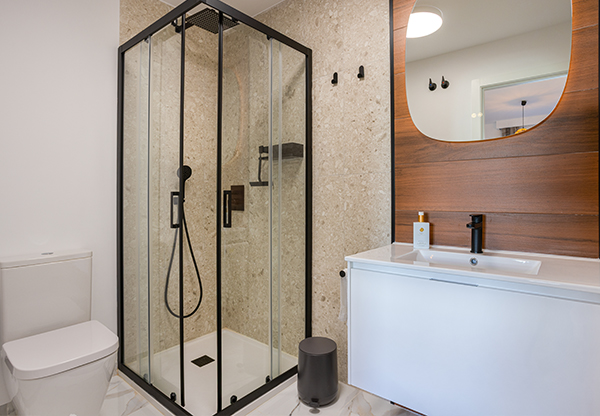
    Shower Enclosures Types: Which One Fits Your Bathroom Design

    One of the most important elements of bathroom renovations is shower enclosures. Available in several styles, shapes and materials, this critical component can make or break the overall appearance of your bathroom. If you are looking for expert tips on selecting the ideal shower enclosure, understanding different styles and factors can help you make an informed decision.

    This guide explores the various types of shower enclosures, highlighting their key features and benefits and providing you with the knowledge to choose the perfect enclosure for your bathroom design.

    6 Types of Shower Enclosures: How to Choose the Right One for Your Bathroom? 

    On the Basis of Frames 

    Framed Shower Enclosure 

    This type of shower enclosure features a visible border or frame around the corners of the glass panels. This frame is usually made from different materials, including aluminium and PVC. The frame prevents water leakage and provides structural support to the shower enclosure, which in turn ensures durability and ease of installation. 

    You should choose a framed shower enclosure if you: 

    • Value functionality over minimalist design 
    • Need a pocket-friendly solution 
    • Prefer a classic bathroom aesthetic 
    • Want a low-maintenance option 
    • Have a limited budget 

    Frameless Shower Enclosure 

    These kinds of shower enclosures serve as a modern bathroom renovation solution that offers a luxurious look and transforms your bathroom space. Frameless shower enclosures also provide enhanced functionality and durability while creating a sophisticated ambience that elevates your bathroom’s style and practicality. 

    You should choose a frameless shower enclosure if you: 

    • Want an easy-to-clean shower enclosure 
    • Prioritise sophistication and luxury 
    • Value durability as well as modern aesthetics 
    • Want a sense of openness in your bathroom  
    • Have a corner bathroom or a bathroom with high ceilings 

    Semi-Frameless Shower Enclosure 

    Semi-frameless shower cubicles strike a perfect balance between functionality and modern aesthetics. These enclosures come with a sleek frame design that supports glass panels while minimising visual obstruction. 

    This type of shower enclosure offers numerous benefits, such as enhanced visual appeal, increased durability, affordability and easy cleaning.

    You should choose a semi-frameless shower enclosure if you: 

    • Want ease of maintenance 
    • Seek a stylish and sophisticated shower 
    • Desire versatility and adaptability 
    • Want a luxurious feel without overspending 
    • Have a bathroom with limited space 

    On the Basis of Doors 

    Pivot Shower Enclosure 

    This type of shower door is a popular choice among homeowners and builders. Pivot shower enclosures offer a mix of functionality, accessibility and style. Pivot shower enclosures feature a rotating hinge system that attaches the pivot door to the surrounding wall. They allow for a 180-degree rotation, providing easy entry and exit. This shower cubicle offers high durability and long-lasting performance, which guarantees years of trouble-free performance with minimal upkeep. 

    You should choose a pivot shower enclosure if you: 

    • Prefer ease of access and mobility in bathrooms 
    • Want a high-end look 
    • Desire long-lasting performance 
    • Have a small or medium-sized bathroom 

    Sliding Shower Enclosure 

    A sliding shower enclosure is a perfect solution for projects demanding functionality without compromising style and durability. These kinds of shower doors have two or more glass panels that slide along a track, allowing for seamless access and smooth operation while maximising space efficiency. 

    You should choose a sliding shower enclosure if you: 

    • Are looking for a space-efficient and accessibility-friendly solution. 
    • Seek affordable luxury. 
    • Need a space-efficient enclosure. 
    • Have a small and narrow bathroom. 

    Bi-Fold Shower Enclosure 

    These types of glass shower enclosures have a space-saving design that caters to diverse bathroom styles, including traditional, modern, and contemporary styles. In bi-fold shower enclosures, glass panels are hinged together in such a way that they effortlessly fold inward and outward, promising easy entry and exit. 

    You should choose a bi-fold shower enclosure if you: 

    • Embrace sleek and contemporary designs. 
    • Want to use your bathroom space efficiently. 
    • Seek an attractive and functional shower enclosure. 
    • Have a corner bathroom or a bathroom with mobility and accessibility concerns. 

    Wrapping Up 

    Selecting the right shower enclosure is crucial to achieve the desired bathroom aesthetic. By considering factors such as your personal style preferences, mobility needs and available space, you can streamline your search and find the perfect fit for your bathroom design.

    However, it is not just the design that matters; choosing the right glass provider also plays a key role in selecting the perfect shower enclosure. Among the trusted glass suppliers in India, AIS has years of expertise in crafting an extensive range of high-quality glass solutions that offer a blend of durability, safety, functionality and aesthetics.

    Get your dream bathroom today with AIS – the ultimate destination for premium glass solutions.

      Categories

      4 Inspiring Ideas for Your Kitchen Space

      The evolution of kitchens is quite significant. Today’s kitchens are required to be as aesthetically appealing as functional, and to blend with the overall design of the house while retaining its unique look as the heart of the home. This dynamic shift in the way we design kitchens has also a lot to do with the availability of multi-functional and innovative architectural materials such as processed glass.
      Modern glass suppliers such as AIS are already leading the way in creating aesthetic glass variants such as AIS Décor lacquered glass and frosted glass which are aiding in the imagining of creative and functional kitchen spaces like never before.

      Given the fact that kitchens are usually smaller in size than other spaces and areas in most homes and apartments, using a material such as glass in cabinets, shelves or even countertops helps in adding the illusion of space. Glass’s inherent property of reflecting light helps in creating a well-lit, airy and lively environment in a kitchen, thus allowing inhabitants to experience more joy in cooking.
      In this blog, we take a look at four inspiring ideas powered by glass to design or recreate your dream kitchen space:

      1. Create window cabinets

      If you’re wondering what they are, then prepare to be excited. If your kitchen wall space is majorly covered with windows, then you can elevate the look of your entire space while also adding more storage to the kitchen with the help of window cabinets. As the name suggests, these cabinets are constructed on top of existing windows, thus providing them with two walls of glass. This can be a unique addition to your kitchen without preventing the external scenery or natural daylight getting obstructed!

      1. Install frosted glass shelves and lacquered glass panel pantry doors

      For heightened aesthetics, why stick to simple clear glass? Visually appealing glass types such as frosted privacy glass can add style to your kitchen cabinets while also concealing what they store – if you wish so! On the other hand, if your kitchen has a pantry door, then you can install lacquered glass panels on it to compliment the wall colour or the theme of the kitchen.

      1. Turn your kitchen island into a glass base cabinet

      If you have a modular kitchen with a counter in the middle of the floor space, called the island, why not experiment by adding a glass cabinet to its sides? This can be the perfect location to store collectibles, cookbooks or fancy kitchenware. Since this is a base cabinet prone to impact by foot, we recommend opting for tempered security glass for the same.

      1. Add colour to your countertops and backsplashes

      Glass kitchen countertops have become very popular, offering a lot in terms of colour, size, and shape. Combining countertops with lacquered glass backsplashes and cabinets creates a stylish and colourful ambience for a kitchen.
      Apart from the aesthetic reasons, using glass in kitchens is beneficial since it is a material that it is stain-resistant, easy to clean and maintain, and easy to replace. Time to give your cooking space a well-deserved glass makeover!

        Categories

        Optimal Building Design & Glazing: A Case Study

        It is the 21st century, and energy conservation and sustainability in architecture is surely gathering momentum. With one eye fixed ever so intently on the environment and the rising global temperatures, architects are turning to innovation and technology to turn the tables on myopic building design and combat energy inefficiency in our living and working spaces. This is where glass is proving to be their trusted accomplice.
        So, when a prominent learning institute in Mumbai approached Asahi India Glass Ltd., the most comprehensive integrated glass company in India, to achieve high performance energy efficiency, we carried out a comprehensive and painstaking glazing and building design analysis to provide a satisfactory solution. Let’s find out how:
        Problem
        A learning institute in Mumbai wanted to optimize its building design without spending big on glazing solutions. This meant reducing the heat gain inside the building without compromising natural lighting.
        Solution

        Normally, we have observed that when it comes to glazing solutions providing high performance energy efficiency, architectural glass variants with a lower Solar Factor and lower U-Value are favoured. But to achieve the ideal balance between the building design and glazing feasibility, we had to come up with an optimum solution that offers best return on investment.
        Therefore, first we conducted a study to understand the building design. Due to the architecture of the institute, the building’s direct and indirect heat gain had fallen down considerably. This can be explained by Fig. 1:

        • 4 Classrooms located on the north side received diffused light and no direct heat
        • 4 South-facing classrooms were provided with a shading device to prevent direct heat and glare
        • 4 Buffer zones, created by placing the service areas along the east façade and corridors along the west façade, prevented heat ingress in the offices
        • 4 Walls had good insulation properties to prevent long-wave radiations from entering into the building
        • 4 North light provided natural light to a portion of the building

        These observations allowed us to fine tune our glazing solution. Ultimately, due to the optimal building design, we could choose a solution which did not have the best specifications (and therefore higher cost) but was a perfect match for the design.

        In order to do so, a detailed building energy analysis and simulation was conducted with a huge portfolio of AIS products. Their performance parameters are compared in the table above. Then, we compared the energy saving percentage against cost payback period.
        This study is depicted in the Fig 2. As one can see, Spring SGU (Solar Control product from the AIS Ecosense range) which has Solar Factor (SF) = 64%, Visual Light Transmission (VLT) = 65%, and U-Value = 5.4 w/ m2 k performed best out of all the glasses with 17% energy savings and 2 months’ payback period, when compared to base case Clear DGU (double glaze unit).

        Results
        Thus, by understanding the relationship between building design and glazing type, we could suggest the client a glazing glass with an optimum Solar Factor and U-Value and higher VLT – thus enabling the institute to save on money and recover investment far quicker than imagined.

          Categories

          5 Design Tips to Use Mirrors for Interior Design

          Isn’t it astounding how a mirror entirely amps up a space by providing it dimension and depth? From energy to luxury to the visual tricks, mirrors with bespoke designs can make a massive difference in the overall appearance of any room. Besides, given the handiness of mirrors, we take the liberty to say — mirrors are highly underrated interior decor pieces.

          Below are five of our top design tips to put mirror glass to use for accentuating the beauty of your space while making the most out of them.

          Placement is Key

          When decorating your home with mirror glass, you don’t wish to miss any opportunity to squeeze the maximum out of this sparkly and one-of-its-kind décor piece. So, it all comes down to where and how you place a mirror.

          The height at which the mirror is installed in conjunction with what it reflects, greatly influence the visual appeal of the space. If the mirror glass, for example, reflects a sloping ceiling, it is not the most flattering sight to behold. So, use mirrors to deflect attention away from any awkward or unpleasing spot of the room. Place it thoughtfully at a height to emphasise more on the plus points of the room. When placed strategically, they can become statement fillers in small but significant places that are too tiny for a piece of furniture.

          Let There be Space!

          For those of you looking for space and light, mirror glass turns out to be of use when installed in a small room or a narrow corridor. Go with oversize mirrors or other large wall mirrors to capture as much light as possible to give an expansive illusion to the room. In fact, mirrors can be placed as windows in a windowless room to make it brighter and instantly bigger.

          Adding mirrors make light and images bounce off from different angles them and thus, imparting a sense of space in the interiors. A mirror distributes space and light in a way that contributes to the depth and energy of the room. This makes rooms look bigger and more spacious than they actually are.

          Make the Mirror the Centre of All Attention

          Without a shiny console or opulent furniture, a room tends to look dull and uninteresting. So, an essentially bare room can benefit from mirror glass as its architectural focal point.

          A large mirror with an extensive frame can offer drama and playfulness to the room. While a more modern and distinct look can be achieved with a round mirror, for example, having golden or metallic detailing giving off that vintage vibe. Also, if the room has some focal point, a well-placed mirror can exaggerate its effect. Nonetheless, it is for you to decide how you wish to style the space to balance out all the elements of the room.

          Besides, when it comes to decorative art, mirrors with unique and eccentric frames can well substitute paintings. Invest in lavish and fancy-framed mirrors to exude elegance, luxury, and style.

          Breathe Life into Those Dingy Corners

          Most of us have a room in our house or office that has windows brightening up the entire room, except for one particular corner of the room. This is where you can bring mirrors into the picture. See the light bouncing in the room when you install mirror glass behind a lamp or with mirrored wall art/furniture.

          Besides, you can not only make use of artificial lights but can also exploit natural lighting with mirrors. Positioning a mirror opposite the window enables the outdoor scenery to reflect on the mirror, which illuminates the space while producing a scenic viewpoint. However, to ensure the longevity of the reflective surface of the mirror, make sure sunlight doesn’t dawn upon it directly.

          With the thoughtful placement of mirrors, you can achieve a luminous and warm ambience. Invest in a frameless polished mirror or a sizable vintage-styled mirror glass, and you can thank us later.

          Play around with Geometric Shapes

          Traditional rectangular mirror glass is an all-time classic. But you must not shy away from experimenting with different shapes, sizes, and colours of mirrors.

          The decor of your space is a representation of your unique taste and personality. So, if sobriety is your calling, go with a bevelled mirror or a large round unframed mirror.  On the other hand, if you like going overboard with your interiors, then help yourself with opulent and eccentric mirrors in unusual shapes. The point is — mirrors are not bound to have practical use always. Enhancing your house or office with eccentric mirrors can be the aesthetic highlight of the space as well.

          Apart from using mirror glass to reflect our faces, there are more than a few ways to decorate and utilise any space with them. Contact AIS Glass today and design your room with mirrors that align with the interiors of the room to complement its decor. Our AIS Mirror is 100% distortion-free, eco-friendly, and incredibly long-lasting with a high precision flatness for true-to-size images.

          So, get in touch with us today!

            Categories

            Glass facades for commercial exteriors

            All those tall glass buildings you whiz past in your cars are a constant reminder of how glass has moved past beyond its traditional use in windows and mirrors and come a long way to become a reflection of contemporary architecture. Gone are the days when all we could spot were those brick buildings now glass has overtaken it.
            All these glass buildings now are the symbol of urbanisation. We encounter glass facades almost everywhere these days as they are known to raise the glamour quotient in any kind of architecture. Increased usage of glass facades for commercial exteriors is instrumental in escalating the aesthetics of a building, not just that, they are even beneficial in terms of energy-efficiency.

            The glass product range includes heat includes heat reflective glass, energy efficient reflective glass, solar control glass, tempered burglar proof glass, decor glass, frosted glass, sound resistant glass, impact resistant glass and many more products, in varied thickness, colours and other specifications.
            Usage of glass facades are all set to raise the bar to redefine structures. There are variety of glass facades being used which reduces inside temperature comparatively under the sun, ensures longer life of upholstery due to reduced heat, helps lower the use of Air Conditioning, thereby improving fuel efficiency. Not just this they also reduce external noise and vibrations inside cabins, shops etc.

            They not just add to the glamour quotient but also reflect elegance and sophistication. These days we come across world class designs being embraced in glass facades. Some are trying to set examples in terms of design, others are trying to find comfort and convenience whereas there are some aiming at both exemplary designs as well as comfort, convenience and energy efficiency.
            Glass facades are for sure raising the standards and redefining the exterior architecture.
            Know more, visit: https://www.aisglass.com/

              Categories

              Renovate Your Bathroom with Glass Shower Door

              There’s quite nothing like unwinding a long, hectic day at work with a hot shower and there’s quite nothing like a glass shower cubicle for relishing the ultimate bathing experience where you get to enjoy a sense of luxury and privacy without having to deal with the worries of water spilling all over the bathroom floor. Moreover, your experience of enjoying a steam bath can be enhanced as a glass shower cubicle allows your steamer to work more efficiently. Let’s find out in details how a glass shower cubicle can help you redefine your personal space – 

              Maintains Privacy

              With glass shower cubicles, you can enjoy the benefit of privacy, both in terms of visibility and audibility. The noise insulating properties allow you to take your shower in peace. Moreover, they provide a division in the bathroom so that you don’t have to worry about water leaking through the shower area anymore. You can even sing peacefully in the shower, without worrying about someone hearing you! Besides that, you can also enjoy privacy by installing glass variants that obscure visibility such as frosted glass or switchable glass.

              Low-Maintenance

              Glass shower cubicles require minimum to no maintenance. Their low-maintenance quality and aesthetic appeal have led most people shift to glass shower doors. Glass shower cubicles are highly durable and very easy to clean. All you have do is occasionally wipe the glass with a clean cloth. You can also choose to apply a protective coating on the glass during its installation that protects the surface from water and soap scum spots. This ensures that your glass remains spotless and as good as new throughout its lifespan.

              Mould-free Environment

              Due to the constant use of water in our bathrooms, it is the ideal environment for mould to grow. We often face problems of mould in our shower areas, even on our shower curtains. This is where glass shower cubicles step in to help you fight mould. Glass shower cubicles do not allow mould to grow on them. They are moisture-resistant and do not allow any water to collect on their surface. All that is needed at max is a simple wipe to the glass to get rid of any moisture that collects.

              Renders Safety

              Wet and leaky shower curtains can be a safety hazard, especially for kids and the elderly. It is extremely easy for anyone to slip and fall as a result of leaky shower curtains. Glass shower cubicles are a better and safer option since they reduce the chances of any water leakage. Glass shower doors ensure that all the water remains contained in the shower cubicle, thereby reducing the chances of any mishap in the bathroom, safeguarding precious lives of your family members.

              Energy Savings

              Glass shower cubicles ensure that your bathroom remains well-lit by allowing natural light to freely flow in. This helps reduce your usage of artificial lighting, and subsequently reduces energy consumption. Moreover, glass shower cubicles provided by AIS Glass also offer heat insulating properties. It traps heat so that the temperature in your bathroom is always comfortable and you don’t have to spend extra money on installing heaters. This helps you cut down on your energy consumption and subsequently energy bills.

              Enhanced Aesthetics

              Apart from providing maximum utility, glass shower cubicles are also an ideal way to enhance the aesthetic appeal of your bathroom. With modern architectural designs taking over every household, glass is being excessively used in every nook and corner due to its attractive qualities. Glass shower cubicles enhance the design of your bathroom, providing it with a minimalistic yet stylish look. Glass doors also ensure a smooth flow of natural light, making your space appear brighter, more spacious and comfortable.

              Customisable

              The best part about installing glass shower cubicles is that they’re available in all shapes and sizes to fit your needs. You can customise your shower glass doors to fit the design scheme that you want. If your shower area is small, you can choose sliding glass doors, or for bigger and more traditional bathrooms, you can opt for a glass shower door which opens inward or outwards as per your convenience.

              At AIS Glass, we provide you with plenty of variety and options to fulfil your glass shower cubicle needs. Our glass enclosures are high impact and moisture-resistant, low-maintenance, aesthetically appealing, and provides a high level of privacy. For purposes of durability and privacy, you can go for AIS Krystal frosted glass – India’s only branded frosted glass that will obscure the view but will allow natural light to pass through. Our goal is to provide you with end-to-end services, from installation to post-installation care, so that you can transform your space using high quality glass solutions. So, for any and all glass solutions look no further than AIS Glass! Get in touch today.

                Categories

                What is Switchable Glass and Tips to Maintain

                Switchable glass, often referred to as smart glass or dynamic glass, represents a revolutionary leap in contemporary architecture and interior design. We will dive deep into switchable glass in this article, explore its definition and functionality, and provide expert tips for its maintenance. 

                What is Switchable Glass? 

                Switchable glass is a sophisticated architectural material that transitions between crystal clarity and complete opacity. This transition is achieved effortlessly, either through manual control or automated systems. The versatility of switchable glass lends itself to a myriad of applications in both residential and commercial spaces. 

                The Inner Workings of Switchable Glass 

                Switchable glass relies on a groundbreaking technology that alters its optical properties. Typically, this technology involves the integration of liquid crystal molecules or suspended particle devices (SPDs) within the glass. Here’s a simplified breakdown of its functionality: 

                • Transparent State: 

                  In its default mode, switchable glass remains transparent, permitting the passage of natural light. This state closely resembles conventional glass, offering unhindered visibility. 
                • Opaque State:

                   When an electrical current is applied, the liquid crystal molecules or SPDs align themselves in a manner that scatters light, rendering the glass opaque. This transformation happens swiftly, ensuring instant privacy and obscuring visibility. 

                Diverse Applications of Switchable Glass

                The adaptability of switchable glass has led to its integration in various sectors: 

                • Architectural:

                   It extensively uses elements like windows, doors, and partitions. By doing so, it facilitates adaptable spaces and enhances energy efficiency.
                • Commercial:

                   In corporate settings, switchable glass is employed within conference rooms to ensure privacy during meetings and presentations.
                • Healthcare: 

                  Hospitals utilize switchable glass in patient rooms and operating theatres, affording privacy when necessary.
                • Residential: 

                  Homeowners embrace switchable glass in bathrooms and an avant-garde design that blends form and function.
                • Retail: 

                  Within the retail industry, it serves as an interactive display and enhances the aesthetics of storefronts.

                Tips for Switchable Glass Maintenance 

                To ensure switchable glass’s functionality and performance, vigilant maintenance is imperative. Here are invaluable maintenance tips: 

                • Regular Cleaning:

                   Like any glass surface, switchable glass necessitates regular cleaning. Employ a mild glass cleaner or a mixture of vinegar and water to eliminate dirt and smudges. Avoid abrasive materials to prevent glass damage.
                • Electrical Connections: 

                  For automated switchable glass systems, consistently verify the integrity of electrical connections and controls. Regularly inspect the wiring for wear or damage.
                • Scratch Prevention:

                   Exercise caution when working near switchable glass to prevent scratches. Refrain from using sharp or abrasive objects that could mar the glass surface.
                • Weather Protection: 

                  When installed outdoors, ensure that switchable glass is shielded adequately from harsh weather conditions. Proper sealing prevents moisture infiltration.
                • Professional Consultation: 

                  In case of malfunctions or damage, consult professionals specializing in switchable glass technology for repairs and maintenance. DIY attempts may exacerbate issues.
                • Documentation: 

                  Maintain user manuals and provide documentation. These resources are invaluable for troubleshooting and routine maintenance.
                • Software Updates: 

                  If your switchable glass system relies on software or remote controls, regularly update the software, ensuring optimal performance and addressing potential bugs.
                • Warranty Consideration: 

                  During installation, inquire about available warranties and service agreements. These safeguards offer peace of mind in unforeseen circumstances.

                Conclusion 

                Switchable glass is a testament to contemporary innovation, offering a blend of functionality and aesthetics. Whether enhancing your living space or optimizing a corporate environment, understanding its operation and nurturing its upkeep are pivotal to reaping its benefits. 

                If you want high-quality switchable glass, AIS Glass is your go-to source. AIS Glass offers a wide range of switchable smart glass solutions that can transform your space.  

                  Categories

                  Choosing the Right Decorative Glass for Your Home

                  Decorative glass has the remarkable ability to revamp the ambience of your home completely. It can infuse a touch of elegance, provide privacy, and bathe your living space in beautiful natural light. Whether fixing up your house or building a new one, choosing decorative glass for your home holds immense significance. In this, we’ll discuss the essential aspects to remember when selecting the perfect decorative glass for your home. 

                  1. Credibility of the Glass Supplier 

                  The first thing that you need to consider when selecting a decorative glass is the respective glass supplier that you are buying from. It is vital to choose a glass supplier who brings experience to the table. So, look for a reputable glass supplier who has been around for some time, which indicates that they have accumulated valuable experience over the years. 

                  2. Top Quality of Glass Products 

                  When selecting decorative glass for your home, think of it like choosing a stunning piece of art. It’s not only about appearance; durability matters, too. You want the glass for home to look great and stand the test of time. 

                  To ensure you select high-quality decorative glass, consider the following factors. First, check how thick the glass is. Thicker glass is usually stronger and will stick around for many years. Additionally, focus on the clarity of the glass. High-quality glass should be crystal clear, allowing you to appreciate its decorative features fully. 

                  Durability is another crucial aspect to think about. You want glass that can withstand everyday wear and tear without losing its charm. Check if the glass meets industry safety and performance standards, ensuring it’s beautiful and safe for use in your home. 

                  3. High-Quality Finish 

                  The finish of decorative glass can significantly impact its aesthetics. Different finishes, such as frosted, etched, or stained glass, offer unique visual effects. Choose a finish that complements your home’s interior design and personal style. A high-quality finish should be consistent and free from imperfections. 

                  4. Eco-Friendly in Nature 

                  In today’s environmentally conscious world, eco-friendliness matters. Consider whether the glass you choose is produced using sustainable practices and materials. Eco-friendly glass options are often energy-efficient and contribute to a greener home. Look for certifications or labels indicating environmentally responsible manufacturing. 

                  5. UV Resistant 

                  Protecting your home from harmful UV rays is vital to preserve your furnishings and maintain a comfortable indoor environment. Look for decorative glass that is UV-resistant. This feature helps block out harmful UV radiation while allowing natural light to illuminate your space. UV-resistant glass also reduces the risk of furniture and flooring fading over time. 

                  6. Moisture Resistant 

                  Certain areas of your home, like bathrooms and kitchens, are prone to moisture and humidity. When selecting decorative glass for your home, ensure it is moisture-resistant. Moisture-resistant glass is less likely to fog up, develop mould, or show signs of wear due to moisture exposure. It helps maintain the glass’s clarity and appearance over time. 

                  Conclusion 

                  Selecting the perfect decorative glass for your home is a thoughtful process that requires attention to various aspects. Locating a trustworthy glass supplier renowned for delivering exceptional products adorned with high-quality finishes is essential, ensuring that your decorative glass looks fantastic and stands the test of time, adding a touch of elegance to your living space. Moreover, consider opting for eco-friendly glass options in this environmentally conscious age.  

                  You can rely on AIS Glass for a variety of decorative glass options. Our AIS Décor glass combines high-quality finish, eco-friendliness, UV resistance, and moisture resistance.  

                    Categories

                    Breathing Life Back into an Old Office Building: A Case Study on Retrofitting Glass

                    Architecture, today, is exceeding the limits of imagination with the help of science and technology. Where once glass was a mere brittle material for windows now lies a plethora of possibilities in manufacturing and processing extremely functional glass for sound reduction, security, privacy, aesthetics, and most importantly, heat reduction. But the buck doesn’t stop here.
                    It is also possible to optimize the dysfunctional glass systems of existing and functioning buildings with a special variant of glass such as the AIS Renew which completely transforms the energy consumption scenario of the space. Retrofitting buildings is a specialty at AIS, and it is precisely what we achieved for the 6-storied office building which is the focus of our case study.
                    Problem
                    It is no doubt that solar and thermal control glass products are any architect’s go-to solutions for creating an energy efficient space. And energy efficiency is the primary requirement of an office where creating the most comfortable and sustainable environment for employees is paramount for productivity.
                    A six-storied office building featuring glazed windows prominently was facing issues due to increased energy consumption. The requirement was to convert the windows into more energy efficient envelopes, thus enabling visual and thermal comfort. However, converting an old/existing building built with a low performance glass by the traditional method of pulling down the existing glass façade and building afresh is very expensive.
                    Solution

                    In order to tackle this problem without disturbing and interfering with the day-to-day functioning of the building, the AIS technical team proposed our retrofitting solution, AIS Renew, as part of the AIS 4G solutions. AIS Renew is a unique product which is attached on top of an existing glass window and converts it into an energy saving insulated glass window – all in no time at all.
                    In order to do this, a particular AIS Renew glass model (Ecosense Exceed as mentioned in the table above) was compared against pared with clear 6 mm glass used in the existing building. An analysis was done on the basis of shade, visible light transmission, solar heat gain coefficient, and U-value.
                    Further, a building-specific climate simulation was also performed for the existing glass and AIS Renew glass. The results of this analysis are mentioned below.

                    Results

                    As is clear from the reference table, AIS Renew with Ecosense Exceed performed better than the clear single glazed units and double glazed units in terms of cooling energy reduction ratio % and radiant temperature.  In brief, selecting AIS Renew for retrofitting would result in:

                    1. Reduced solar gain in summer thereby reaching the set temperature sooner, thus reducing the load on AC operation.
                    2. Insulation of the building against heat due to its lower U-value by influencing long wave infrared radiation while keeping the space cool in summer and warm in winter.
                    3. A shorter payback period compared to extra glass cost which would have been used for replacement.

                    Thus, with a thoroughly scientific analysis of the retrofit, glass manufacturers like AIS ensure the most ideal retrofitting glass solution for your office building, resulting in substantial energy, cost and time savings.

                      Categories

                      The Importance of Maintaining a Clear Car Windscreen

                      Maintaining a clear car windscreen is critically important for any vehicle’s safe and effective operation. In addition to improving visibility on the road, it can also help improve airflow into the vehicle and reduce the risk of road accidents. Also, keeping your car windows clean will help maintain its resale value and increase its aesthetic appeal. This article will examine why keeping your car’s windscreen clean is important and how you can do it effectively.

                      So, let’s get started.

                      Importance of a Clear Car Windscreen

                      1. Clear Visibility

                      Having a clear car windscreen is essential for safe driving. It gives you better visibility of the road and helps to reduce glare from headlights of oncoming traffic at night. Moreover, it reduces distractions while driving, as you can see your surroundings without any obstruction. It also helps judge distances between objects, which is critical when taking turns or changing lanes. 

                      Furthermore, even in bad weather conditions like snow, fog, or heavy rain, having a clear windshield can help improve visibility to stay safe on the roads.

                      2. Enhancing Reaction Time

                      Having a clear car windscreen is essential to react quickly and safely to obstacles on the road. A clean and clear car windscreen helps drivers better see their surroundings and anticipate any potential hazards, thus increasing their reaction time. Cleaner windows also reduce glare from the sun or other headlights, further improving visibility and allowing drivers more time to make critical decisions such as braking or swerving. 

                      For these reasons, all drivers need to keep their car windscreens clean to maximize their reaction time and improve overall safety on the roads.

                      3. Avoiding Accidents and Collisions

                      A clear car windscreen is essential for driving safety, giving you an unobstructed view of the road ahead. By having a good view of the traffic and road conditions, a driver can make better decisions about handling their vehicle safely. Poor visibility due to dirt, debris, or condensation on the windscreen can be hazardous, leading to accidents and collisions. 

                      Windscreens should always be kept clean and free from obstructions like stickers, grime, and chips/cracks. Additionally, wipers should be in good condition and used regularly to ensure proper driving visibility.

                      4. Extends the Lifespan of Wiper Blades

                      For optimal performance, the car windscreen must be kept clean and debris-free. When dirt accumulates on the glass, it can cause wiper blades to become worn out prematurely. This is because debris and grime will cause abrasion on the blade’s rubber as it moves across the screen during a wipe cycle. Keeping your car’s windscreen clean helps avoid this wear-and-tear and extends the lifespan of your wipers. 

                      Additionally, when windshields are cleaned regularly with a glass cleaner, they are less likely to accumulate streaks or smudges when using the wipers, providing improved visibility for you while driving.

                      5. Better Driving Experience

                      Having a clear car windscreen is essential for safe and efficient driving. A clean and unobstructed view of the road ahead gives drivers better visibility, allowing them to respond more quickly when encountering obstacles or hazards. Furthermore, streaks and smears on the windshield can make it difficult to see properly at night or in other low-light conditions, creating a dangerous situation. Having a clear windscreen also improves aerodynamics, which increases fuel efficiency.

                      The Bottom Line

                      Keeping a car’s windscreen clean and clear is incredibly important for maintaining visibility, protecting your vehicle’s interior from the elements, and prolonging the life of your windshield. Regularly check for debris, cracks, or chips on your windshield, and ensure that you use proper cleaning products and techniques for maintenance. 

                      With just a little effort each month, you will have peace of mind knowing that you’re driving safely with an unobstructed view.


                        Categories

                        How Glass Protects You from UV Rays

                        Did you know that excessive exposure to ultraviolet or UV radiation can cause skin cancer? While we cannot see the UV rays, they have been found to be harmful – not only can these waves kill off viruses, but even healthy body cells; at the least, cause them to mutate. Yet a vast number of people remain unaware of how harmful UV rays are in truth.

                        This is especially true of India, where summer wreaks havoc every year for months on end. While vitamin D is essential, excessive exposure to the sun can cause serious harm.

                        Here’s How UV Rays Harm Us

                        UV radiations include a wide spectrum of rays. There are primarily three types of UV rays which the sun emits, as mentioned below.

                        UVA Rays – About 90% of the rays that reach the surface of the Earth are UVA rays. Also known long-wave light, UVA rays can even penetrate the second layer of skin. These rays mostly cause sun damage, skin ageing, and wrinkling. But excessive exposure to UVA can lead to skin cancer as well.

                        UVB Rays – Medium-wavelength UVB rays deeply affect the topmost skin layers. Unprotected skin can become red and burn under their exposure. However, most UVB rays do not reach the Earth’s surface.

                        UVC Rays – Considered to be the most harmful of UV rays, UVC rays do not even reach the surface of the Earth. These rays are fully absorbed by the Ozone layer.

                        Of the radiation spectrum, UVA rays cause the most harm as they are not filtered by the Ozone layer. In addition to skin cancer, UV rays also cause eye issues, sun damage, premature ageing, weakened immune system, and more.

                        Even from a 15-minute solar exposure, one can suffer from sunburn, tanning, and skin reddening. Such harmful effects inevitably put forth serious questions about safety and wellness under the sun.

                        Naturally, there’s a dire need for a solution to this problem, especially since escaping these harmful rays may become quite for those living or working in tropical regions, in areas that receive direct sunlight, and the likes.

                        Can Glass Block UV Rays?

                        Put simply; the answer is both ‘yes’ and ‘no.’ Glass is a complex element which can be processed to befit any need, even heat resistance. However, in its natural state, glass has a very high surface emissivity, which means it can absorb and emit solar radiation completely.

                        To combat this issue, glass can be treated chemically for enhanced solar control and heat resistance properties. Glass can also be tinted or coated to block UV rays to some extent, especially in residential and commercial spaces.

                        For enhanced thermal comfort, you can invest in the following types of glass.

                        Low-E Glass

                        Low-E glass can block both UV and infrared rays of the sun. But visiblelight can pass easily. This is because it has ‘low’ emissivity. Consequently, the glass lowers the amount of solar radiation absorbed and transmitted. Outside heat is reduced tremendously.

                        For best benefits, you can install Low-E glass for skylights or bay windows to keep out harmful UV rays and still enjoy ample daylight. On the other hand, glass does not let the internal heat to move out, so you can also enjoy warmer winters.

                        Solar Control Glass

                        A protective oxide-based coating is applied to solar control glass, which reflects away most of the UV radiation. It also prevents excessive solar glare and offers overall thermal comfort. In this way, solar control glass keeps the indoors cooler and cheerful.

                        Solar control glass is best suited for window use. You can install it in the kitchen, bathroom, bedroom, etc. and enjoy excellent thermal comfort. It will also lower your reliance on AC as well as heating systems for energy-efficiency.

                        Solar-Low-E Glass

                        A combination of low-E and solar control glass, solar-low-E glass has a protective solar coating. It can reflect away harmful UV rays, infrared rays, and solar glare. At the same time, solar-low-E glass keeps the outside heat from seeping in or inside heat from seeping out to create a comfortable ambience indoors.

                        You can use solar-low-E glass for both residential and commercial applications. Keep out harmful UV radiation and benefit from improved energy efficiency. You can use the glass for façades, walkways, balconies, doors, internal partitions, windows, and much more.

                        To Sum Up

                        Many people continue to rely on curtains and blinds to prevent heat entrance. However, these methods not only block the harmful UV rays, but they also block the natural light. For a more ‘permanent’ solution, homeowners should turn to high-performance glass instead.

                        As you know, prolonged exposure to UV rays can cause severe damage to your eyes and skin. Not to mention, excessive sun exposure can cause furniture and upholstery to fade, glass windows to crack, raise indoor heat, and whatnot. But with proper glass applications, you can cut down UV radiation significantly.

                        About AIS Glass

                        AIS Glass leads as the number one manufacturer of integrated glass in India. We offer 360-degree glass solutions for both residential and commercial use, from glass selection to installation. Get our AIS Ecosense series for enhanced thermal comfort and energy efficiency. Moreover, our installation process is quick and seamless for a hassle-free experience.

                        Get in touch today!

                          Categories

                          Redefine Your Interiors with Décor Glass This Diwali

                          As the festival of Diwali nears, local markets become loud, flamboyant, and utterly infectious with the fanfare. Weeks in advance, many Indian households become busy in preparation for the occasion of Diwali; old objects are discarded, every nook and corner is made dust-free, rooms are refurbished, walls are repainted, and whatnot.

                          To prepare for the festival this season, if you wish to remodel or renovate your home interiors, you need a trendy style solution. And when it comes to trends, what better than décor glass?

                          What is Décor Glass?

                          Also known as back-painted glass, décor glass is a kind of standard or textured glass which has been coated on the “first surface” or the backside. As a result, the glass appears either opaque or translucent based on the thickness of the colour coat.

                          Once the coat is applied, the glass is oven-cured via a superior process. Also, the surface of the glass can be coated with any hue to achieve a colourfast finish and a clear shine. Moreover, because of the natural sheen, décor glass is often used as a design element for interiors.

                          Other than the natural shine, back-painted glasses also offer numerous benefits; from heat and moisture-resistance to pure colouration.

                          Décor Glass: Serving More than Aesthetic Needs

                          Don’t fall for the name! Back-painted glasses can offer much more than the fulfilment of your stylistic needs, and here’s why.

                          Non-Porous – Décor glass is a non-porous material which does not allow air or water to pass through. As a result, it cannot trap bacteria or other microbes. Not even mould, or mildew can infest the material.

                          Highly Durable – Back-painted glasses can easily withstand every day wear-and-tear. They neither fade nor stain over time. Even extreme heat or moisture cannot hamper their natural shine. Moreover, since the glass is manufactured with a superior curing process, it is structurally very strong.

                          Easy Maintenance – Décor glasses hardly need any upkeep. Easy-to-clean and disinfect, they neither soak up microbes or dust. Any grime or cooking grease settled on the surface of the glass can be wiped off with a clean cloth and soapy water.

                          Moisture and Heat-Resistant – Excessive exposure to heat and moisture can fade away the colour of most materials, but not décor glass. As it shows high resilience to both heat and moisture, it can easily withstand extreme temperatures. Décor glass neither chips away nor loses colour over time.

                          Diwali and Décor Glass: A Combination You Cannot Miss!

                          House remodels can be worrisome, especially during the festival season. But if you want a fail proof style solution, invest in back-painted glasses. A powerful combination of form and function, they are sure to light up your world like nothing else! Rock a subtle pastel hue, maybe a bold Venetian red, or complement the festival with royal metallic shades; the stylistic choices are practically endless.

                          Check out different ways in which you can use décor glass to redefine your interiors this Diwali.

                          Kitchen

                          Use of tiles is so common in kitchen décor. If you want a different yet attractive alternative, use back-painted glasses. Create colourful cabinets and backsplashes for a sleek and ultra-modern look. Highly versatile and easy-to-clean, you can try any style to level up your kitchen décor.

                          Besides, décor glass is a non-porous material which does not trap microbes. Even excessive heat and moisture cannot hamper the shine of the glass; perfect for the kitchen, right?

                          Wall Panels

                          Ditch wallpapers and emulsion paints for some trendy, awesome décor glass. You can choose from diverse colours and shades. Go for the cobalt blue or fierce red, maybe a sunshine yellow for the cheer or recluse grey for the laidback style.

                          Include wall panels in your kitchen, bedroom, bathroom, or living room to add a touch of drama. Get a quintessential modern and sleek look effortlessly. Moreover, the wall panels made of décor glass also eliminate the hassle of repainting every year.

                          Shower Wall Panels

                          Take your bathroom style from mundane to magnificent with shower wall panels. Get décor glass panels to amplify the bathroom space to look more expansive. As back-painted glasses are easy to clean and upkeep, you need not worry about cleanliness while still enjoy stunning visuals.

                          Besides, these panels can resist heat, moisture, and microbes. With only a simple cloth wipe, you can keep the panels fresh and looking anew. Best of all, you can add texture and colour to your bathroom space and transform the overall visual appeal.

                          Entryways

                          When you welcome your guests, walls adorned with décor glass will make for a killer first impression. As natural light bounces off the panels, you can create a classy, chic entryway. Rock different patterns and hues to create a characteristic look. They are a perfect way to introduce bold colours in your interiors and elevate their aesthetic appeal.

                          If you are looking for premium quality décor glass, trust AIS Glass!

                          About AIS Glass

                          India’s leading integrated glass manufacturing company – AIS Glass – offers top-notch, end-to-end solutions for all your architectural needs. Get best-in-class back-painted glasses which can be customised to your preferred style. Our AIS Décor is not only stylish and trendy, available in a wide variety of colours, but is also resistant to heat, moisture, and is eco-friendly. Plus, our installation is fast, smooth, and hassle-free.

                          For more details, contact us today!

                            Categories

                            Toughened Glass: Everything You Need to Know About Uses, Benefits & Types

                            What is Toughened Glass?

                            Toughened glass, also known as tempered glass, is a type of safety glass strengthened through controlled heat treatment. It is made by heating annealed glass to a high temperature and then rapidly cooling it, making it approximately 4–5 times stronger than annealed glass of the same thickness. If it breaks, it shatters into small, blunt fragments, significantly reducing the risk of injury.

                            It is highly durable, impact-resistant, and able to withstand thermal stress, making it suitable for applications such as – 

                            • Windows and doors – Shower doors, glass railings, and other safety-critical areas.
                            • Tabletops and shelves – Helps reduce injury risk in case of breakage.
                            • Building facades – Large commercial glass panels requiring structural integrity.
                            • Automobiles – Side and rear windows to reduce injuries during accidents.

                            Important –  Once tempered, toughened glass cannot be cut or altered without losing its strength. Any shaping or customization must be done before the tempering process. Toughened glass and conventional glass differ significantly in their properties, as outlined below – 

                            Tempered Glass Breakage Behavior

                            One of the most important safety features of toughened glass is its breakage behavior. When it breaks, it shatters into small, blunt fragments, reducing the risk of injury to users. These fragments are much less likely to cause severe cuts compared to the large, sharp shards produced by conventional glass. Conventional glass can form dangerous, jagged pieces that pose a higher risk of injury, making it less suitable for applications where human safety is a concern.

                            Manufacturing of Tempered Glass

                            Toughened glass undergoes a special thermal or chemical tempering process. It is heated to high temperatures and then rapidly cooled to create internal stress patterns that increase its strength. Conventional glass, on the other hand, is made by slowly cooling molten glass at a controlled rate to relieve internal stress. This simpler process results in glass that is less strong and more prone to breaking into sharp pieces.

                            How is Toughened Glass Made?

                            There are mainly two methods for producing toughened glass: thermal tempering and chemical toughening.

                            Thermal Tempering: This is the most common method. Ordinary glass is heated to approximately 620°C and then rapidly cooled using jets of cold air. This abrupt cooling puts the outer surfaces of the glass into compression while the interior remains in tension. The difference in stress strengthens the glass, making it approximately 4–5 times stronger than annealed glass of the same thickness. The higher the thermal expansion and the lower the thermal conductivity of the glass, the greater the residual stress, resulting in more durable glass.

                            Chemical Toughening: In this method, the glass is immersed in a molten potassium salt bath. Smaller sodium ions in the glass are replaced by larger potassium ions from the bath, creating a layer of compressive stress on the surface. This chemical process strengthens the glass without heating it, making it suitable for applications where high heat might cause distortion.

                            Both methods result in stronger, safer, and more durable glass suitable for a wide range of architectural, automotive, and consumer applications.

                            Types of Toughened Glass

                            Toughened glass is available in several types of tempered glass, each suited for specific applications and aesthetic needs. The main types include – 

                            • Clear Toughened Glass – Standard transparent glass that offers strength and safety while maintaining clarity.
                            • Laminated Toughened Glass – Combines layers of toughened glass with interlayers for extra safety and sound insulation.
                            • Reflective Toughened Glass – Coated to reduce glare and heat, often used in building facades.
                            • Tinted Toughened Glass – Colored glass that reduces sunlight transmission and enhances privacy.
                            • Frosted Toughened Glass – Opaque or semi-opaque glass that provides privacy while still allowing light to pass through.

                            Toughened Glass Benefits

                            Tempered glass offers several key tempered glass benefits over ordinary glass – 

                            • Exceptional Strength –  Toughened glass is approximately 4–5 times stronger than standard annealed glass of the same thickness, while maintaining the same transparency and light transmission.
                            • Thermal Resistance –  It can withstand temperature variations of up to 250°C, compared to just 40°C for normal glass.
                            • Safety –  If it does break, it shatters into small, blunt fragments that are unlikely to cause serious injuries.
                            • Shock Resistance –  Highly resistant to both electric and thermal shocks.
                            • Durability –  Its long-lasting strength reduces the need for frequent replacement, making it ideal for both residential and commercial applications.

                            Applications of Toughened Glass

                            Toughened glass is widely used due to its strength, durability, and safety features. Key tempered glass applications include – 

                            • Architectural Use –  Ideal for skyscrapers, high-rise buildings, standalone glass walls, and large windows, as it can withstand extreme conditions without shattering into dangerous pieces.
                            • Bathrooms and Wet Areas –  Heat-tempered glass is resistant to moisture and temperature changes, making it perfect for shower doors and partitions.
                            • Furniture and Interiors –  Used for tabletops, shelves, frameless doors, and glass dividers due to its strength and scratch resistance.
                            • Kitchenware and Lab Equipment –  Can be molded into cookware, oven doors, lab glassware, and other heat-resistant applications.
                            • Security Applications –  Laminated toughened glass is combined with other materials to create bulletproof and impact-resistant glass for vehicles and buildings.
                            • Electronics –  Toughened glass is used in phone screens and other devices for durability and scratch resistance.

                            To learn more about the practical uses and technical properties of toughened glass, you can also read this detailed guide on toughened glass uses and properties. Its high durability ensures long-lasting performance, maintaining clarity and smoothness even under daily wear and tear.

                            Low Maintenance of Toughened Safety Glass

                            Toughened safety glass is highly durable and requires minimal maintenance due to its unique properties – 

                            • Breakage Resistance –  Its strength makes it less prone to breaking from external pressures or accidental impacts, reducing the need for replacements or repairs.
                            • Scratch Resistance –  The tempering process enhances scratch resistance, helping maintain clarity and appearance over time.
                            • Heat and Thermal Stress Resistance –  It tolerates higher temperatures than conventional glass, minimizing damage from thermal stress and reducing replacement frequency.
                            • Easy to Clean –  Smooth, non-porous surfaces make cleaning simple – usually just a damp cloth or mild cleaning solution is enough.
                            • Long-Lasting Durability –  Toughened glass retains its integrity and appearance over many years, lowering maintenance and replacement needs.

                            Regular cleaning and inspections ensure that toughened glass continues to provide optimal safety, durability, and aesthetic benefits.

                            For world-class branded glass products, including automotive, consumer, and commercial solutions, AIS Glass, known for offering the best tempered glass in India, provides a wide range of toughened glass options to enhance the safety, energy efficiency, and style of your spaces.

                              Categories

                              UV-Protected Glass vs Regular Glass: Which is Better for Your Home?

                              Selecting the right glass for your home can be overwhelming, especially with numerous options available in the market. Among these are UV-protected glass and regular glass.

                              While both may seem similar, they have distinct features that significantly impact their performance and overall value.

                              In this blog, we will explore these options by comparing UV-protected glass and regular glass, highlighting their key differences and benefits. First, let us understand what UV-protected glass is and its uses.

                              UV-Protected Glass: Meaning and Uses

                              What is UV-Protected Glass?

                              UV-protected glass is a type of glass designed to protect against harmful ultraviolet (UV) radiation.

                              Made using advanced technologies and specialised materials, this glass absorbs or reflects UV rays, thereby reducing UV transmission and enhancing energy efficiency.

                              Through an intricate manufacturing process, UV-protected glass acquires unique properties that make it a preferred choice among homeowners, interior designers, and architects seeking both protection and performance.

                              UV-Protected Glass Uses

                              • Commercial storefronts and facades 
                              • Museums and art galleries 
                              • Furniture 
                              • Glass walls 
                              • Windshields 
                              • Sunroofs 

                              Key Differences Between UV-Protected Glass and Regular Glass

                              ParameterUV-Protected GlassRegular Glass
                              UV ProtectionBlocks up to 90% of UV radiation and offers a higher level of protection.Blocks limited UV but allows most UV-A radiation to pass through.
                              Energy EfficiencyAbsorbs solar heat (depending on tint and thickness), thereby reducing air-conditioning usage and energy costs.Allows solar radiation to enter, resulting in higher cooling costs and increased energy consumption.
                              CoatingsFeatures specialised soft and hard high-performance coatings that reflect heat away.Lacks specialised coatings, leading to lower indoor comfort.
                              InterlayersMay include specialised interlayers that help reduce infrared transmission.Does not typically include interlayers and relies solely on glass composition.
                              DurabilityHas a longer lifespan as it resists UV-induced degradation, improving performance and efficiency.More susceptible to thermal stress and UV-induced degradation, leading to frequent replacements.
                              CostGenerally more expensive but offers long-term benefits that outweigh the initial cost.A more economical option compared to UV-protected glass.
                              ApplicationsIdeal for premium applications such as residences, museums, art galleries, and high-end buildings.Suitable for basic applications such as windows, doors, partitions, mirrors, and furniture.
                              Interior ProtectionProvides strong protection for interiors, preventing fading and discolouration.Offers limited protection, leaving interiors exposed to UV effects.
                              SecurityOffers enhanced security when combined with appropriate safety films or laminations.Breaks more easily under impact and offers minimal resistance to break-ins.
                              GlareReduces glare, improving visual comfort and indoor visibility.Allows glare to pass through, which may cause eye discomfort.

                              Benefits of UV-Protected Glass Over Regular Glass

                              Choosing UV-protected glass for your windows is a better alternative to regular glass, as it not only offers enhanced protection against UV radiation but also:

                              • Reduces glare and the risk of eye strain caused by sunlight
                              • Protects interior décor elements from damage and fading
                              • Helps reduce the risk of skin damage due to UV exposure
                              • Minimises energy consumption
                              • Requires less frequent replacement

                              Conclusion

                              If you prioritise protection, long-term value, high performance, energy efficiency, and durability, UV-protected glass stands out as an ideal choice for a wide range of spaces.

                              AIS Glass is top glass companies in India 2026, offering a wide range of premium products tailored to the needs of various industries.

                              At AIS, we combine innovative design with superior quality to deliver cutting-edge glass solutions that offer exceptional performance and visual appeal.

                              To learn more, visit AIS Glass today.

                                Categories

                                Annealed Glass vs Tempered Glass: Key Differences and When to Choose Each

                                Whether it is a new construction or renovation project, selecting the right glass is crucial. Among the numerous glass options available, annealed glass and tempered glass have emerged as two of the sought-after choices. 

                                Before making a decision, it is essential to know what sets these two apart and how their application can impact the success of different projects. 

                                Let’s explore annealed glass vs tempered glass and understand their key features and applications. 

                                What is Annealed Glass? 

                                Also known as float glass, annealed glass is a type of glass that undergoes a controlled heating and slow-cooling process to relieve internal stresses. Manufactured using the float glass process, it offers a smooth, flat surface with excellent optical clarity and minimal distortion.

                                Due to its versatility and ease of fabrication, annealed glass is widely used in residential and commercial applications. To learn more, read our detailed guide on what is annealed glass.

                                What is Tempered Glass? 

                                Tempered glass is an upgraded version of annealed glass that is manufactured through a specialised process. In this process, the glass is heated up to around 600° C and then quickly cooled with high-pressure air jets. 

                                This rapid cooling creates compressive stresses on the surface and tensile stresses inside the glass, improving its strength and impact resistance.

                                Tempered Glass Vs Annealed Glass

                                ParameterAnnealed GlassTempered Glass
                                Cooling ProcessSlowly cooled after the heating process.Rapidly cooled (quenched) after the heating process.
                                DurabilityRelatively low due to low tensile strength.More durable as it has a higher tensile strength and excellent weather resistance.
                                CostLess expensive, therefore, it serves as an affordable solution for projects with limited budgets.More expensive as specialised equipment and modern technology are used in manufacturing.
                                Breakage PatternWhen broken, it leaves sharp fragments that increase the risk of injury.Leaves small, blunt fragments which helps reduce the risk of injury during or after breakage.
                                StrengthWeakerFour to five times stronger than annealed glass. Learn 7 important facts about tempered glass you should know.
                                Noise ReductionLimited sound reduction due to lower density and sound transmission class (STC) ratings.Has better noise resistance due to increased glass density.
                                Energy EfficiencyLower as it has a higher thermal conductivity, resulting in more heat transfer.Higher as it minimises heat transfer.
                                LifespanShorterLonger
                                FabricationCan be cut using standard glass cutting tools.Cannot be cut after tempering.
                                Heat and Thermal ResistanceLower; thus, it may crack or shatter with sudden temperature changes.Higher resistance to thermal stress, making it less likely to crack.
                                Impact ResistanceLimitedHigh as it cannot break easily, reducing the chance of break-ins and intrusions.
                                SuitabilityDecorative elements and non-structural applicationsSafety-critical applications

                                How to Choose Between Annealed Glass and Tempered Glass

                                When selecting between annealed and tempered glass, consider the following factors:

                                • Safety Requirements: If the application involves a risk of human impact, tempered glass is the preferred choice due to its safer breakage pattern.
                                • Strength and Durability: For areas exposed to heavy use, impact, or thermal stress, tempered glass offers superior performance.
                                • Budget Considerations: Annealed glass is generally more cost-effective and suitable for applications where high strength is not required.
                                • Fabrication Needs: If the glass needs to be cut, drilled, or customised after manufacturing, annealed glass is the better option.
                                • Application Type: Tempered glass is ideal for doors, railings, shower enclosures, and façades, while annealed glass works well for decorative and non-structural applications.

                                When to Choose Between Annealed Glass and Tempered Glass

                                Carefully considering your project’s safety and performance requirements is crucial when selecting the right type of glass.

                                1. Annealed Glass

                                Due to its lower impact resistance, annealed glass is better suited for applications that do not require high strength or enhanced safety features.

                                It can be used in applications where reducing glare and solar heat gain is important, making interiors more comfortable, especially in sunny climates. Annealed glass also provides subtle light diffusion, privacy, and enhanced aesthetics, making it suitable for spaces such as bathrooms, partitions, and office interiors.

                                2. Tempered Glass

                                Tempered glass offers greater strength and superior resistance to thermal stress. As a result, it is widely used in applications where safety, durability, and performance are essential.

                                You can use tempered glass for:

                                • Interior design elements such as walls, partitions, and railings
                                • Shower enclosures
                                • Sliding doors and windows
                                • Exterior applications, including building façades, roof glazing, staircases, and entrance doors
                                • Car sidelites

                                Coming to an End

                                Both annealed glass and tempered glass have unique characteristics that make them ideal for a wide range of applications.

                                To make an informed decision, it is important to understand the properties, differences, and applications of both annealed and tempered glass. In addition, you must consider the specific demands of your project and choose from reputed glass companies in India, such as AIS.

                                AIS is a leading glass solutions company that specialises in designing, manufacturing, and marketing a wide array of glass products suitable for both residential and industrial applications.

                                For expert consultation and specialised glass solutions, contact AIS today.

                                  Categories

                                  Difference Between Tempered Glass and Laminated Glass

                                  When choosing a safe, secure, and durable glass solution for a space, two options rise to the forefront- tempered glass and laminated glass. The differences between tempered glass and laminated glass stems from their unique features, benefits and limitations, which greatly affect their suitability for specific uses.

                                  So, let us compare tempered glass and laminated glass in depth to help you understand which one best aligns with your project’s requirements.

                                  Laminated Glass Vs Tempered Glass

                                  Offering exceptional strength, pleasing aesthetics and unbeatable quality, both tempered glass and laminated glass are good options for different applications.

                                  The difference between tempered and laminated glass is characterised by several key variations. The comprehensive evaluation given below explores the fundamental differences between these glass types:

                                  ParameterTempered GlassLaminated Glass
                                  Manufacturing ProcessMade by heating annealed glass to over 1100°F and then rapidly cooling it with blasts of cold air to create compression on the surface and tension within the core of the glass. To learn more about the manufacturing process, read our detailed guide on how tempered glass is made.Made by bonding two or more layers of glass with a PVB (polyvinyl butyral) interlayer using heat and pressure to create a strong, durable bond. To learn more about its manufacturing process, features, and applications, read our detailed guide on everything you need to know about laminated glass. 
                                  Breakage PatternShatters into small, blunt fragments reducing the risk of injury.Breaks into sharp shards, but the glass pieces stick together, forming a spider web-like pattern which reduces the chances of injury.
                                  DurabilityHighly durable and can withstand higher impact.Moderate to high but can delaminate due to water penetration, ageing and temperature fluctuations.
                                  StrengthFour to five times stronger than annealed glass.Has enhanced resistance to impact, accidents, burglaries and intruders.
                                  SecurityThe tempering process improves impact resistance and safety performance.The interlayer increases the glass’ strength, providing protection against forced entry and ballistic threats.
                                  Heat ResistanceOffers better heat resistance and can withstand high temperatures easily.Provides moderate heat resistance.
                                  UV ResistanceHas limited UV resistance.Offers enhanced UV protection.
                                  Noise TransmissionProvides limited sound insulation.Efficiently reduces outside noise levels and fosters a quieter indoor environment.
                                  ScratchproofHighly-scratch resistantModerate scratch resistance
                                  WeightSimilar to annealed glassHeavier because of the PVB interlayer.
                                  InstallationEasy to installRequires professional installation due to its weight and because it cannot be easily cut or modified after manufacturing. To learn more about the installation process, read our detailed guide on step-by-step guide to laminated glass installation. 
                                  MaintenanceCan be easily cleaned without worrying about damage when maintained properly. To learn more about cleaning and maintenance, read our detailed guide on how to maintain and clean toughened glass.Requires minimal upkeep and maintenance.
                                  RepairCannot be repaired and must be replaced if damaged.Possible to repair with specialised tools in case of minor chips.
                                  ApplicationsSuitable for interior safety applications, such as tabletops, shelves, railings, shower enclosures, doors, windows, etc.Ideal for skylights, overhead glazing, glass staircases, car windshields, etc.
                                  CostMore cost-effective and an economical optionMore expensive
                                  CustomisationLimited customisation optionsHighly customisable
                                  Energy EfficiencyLess energy efficientEnhanced energy efficiency
                                  Weather ResistanceWithstands extreme weather conditions.High resistance against weathering and corrosion.

                                  How to Choose between Tempered Glass and Laminated Glass?

                                  While both tempered glass and laminated glass offer durability, there are some points that differentiate them for specific applications.

                                  Choose laminated glass if you are looking for:

                                  • Enhanced safety features and benefits
                                  • Strength and resilience
                                  • Improved sound insulation
                                  • UV resistance
                                  • Aesthetics
                                  • Hurricane and storm resistance

                                  Choose tempered glass if you seek:

                                  • Impact resistance
                                  • Increased safety in your residential space
                                  • A low-maintenance glass solution
                                  • Thermal endurance
                                  • Better optics and clarity

                                  Both glass types are excellent options for homeowners, builders and architects, catering to diverse project needs and budgets.

                                  However, laminated glass offers additional benefits at a higher cost, making it an ideal choice for spaces requiring enhanced sound insulation, UV protection, and improved safety. High-performance solutions such as AIS Acousticglas are specifically designed to reduce external noise while providing the safety and durability of laminated glass.

                                  On the other hand, tempered glass is ideal for areas with moderate security requirements, budget-conscious projects, spaces exposed to heat (such as kitchens and bathrooms) and projects requiring easy maintenance.

                                  Conclusion

                                  When choosing between tempered and laminated glass, consider factors such as your budget, aesthetic preferences, functionality, safety, and security requirements. Understanding the unique advantages of each glass type will help you make the right decision for your project.

                                  As one of the leading laminated glass companies in India and a trusted toughened glass manufacturer and supplier, AIS offers a comprehensive range of high-performance glass solutions for residential, commercial, and architectural applications. Manufactured using advanced technology and stringent quality standards, our tempered and laminated glass products deliver exceptional strength, safety, durability, and aesthetics.

                                  Explore AIS’s wide range of tempered and laminated glass solutions to find the ideal option for your project. Contact our experts today for customized recommendations and reliable glass solutions.

                                    Categories

                                    Security Glass Installation: Key Considerations for Optimal Protection

                                    As security concerns continue to rise, the use of security glass has become an essential step for providing added protection to all types of spaces. 

                                    Manufactured with a specialised PVB interlayer between two sheets of glass, this laminated glass provides ultimate protection from burglar attacks and other potential threats. 

                                    For those who have decided to install security glass, there are some key considerations to keep in mind to maximise its effectiveness and ensure maximum protection. 

                                    So, let us explore the essential factors you must consider when installing a security glass. 

                                    Key Considerations for Security Glass Installation 

                                    Assess Your Security Needs 

                                    Identifying potential risks helps determine the required security level, which, in turn, guides the selection of the appropriate type of security glass. 

                                    Therefore, before starting with the security glass installation process, consider: 

                                    • Location: Areas prone to crimes or natural disasters demand enhanced security. 
                                    • Access Points: A space with multiple entry points also affects security needs. 
                                    • Type: The type of space (residential, commercial or industrial) impacts the required level of security as each of these spaces has unique security requirements. 
                                    • Asset Value: Facilities with valuable equipment or merchandise demand advanced security glass solutions. 
                                    • Existing Security Tools: The current infrastructure, such as alarms, cameras and access control systems also influences security requirements. 

                                    Choose the Right Type of Security Glass 

                                    Different types of security glass cater to different situations. For this reason, you must choose the one that matches your security needs. For example- if you want protection against forced entry and ballistic threats, choose laminated security glass. 

                                    If you want a glass that can withstand extreme temperatures while enhancing safety and reducing the risk of injury in the unlikely event of breakage, tempered security glass installation can be done. 

                                    Optimise Glass Thickness 

                                    Glass thickness is another crucial factor in security glass installation that affects the level of glass performance. 

                                    A security glass with normal thickness is a good way to ensure easy handling, flexibility and cost-effectiveness. 

                                    However, a thicker security glass can offer enhanced security due to its greater impact resistance. This type of glass also ensures durability and strength, reduces heat transfer, minimises noise transmission and withstands major threats. 

                                    Measure the Security Glass 

                                    Accurate measurements of the glass, as well as, the security glass are vital for ensuring successful security glass installation. This step helps ensure a precise fit of the glass frame and the glass, preventing rework and increasing efficiency. 

                                    Failure to measure the glass appropriately can cause installation delays, material waste, reduced glass performance and aesthetic issues. 

                                    To avoid such situations, use a measuring tape to measure the glass, frame and opening, record the measurements properly, double-check them for precision and verify the recorded dimensions against the manufacturer’s product specifications. 

                                    Ensure Quality Installation 

                                    A well-planned and properly executed security glass installation is the foundation of optimal protection. 

                                    Thus, it is suggested that you ensure the correct security glass is installed as this will maintain structural integrity and prevent any possible compromises, such as premature failure and costly rework. 

                                    Moreover, quality installation will also help you maintain glass clarity, ensure glass and frame stability, prevent air and water infiltration and reduce safety risks, both during and post-installation. 

                                    This way, proper installation ensures optimal protection and performance of security glass combined with its smooth operation. 

                                    Post-Installation Maintenance 

                                    Post security glass installation, maintenance and care of the security glass are among the most important factors that maximise its effectiveness. 

                                    Conducting regular inspections of the glass and the sealants is ideal to detect and address the signs of wear and tear, ensuring that the security glass works as a robust barrier, offering optimal protection. 

                                    Summing Up 

                                    Investing in security glass is an effective and effortless way to protect yourself and your valuable assets and property against unwanted intrusions, burglaries, natural disasters and extreme weather. 

                                    However, to ensure that you make the most of this specialised glass, follow the essential checklist outlined above or consider turning to AIS Glass and leverage professional security glass installation services that feature exact fitting and thorough quality control checks. 

                                    We at AIS provide end-to-end solutions to the customers, from manufacturing to installation. 

                                    Are you ready to secure your loved ones and valuables with our top-notch security glass solutions? Fill out our customer enquiry form and our dedicated team of experts will contact you shortly. 

                                      We use cookies to help you get the best possible experience of our site. By clicking 'Accept' you agree to our use of cookies.