People all across the
globe have had a long-standing love affair with glass as a material for all
types of dwellings. Architects around the world are enamoured with its beauty,
versatility and unique technical capabilities. The way glass reflects light is
genuinely mesmerising. The way it creates an expansive sense of space is
unachievable with any other material. No wonder designers and architects around
the world wax lyrical about the exquisite and fluidic properties of glass. They
are gaga about the panache and class it adds to any type of dwelling.
Earlier, glass was mostly
used for windows, doors and partitions, but in the last decade or so, its
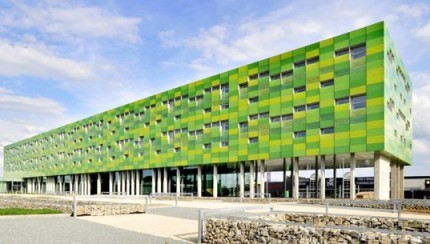
utility has been taken to a whole new level. Several buildings across the world
have popped up with a glass exterior, and they shimmer and stand out like no
other. Let us look at a few glass-inspired marvels of the decade around the
world.
The Burj Khalifa in Dubai
Who does not know of this
iconic building in Dubai? It is, after all, the highest manmade structure in
the world. Standing tall at 2,716.5 feet, the Burj Khalifa’s façade boasts an
impeccable combination of glass, aluminium and silicone. Special consideration
was given to minimise heat transmission for energy conservation. More than
24,000 cladding panels were used over a whopping curtain wall area of 132,000
meters to achieve energy-efficiency. The glass on the exterior facade includes
high-performance reflective glazing. The Khalifa comprises of multitudes of
silicone sealants, structural adhesives, aluminium mullions etc.
The Shard in London
The Shard in London is
quite literally a shard of glass near the London Bridge. It is a commercial
tower made from glass, reinforced concrete and steel. The tower uses a bright
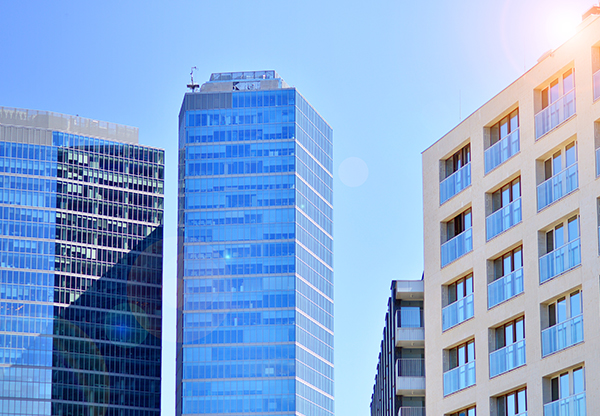
blue, highly reflective laminated glass to reflect excessive heat. The shard
reflects the sky, clouds and the sun of the city of London beautifully. On a
sunny day, the building shimmers unabashedly much like a shard of glass.
This 94-storey high glass
shard was designed by the Italian architect, Renzo Piano and was unveiled for
the public in 2013. The Shard is a neo-futuristic piece of a fluidic skyscraper
that poses as a wonder to all who visit this timeless city. It also has a
53-meter-deep foundation that provides it with unwavering support.
The Shanghai Tower in
China
The world’s
second-highest structure also houses the world’s highest observation deck. The
Shanghai tower is a flag bearer of modern-day architecture. The tower’s core is
made up of 30 square meters worth of concrete. This base supports an outer
structure made of laminated glass. This transparent façade looks glorious and
also provides unique structural sensibilities to the tower. This glassy
skyscraper utilises two layers of highly-reflective glass panels to lower heat
absorption and provide extra strength to withstand the harsh wind loads that
the building must endure at such a height.
This tower breaks several
architectural records around the world, but all of it pales in comparison to
the fact that the Shanghai Tower saved 58,000 million dollars in material cost
due to its ingenious design. Gensler, the architectural mastermind behind this
tower conducted wind tunnel tests to refine the tower’s form, thereby reducing the
wind load by 24%.
The Dubai Mall in Dubai
Meet the second largest
mall in the world. This gargantuan enclave is equivalent in size to more than
50 football fields! Unfathomable, isn’t it? This mall has a total internal
floor area of 5.9 million square feet. Imagine this complex as a tiny town structure
with streets and water parks having 80 million shoppers visit its premises
annually. The interior, as well as the exterior, has been beautifully
constructed with a myriad of materials with glass and steel being the
majoritarian contributors. The use of polished and reinforced fibreglass panels
clads the interiors, storefronts, stairs, doors and windows of this magnificent
structure. The grandeur of the Dubai Mall is well worth witnessing.
Concluding Thoughts
The list of architectural
marvels that champion glass is endless. The last decade saw countless
skyscrapers that used glass beautifully in tandem with other materials.
Innovative uses of glass are not only seen in commercial skyscrapers but also
residential dwellings. It is light, affordable, fluidic and available for all
types of constructional aspirations.
AIS Glass offers stunning varieties of this material for all your needs. Be it your desire to remodel your home or office premises; our experts provide superior quality glass solutions for both interiors and exteriors. Get all your needs met, both for aesthetics and functionality with AIS Glass glass solutions! Contact us today.
With the presence of global warming and ecological problems becoming a huge problem over the last few decades, every industry is trying to use materials that will lessen the effects of the same. With the use of sustainable materials increasing by the day in the world, property developers and real estate companies are also doing their bit to improve the environment for a better future. This has led to the rise of green buildings. One of the most important materials in the construction of a green building is glass, whose specialised energy efficient and eco-friendly varieties like solar control and tinted glass are used.
Green Buildings
The development of green buildings is a start in that direction. Green buildings are buildings that use less water, 1ptimizes energy efficiency, conserve natural resources, generate less waste, and provide healthier spaces for occupants as compared to conventional buildings. They are also beneficial for the environment, as most buildings use recycled and environmental friendly building materials and provide effective building management systems.
Use of Glass in Architecture of Green Buildings
To achieve all of this, developers use glass as a major component during construction. Glass is known to be an excellent green material. Types of glasses like solar control glasses and low-E glass can reflect heat or UV rays to maintain an optimal temperature inside the building. Glass in buildings also substantially reduces the need for artificial lighting and allows daylight to make the interiors airier and more open.
From design, appearance, thermal performance, and comfort to simple aesthetics, selecting the right glass is inevitably important for constructing a green building.
achieve a great balance between all the parameters and block a high amount of solar radiation by reflecting away the infrared part of sunlight. This helps buildings remain invariably cool in the summer and cuts down on energy bills and air conditioning usage.
Impact on Environment
The biggest advantage that makes glass a major component in green buildings is the fact that it is recyclable and also does not have a huge impact on the environment itself. Glass can play a role in accomplishing greater indoor environmental quality and when used carefully, can also improve energy efficiency. Along with tangible benefits, glass can also provide enhanced air quality, excellent daylighting, and general health & well-being for the occupants. From a global point of view, the conservation of scarce natural resources is also a huge advantage, while its widespread acceptance and enhanced marketability make it a viable option for the industry too.
Glass is amongst the most extensively used materials in the architectural industry as it plays a crucial role in controlling the flow of heat and light in and out of your home. Glass should not be limited to a functional material or simply be an afterthought. It can also be used to enhance the decor of your interiors, which makes it one of the most versatile materials in architecture. There are numerous window glass types and other specialized glass available today. Below, you’ll find one apt for each room in your home – THE MASTER BEDROOM Double Glazing Glass The double glazed glass comprises of two layers of glass with another layer of gas sandwiched between the two. This gives it the high thermal performance that doubled glazed glass is well-known for. It reflects away the infrared heat during the summer season, keeping your room cool, while in the winter season, it retains the heat, keeping the room warm. Laminated Glass For the highest degree of protection, opt for laminated glass. It is manufactured by bonding together two or more sheets of glass with a plastic interlayer, usually PVB. Owing to its toughness, the glass is used for reinforcing security as it can stop burglars from entering the house and is also available with multi-lock mechanisms. Smart Glass & Integrated Blinds There’s nothing better than more privacy in a bedroom, and smart glass like AIS Swytchglas, which switches from transparent to translucent at the press of a button, provides you exactly that. Having integrated glass blinds also offer a great modern solution for your windows. THE KIDS’ ROOM Tempered Glass This type of safety glass is well suited for the kids’ room. Its safety features ensure that little children stay away from harm’s way. Tempered glass is impact resistant, thereby reducing chances of injury. It is made out of ordinary annealed glass which is hardened considerably through the process of heating and rapid cooling. In case of heavy impact, the glass shatters into small pieces without sharp edges. The glass is 4-5 times stronger than regular glass, making it the ideal choice for the kids’ room. THE LIVING ROOM Stained Glass and Clear Glass This type of glass is widely used for aesthetic purposes, commonly spotted in the windows of old buildings. This coloured, decorative glass can be found in churches, funeral homes and museums. When installed at your house, it allows ample amount of light in while ensuring your privacy. For table-tops, you should use clear glasses.
Lacquered Glass An immensely popular decorative glass which you can utilize in your kitchen cabinet windows is lacquered glass. It’s stunning painted appearance, eco-friendliness, and heat and moisture resistance make it ideal for the conditions of a kitchen. THE BATHROOM Frosted Glass Frosted glass is subjected to a sandblasting technique that turns ordinary glass slightly opaque. This effect helps in maintaining privacy, and is a popular choice for bathrooms, glass partitions or walls. Moreover, the glass requires low maintenance as it does not allow dust to stick to its surface.
There’s quite nothing like ending the day with
a cup of coffee on the patio or terrace in the presence of chirping birds and
rustling leaves or the sound of pattering raindrops. And those low-key summer
alfresco brunches that none can get enough of? Well, a patio is not just
another space in a home but an extension of it where life is celebrated in its myriads
of forms. No wonder there’s a festival unique to Cordoba called “Festival of
the Cordoban Patios,” where forecourts are grandly decorated and adorned
for public display.
Patios: A Whole New
Way of Experiencing Home Life
Gone are those days when people considered
patios to be of little significance if any. Modern-day architecture and
interior designing are never really complete without a well-designed courtyard.
After all, patios are more than mere ornamentation.
Your patio is the very first space that a
visitor or guest is bound to notice before ever entering into your home. And to
that end, it is a mouthpiece to your sense of hospitality and personal style. A
patio that has just a few items strewn around or worse, one that is barren
might give the impression that you do not really care about creating a
welcoming environment, regardless of the look of your interiors.
Moreover, a well-designed and polished patio
acts as an additional home space where you can unwind the stresses of the day
without having to worry about rain or sun glare. It also makes for a fun
recreation spot and dining area where you can share light-hearted alfresco
meals with your friends and family. The bliss is even greater when your patio
lies amid nature’s glory.
A patio can even be transformed into a little winter
escape by bringing in a hot tub or installing outdoor heaters. Besides, a
scrupulously-crafted patio will significantly increase the resale value of your
property.
Glass Patios: Because
You Never Get a Second Chance to Make a First Impression
Patios are sought-after, not just for their undeniable
charm, beauty, and resale value but for their functionality – space for
relaxation, recreation, and perfecting hobbies. More often than not, homeowners
are found grieving the fact that their patios are being under-used owing to
natural elements that limit their usage. To address such grievances, enclosed
patios are gaining popularity.
And it is self-evident that the material widely
used for building enclosed patios is glass. Not only does glass enhance the
visual appeal of your patio to a whole different level, but it offers an
unobstructed view of the glorious outdoors. And the fun does not stop come
heat, snow, or rains. Moreover, enclosed glass patios take care of your need
for privacy in light of the fact that invading one’s personal space becomes a
lot more easier in case of outdoor personal spaces.
Furthermore, even kids and pets can be left
alone to enjoy the outdoors without having to keep a constant eye on them. And
let’s not forget the value a glass patio will render to your property – both
functional and market value. You can pursue your passion for planting
sun-loving plants even during the winter months and experience the freedom that
comes from having an added security to your home. In a nutshell, a glass patio
is your personal oasis and sanctuary where you can retreat from time to time
for rejuvenation.
Go Alfresco in Style
Make the most of your open-air spaces to
entertain high-profile friends and to enjoy intimate alfresco gatherings with
these design ideas –
Freestanding or
Detached Patio
Want to create an oasis of calm away from your
home? Then, a freestanding or detached patio is the ideal choice for your need
for solitude. Usually constructed next to the pool area, a detached patio offers
you the ‘just right’ amount of privacy that you need away from the chaos of
everyday living. It can even serve as a tranquil location for riding on your
hobby horse and perfecting your God-given talents and skills – art and sculpture,
music, scriptwriting, et al. By installing soundproof glass panes in your
free-standing patio, you can create an atmosphere of absolute serenity and even
practice precious moments of meditation and contemplation to revitalise
yourself.
U-Shaped or L-Shaped
Patio
Well, it isn’t uncommon to find occupants disputing
over who gets to have the room that offers the best of the patio and its glory.
For such dilemmas are designed the L-shaped or U-shaped patio designs that hug
the outside of the homes and can be accessed from several different rooms. Not
only do they make a seamless transition from the indoors to the outdoors, but
they are even straightforward in design. By adding in a sleek sectional sofa
strewn with vibrant accent pillows and cushions or a daybed repurposed as a
chaise, and flowing curtains, not only is it possible to enjoy ample of privacy
but these inviting displays are the best conversation starters that will help
create intimacy and lasting memories.
Wraparound Patio
For those who wish to experience the sense of
having the outdoors within in more than one angle of the home, nothing beats
the wraparound porch design. Designed to either “wrap around” the
entire property or two or more sides of the home, these patios not only serve
as an outdoor living room of sorts but also as a centre for relaxing and
entertaining guests. It even enhances the curb appeal of the home. And to enjoy
the presence of lush greenery at all times of the day, you can install Low-E
glass, which will provide you with natural light but keep unwanted glare, heat,
and UV rays of the sun at bay. These patios can be designed to be angled or
curved and can be built either at ground level or higher as per your desire.
Multi-Level Patio
If your idea of going from drab to fab is by bringing the best of all worlds in your patio design – a hot tub, a redwood pergola, an entertainment spot, a deck for planters, a fire pit, a sandbox and slide for the little ones, and a relaxing hammock, then tiered or split-level or multi-level patio is the way to go. For the main levels of the courtyard, you can have an elevated glass deck having the seating area, and surrounding this main spot, you can add in all the elements that you wish to personalise your inspiring space with. Or, you can have an extended glass patio that allows you to entertain guests and a separate free-standing patio at some distance to serve your need for solitude from time to time. With multiple-level patios, the sky is the limit.
Entry Patio
Looking to make that lasting first impression
on visitors and prospective buyers alike? Well, that thirsty front lawn is not
going to do the trick. The ideal way to go about this would be a welcoming
front entry patio that makes for an enchanting entrance. And what could be
better than the delicate, fluid visual feel of glass in building your entry
patio!
Moreover, by installing solar control glass
solutions, you can enjoy relaxing afternoon naps in your patio without having
to worry about sun glare or even sudden torrential showers. Moreover, you can
even choose switchable or smart glass to enjoy privacy on-demand. Additionally,
adding paving, a fountain, and planters will take your outdoor living space to
a whole new level.
Ready to design the patio of your dreams? Well, so are we! As India’s leading glass manufacturer – AIS Glass has all your glass needs covered. Our extensive range of glass solutions will help you build patios that are durable, can withstand the elements, offer privacy, and will help you experience optimal daylight management. So, what are you waiting for? Contact us today!
Following road safety rules while driving in India can make driving less stressed out. But often people break rules just to reach their destination quickly. Putting their lives at risk, people indulge in rash driving that sometimes lead to accidents. Besides glass, there are numerous other things that can be done to reduce the car traffic and pollution issues. Some of the rules are listed below: Educate your loved ones: Making your children and your loved ones aware of road safety can bring about a great impact to their lives. Make sure you let them know about rules of crossing the road, traffic signs and so on. Drive/ride at economical pace: Driving or riding the vehicle at a constant speed will increase the overall fuel efficiency by at least 30%. This can be done by maintaining a steady pace in your driving style. By doing so, one can reduce the amount of greenhouse gases and other pollutants. Make sure to also service the car regularly to keep the engine tuned.
Avoid peak hours: Peak hours are the worst time to commute as the street is crowded with people heading to work, school and other venues. Often people are stuck in heavy traffic. This causes stress and doubles the travelling time to your destination. To cut down on this issue, one needs to schedule errands and travel to avoid peak hours. This helps to save time and get the task done as well. Follow traffic rules: Following traffic rules ensures road safety and smooth flow of the traffic system. Traffic rules also ensure that one does not have to deal with speeding tickets, or any other fines given by traffic officials. These rules also apply to pedestrians who are looking to cross the road without any risk.
Carpooling/Public transport: For some people, avoiding peak-hour traffic might not be possible. During such times, carpooling or using public transport can be the smarter choice. It can help contribute to less traffic, prevent you from getting stressed and can save a lot of money. In a country like India, one also worries about parking in major cities like Mumbai and Delhi! This will be less of an issue with carpooling.
Those people who are looking for a healthier way to commute can opt to walk or cycle their way to work. In case the destination is closer, bicycling or walking can be a good decision. So, stay safe on the road and help the environment by reducing your carbon footprint! We at AIS have been offering automotive glass for over 30 years. AIS Auto Glass is seen in India’s best vehicles, commanding a market share of over 70% offering high-quality automotive glasses for the best in safety, comfort & style.
Things to Consider Before Choosing a Car Glass Dealer
Car glasses are one of the most important yet the most underrated components of any car. Take them out of a four-wheeler, and even the most professional drivers would think twice before driving it! They don’t only help in shielding you from extreme weather conditions (harsh sunlight, heavy rains, hail storms) but also protect you from debris that drifts by on the road.
Since glasses play such an important role in your car, you must take every possible step to ensure that your car glasses are always in top-notch condition. You carry out an in-house examination of your car glass by verifying whether there are any chips or cracks on it, any leaks around it, or whether any wind passes through it when you are driving.
In case you find out that there is any fault with your car glass, make sure to get in touch with your nearest car glass dealer. But not any dealer! You have to carry out a proper background check to ensure that they are competent enough. To make sure you land up with the ideal car glass dealer as soon as possible, here are a few things that you must consider before picking glass dealers in Delhi:
1. Off-site assistance
Every car owner has a busy schedule, and taking time out of your day for glass replacement can become hectic. Hence, when you are trying to find a car glass dealer, make it a point that they put up with your timetable and not the other way around.
In certain cases, you might not be able to drive the car down to the dealer because your car glass is shattered to such an extent that it delivers zero visibility. Moreover, in some situations, such as a car accident, your car glass might get completely detached. This is another situation where driving the car is next to impossible.
This is where off-site assistance comes into the picture! Off-site assistance ensures that you don’t face any inconvenience, and the dealer accommodates your problems. Thus, before zeroing down on a dealer, make sure that they offer off-site assistance, and most importantly, they offer it without any extra charge.
2. Number of technicians that would be appointed to your car
Replacing car glasses is not an easy task, and any fault or inaccuracy here and there can result in technical failure. If a car glass is not installed properly, you might face reduced visibility, blurred vision, and rattling sounds while driving. Hence, to avoid such problems, you have to make sure that the car glass dealer in Mumbai installs your windshield properly.
You have to make sure that at least two technicians work dedicatedly on your car. They will give their undivided attention to your car and ensure that every step in the glass replacement process is carried out properly. From removing the trim to applying the urethane, two technicians will perform every step with utmost precision. Overall, make it a point that the dealer appoints at least two technicians to your car.
3. Nature of warranty
The best way to verify the quality of work of any car glass dealer is by quizzing them about if they offer any warranty on their workmanship or not. Every technician that works at a car glass replacement centre has to undergo specialized training and not only theoretical! Each worker has to get hands-on training as well that allows them to know the intricacies of this work.
So, when you are visiting or calling a dealer, make sure to grill them on whether their workers are experienced or not. If the dealer says yes, ask them if they would provide a warranty on the installation services provided by them. The answer to this one question would give you a clear picture of whether the dealer is worth your money or not. To sum up, in a few words, a quality dealer will always give a warranty on their workmanship!
4. Check out their response time
Let’s draw out a scenario. You got your car glass replacement a few days back from your local dealer, and suddenly, it is rattling and offering reduced visibility. As it is showing every symptom of improper installation, you call up the dealer. But they don’t pick up! This is why checking out the response time beforehand is important. So, the question is how you can check out the response time of different car glass dealers?
Well, first things first, you will have to make a list of several glass dealers around you. Once you have the list, the next step is to call every one of them. As and when you ring them up, make sure to note down the time they take to pick up your call. If they pick it up within a few seconds, you could shortlist them. However, if they don’t pick up and don’t pick up, you must tick them off the list.
5. Quick installation
Another important factor to consider before finalizing a glass dealer is a quick installation. If your car stays at their facility for several days, it would cause a major problem with your daily routine. Moreover, in case your car remains at its centre, the chances of your car getting damaged also increases. So, when you are checking out different dealers, you have to make sure that they offer quick installation.
Here, quick installation means an hour only! Since your car glass would get reinstalled in about an hour only, rest assured your hectic schedule won’t be compromised. The ideal way of finding out whether a dealer delivers quick and seamless installation is by finding out their reviews. Take a look at Google reviews and ask their previous customers whether they got their car back quickly or not.
6. Use of OEM-grade materials for installation
The automotive industry still remains largely unregulated. This means it is very easy for any dealer to use low-quality products, which they can procure at a lower rate and sell at a higher price, hence increasing their margins. As car glasses play a significant role in ensuring your safety, you have to make sure that the dealer you zero down on uses OEM-grade materials for installation.
By materials, we mean the glass itself and the adhesive that is used for installation. When a dealer uses OEM-grade materials, it means they care about the safety of their customers. Hence, when you are shortlisting a list of ‘car glass dealers near me’, make it a point to only go for those ones that make use of OEM-grade installation materials.
Thus, you have to keep in mind that finding the right dealer could take a bit of time and effort, but it is all worth it! Your car glass is the only thing that separates the inside of your car from the outside, and you can only entrust their quality to a verified dealer like AIS Glass.
So, in short, we can say that the best way of landing up with the ideal dealer is shortlisting them and checking out their response time, whether they offer off-site assistance or not, and if they deliver a warranty on their workmanship. Plus, quick installation, the proper appointment of technicians, and the use of OEM-grade materials is a must. If they meet the criteria, go with them without any doubt! To know more, get in touch!
Tempered glass has revolutionised the way people think about glass. In contrast to the general perspective that glass is fragile and can be broken at the slightest bit of pressure, tempered glass helped to change this outlook. Today, thanks to their strength and durability, tempered glass is widely used across several industries. This includes construction projects, vehicle windows, and shower doors, to name a few (we’ll talk about its applications in detail in the latter part of this article).
Before jumping into the specifics, such as the types of tempered glass, their properties and their applications, it is important to know how they are made. First, using a special furnace, annealed glass is heated evenly and uniformly to a high temperature of 620 °C. To better understand the base material used in this process, learn more about what is annealed glass before exploring how tempered glass is manufactured. As soon as it reaches the desired level, it is immediately removed from the furnace and rapidly cooled using high-pressure air jets. This process induces compression in the glass while the core remains in tension.
Now that we know about the basics of how tempered glass is made, let us move on to the types of tempered glass:
Types of tempered glass
There are primarily five kinds of tempered glass, classified based on their appearance, functionality and application:
Clear Tempered Glass – Standard transparent glass known for strength and durability.
Frosted Tempered Glass – Offers privacy by diffusing light, commonly used in bathrooms and partitions.
Tinted Tempered Glass – Reduces glare and heat while enhancing aesthetics.
Laminated Tempered Glass – Combines tempered glass with an interlayer for added safety and sound insulation.
Reflective Tempered Glass – Helps reduce solar heat and glare, often used in commercial buildings and facades.
Every tempered glass types mentioned above carries the virtues of strength and durability. However, they differ from one another, and the difference in their visual effect is a major one. For instance, the frosted type of tempered glass scatters the light that passes through it, giving it a translucent effect. In contrast, the reflective type of tempered glass helps in combating solar glare.
Since we have covered the tempered glass types, let’s now talk about their properties.
Properties of Tempered Glass
Before glass is classified as tempered glass, it must meet several requirements. This includes achieving a minimum compressive stress of 69 megapascals (10,000 psi). You might be wondering, where does tempered glass get its strength from? Well, it derives its strength from surface compressive stress.
When tempered glass breaks, it shatters into smaller, circular pieces instead of sharp shards. This makes it ideal for high-pressure applications. Plus, tempered glass breaks into small, blunt fragments, reducing the risk of injury. To summarise these points concisely, here are the top properties of tempered glass:
Impact Resistance – Compared to float glass, tempered glass offers higher impact resistance, enabling it to withstand high-stress situations and temperatures.
Strength – Did you know that tempered glass can be 3 to 7 times stronger than annealed glass? This makes it ideal for applications that involve frequent heavy loads.
Versatility – Tempered glass can be moulded and shaped into different forms and styles. Hence, it can be used for a wide variety of purposes, ranging from cars to homes and refrigerators.
After covering the types and properties of tempered glass, let us now move on to the applications of tempered glass.
Applications of Tempered Glass
Wherever there is a requirement for safety, resistance, and strength, the first choice that comes to mind is tempered glass. Here are some of the top applications of tempered glass:
1. Passenger Vehicles
Passenger vehicles come equipped with tempered glass. Why? Well, cars are always parked outside and are exposed to regular heating and cooling. Hence, they need optimal thermal resistance, which tempered glass helps deliver seamlessly. Another reason why tempered glass is used in passenger vehicles is that in case of an accident, tempered glass won’t break into sharp shards. This means they won’t pose any threat to the passengers sitting inside!
2. Residential Construction
When it comes to residential construction, tempered glass has a wide range of applications. Thanks to their strength, durability, and thermal resistance, they can be used as glass installed near fireplaces, glass shelves, cabinets, glass tabletops, and frameless shower doors.
3. Commercial Buildings
There are several building codes that state tempered glass must be used under several situations. This includes using them for skylights, stairways, doorways, and elevators. They can also be used for frameless glass doors and facades. In general, we can say that in commercial buildings, tempered glass is used where glass breakage could pose safety risks.
4. Food Service
From refrigerator glass panels to microwaves’ doors, most kitchen appliances today have some form of tempered glass in them. Why? Well, they can hold a lot of pressure and resist high temperatures, hence ensuring there are no glass-related accidents.
Conclusion
From making vehicles safer to enhancing the aesthetics of our homes, tempered glass has become a benchmark of quality. Owing to its high resistance to temperature and pressure, it proves useful across a wide range of applications. If you are looking for the best tempered glass in India, choosing the best tempered glass manufacturer is essential to ensure superior quality, durability and safety standards. Buy premium tempered glass solutions from AIS and experience advanced quality, strength and reliability for every application.
“There’s so much pollution in the air now that
if it weren’t for our lungs, there’d be no place to put it all.” This sad
statement pretty much sums up the scenario of the present day. Ever since the
rise of the First Industrial Revolution, the problem of environmental pollution
has existed and with each passing year has only gotten worse, to the extent
that unless serious measures are taken both on the individual and the global
level, the earth we get to call our home may not have any pollution-free areas
left at all.
Air Pollution: An On-going
Problem
According to the United Nations, it is
predicted that by the year 2050, around 68% of the world’s population will be
living in urban regions. As of today, the numbers stand at 55% – people are
continually shifting, creating more congested areas than ever before. Add to it
another 2.5 billion and you can only imagine the mayhem that is in the reserve.
Well, urban areas are infamous for alarming
rates of pollution. The World Health Organisation reveals that nine out of ten
people breathe in dangerous levels of polluted air on a constant basis. And to
prove the authenticity of this claim, an estimated seven million people are
killed every year due to the deadly beast of air pollution. The two major
sources of air pollution in the urban areas have been found to be
transportation technologies such as automobiles and power production
technologies such as coal-burning plants.
Most of us are thoroughly aware of the physiological
damage air pollution can have – heart disease, lung cancer, emphysema, birth
defects to name only a few. But a study conducted by Professor Sefi Roth back
in the year 2011 and then again in 2018, had some more surprising insights in
store. In that study, students of similar education levels answering
examinations were tested through the course of several days. Even the pollution
levels on each day of the exam were measured. Shockingly, the results revealed
that the most polluted days had the worst test scores whereas the scores
dramatically increased on days when the air quality was the cleanest.
Moreover, in 2018, his team analysed the crime
data from more than 600 of London’s electoral wards and found that with the
rising levels of air pollution, crime rates also increased significantly. And
what’s even more shocking is that even moderate levels of air pollution were
capable of making a huge difference.
Jack Frost Only
Aggravates the Problem
That being said, contrary to what people
generally believe, the pollution onslaught worsens during the winter season.
“Winter is coming and so is the pollution”, “Delhi struggles to breathe due to
pollution onslaught”, “Winter has become synonymous with air pollution” are not
merely newspaper headlines screaming for attention. The problem of smog becomes
almost intolerable in winters owing to the dreaded ‘temperature inversion’ – a
phenomenon where a layer of warm air is found at some height above the ground
with colder, denser air both above and below this warm layer. As a result, the
volume of air left open for pollutants to mix in becomes considerably smaller,
thereby increasing pollutant concentration in that area significantly – high
risk to even very high risk at times. How this happens is that the warm air
parcels that rise above the ground will inevitably stop once they reach the
inversion point and since an inversion can be formed a km above the ground or
even lower, the concentration of deadly pollutants will have a smaller volume
of air to mix with.
The cities in India where pollution has reached
unbearable levels are – Delhi, Kanpur, Faridabad, Varanasi, Patna, Gaya,
Lucknow, Muzaffarpur, Agra, even Srinagar with some cities scoring a whopping
174 on the PM 2.5 scale (which is 17 times higher than the acceptable limit
declared by WHO). PM 2.5 refers to Particulate Matter 2.5 – atmospheric
pollutants that have a diameter of less than 2.5 micrometres (about 3% of the
diameter of a human hair).
Since these particles are too small to be
detected by the human eye and too fine, they can easily remain longer in the
air than heavier particles and are capable of bypassing the nose and throat and
penetrating deep into the lungs, sometimes even entering the circulatory
system.
The acceptable PM 2.5 rating is 12 and below
with 12.1 to 35.4 being moderately risky, 35.5 to 55.4 being unhealthy to
sensitive people, 55.5 to 150.4 being unhealthy to healthy individuals, 150.4
to 250.4 being extremely unhealthy and a rating of 250.5 and above being
downright hazardous.
The rising air pollution of India is gradually
progressing towards hazardous. This air pollution naturally affects our indoors
and pollutes the interiors of our private spaces.
Glass Solutions: The
Answer to the Pollution Problem
Though it is true that the problem of outdoor
air pollution is not entirely within our control, each of us can take certain necessary
measures to ensure that the interiors of our personal spaces are well-protected
against the deadly pollutants.
And to that end, modern-day innovations in
glass solutions are here to help you. Anti-pollution window solutions come with
double-glazed glass units that allow natural light to pass through but keep the
unwanted heat of the sun and unneeded noise at bay. Moreover, these windows are
completely sealed with multi-point locking systems to ensure that even PM 2.5 contaminants
do not invade your space. Finally, to fill in any gaps that might be left
between the glass panes and the window frames, a special silicone sealant is
used. The resulting fenestration solution is equipped to help you and your
family fight the rising levels of air pollution.
Want to make your home pollution-proof? Then, contact AIS Glass without delay! As India’s leading glass manufacturer, our fenestration solutions are thoroughly designed to keep pollution at an arm’s length. The multi-point locking systems and specialised high-quality silicone sealant that we use on our windows will keep you safe from the most deadly of air contaminants and our double-glazed glass will maintain ideal interior temperatures. So, what are you waiting for? Get yourself and your loved ones protected against pollution. Get in touch today.
Modern glass solutions combine aesthetics with strength and safety. For years, many homeowners hesitated to use glass extensively in interior design. Many believed that glass would not complement their existing décor or provide the level of safety and durability required for everyday use. The image of glass in our minds has always been a delicate and risky substance. In the past, glass was predominantly used in office spaces, restaurants, and retail establishments to create a modern and sophisticated appearance. But today, design preferences have evolved significantly.
Today, modern architecture embraces glass more confidently than ever. Advanced glass technologies such as toughened glass combine safety, durability, and aesthetics.
What is Toughened Glass?
Toughened glass has been the talk of the town for a while now due to its exceptional strength, making it more resistant to shattering than standard glass. Even if it does break, unlike ordinary glass that shatters into sharp, dangerous shards, toughened glass breaks into relatively small, blunt-edged fragments that reduce the risk of serious injury.
Toughened glass is manufactured by heating the glass to high temperatures and then rapidly cooling it. This process increases its strength, making it four to five times more impact-resistant than standard annealed glass. Learn more about annealed glass in our detailed guide: what is annealed glass? Let us explore why toughened glass is an excellent choice for modern interiors.
Benefits of Toughened Glass
1. Damage Resistant
One common concern about glass is its durability and maintenance requirements. Toughened glass addresses these concerns with its exceptional strength and resistance to everyday wear and tear. It is highly durable, easy to maintain, and suitable for high-traffic areas.
In the rare event that stains appear on the surface, they can be easily cleaned using a microfiber cloth and a standard glass-cleaning solution. Toughened glass also performs well under demanding environmental conditions, making it a reliable choice for residential and commercial applications.
2. Heat Resistant
Toughened glass is an excellent choice for areas exposed to heat, such as kitchens and bathrooms. Unlike ordinary glass, which can crack when subjected to sudden temperature changes, toughened glass is designed to withstand higher thermal stress.
Its unique manufacturing process enables it to tolerate elevated temperatures while maintaining its structural integrity. As a result, toughened glass offers long-lasting performance in environments where heat resistance is essential.
3. Enhanced Safety and Security
Toughened glass enhances safety in both residential and commercial spaces. Its superior strength makes it more resistant to accidental impacts than standard glass.
Even when broken, it shatters into small, blunt-edged fragments instead of sharp shards, significantly reducing the risk of injury. This safety feature makes toughened glass a preferred choice for doors, partitions, facades, shower enclosures, and other high-use applications.
4. Design Versatility
Modern toughened glass is available in a wide range of colours, textures, finishes, and sizes, making it suitable for various design requirements.
Whether you prefer frosted glass for privacy, patterned glass for decorative appeal, or coloured glass to enhance aesthetics, toughened glass can be customized to suit your space. Its versatility allows homeowners and designers to create stylish interiors without compromising on safety and durability.
The fact that toughened glass can be customised according to your needs is just what you might need to stand out. Moreover, every space reflects the people living in it, so why settle for standardised décor solutions?
Embrace the grandeur of modern glass architecture with AIS. If you are looking for the best toughened glass in India, AIS Stronglas offers the perfect combination of strength, safety, and aesthetics. With AIS Stronglas, you can create a safe and elegant ambience in every corner of your home or office. There are various uses of toughened glass that can help transform your living spaces. Our AIS Stronglas is four to five times more impact-resistant than normal annealed glass and is highly durable and low-maintenance. It is suitable for a wide range of applications, including tabletops, balustrades, facades, shelves, shower enclosures, and more.
Plus, AIS Stronglas can be customised in terms of size, design, and colour to suit your design preferences and complement your interior décor. Get in touch with our experts today!
Ever walked
into an office and been blown away by the smart use of colours? Bland and
boring office spaces are a thing of the past. Today is the day and age of
ensuring that the ambience of the office is productivity-friendly, and let’s be
honest – nothing enhances productivity and lifts up our spirits more than
colour. While we understand that you want to add colour without losing that
professional look and feel of your office space, back painted glass is a product best-suited for your design needs.
Let’s take
a look at how this colourful member of the glass family can elevate the look of
your office space.
That Home-like Kitchen!
“Colour is a power which directly influences the soul.”- Wassily
Kandinsky
To create a comfortable and open space for your employees, you
can make the kitchen cabinets look a bit more colourful using back painted glass. The vibrant colours and shiny surface will
give a modern and, needless to say, professional look. Also, as Mr. Wassily,
the Great Russian painter and art theorist, rightly said colours do affect how
you feel. So, you can be assured that the staff is going to feel cheerful when
they sit down at the cafeteria after a long day of work to see either
vibrantly-coloured table-tops or back
painted glass wall panels.
Plus, since back painted
glass is easy-to-clean, you need not worry about a few spillages!
Vivacious Restrooms
“Mere colour can speak to the soul in thousand different
ways.” – Oscar Wilde.
Don’t you agree with the words of this Irish poet and playwright?
Colours have this fantastic capacity to evoke different emotions in people.
It’s as if they speak to people. When you combine colours with décor, the
effect is phenomenal. Also, the people working at a place use restrooms quite a
few times during the day, and if you clad the washbasin surfaces and the walls
of the area with back painted glass while
colour-coordinating them with the hues of the doors and windows present in the
space, you can create a one-of-a-kind appeal. After all, why compromise on the
décor of such an important space! Even your clients and auditors will
appreciate your efforts in this area.
Flamboyance Up and Down!
Elevators are a great space to put in more creativity and
thought. Also, there are three static faces in an elevator. So, you can get a
bit more creative with the interiors and clad either of the two static faces
with a bright-coloured back painted
glass fixated from floor to the ceiling and do the same with a mirror on
the other face. Keep the third face of the elevator very basic. It will look
aesthetically appealing because of that dash of colour. Moreover, you can click
a professional “excited to get to work!” selfie while you’re in there.
Less is More
When it comes to designing an office space, it is always better
to keep the lines crisp, clean, and non-distracting. Now, even if you want your
office to look very simple and minimalistic, you can add that little hint of
colour using back painted glass to give it an edgy and modern appeal. How?
Well, cover all pillars in the mesmerising sheen of back painted glass – whether you wish to go for neutral tones or
stick to more eye-catchy shades like bright yellows and reds is entirely up to
you to decide. Yes, less is indeed more, but only when done the right way – back painted glass is your partner in
achieving that minimalistic/modernistic look!
When it Boils down to Choosing Plan B
Plan A was all of the above-mentioned points. But, in case none
of that appeals to your design sensibilities, there’s still hope because
there’s still a plan B that you can try! Simply installing backpaintedglass-covered furniture pieces will
also act as that perfect escapade from bland and uninspiring office interiors.
Just like the Los Angeles-based interior designer, Rose Tarlow,
says, “Furniture must have a personality as well as be beautiful.” Adding a pop
of colour with back paintedglass to your tabletop or your chair or
the reception desk is going to reflect your personality and exude professional
vibes. The glassy feel will give the space an edge and create a positive and
open atmosphere.
Well, aren’t you feeling a little inspired to get creative and
colourful with your workspace? We’re not surprised! After all, back painted glass has an unmatched
charm to it. Contact AIS Glass for your office décor needs. We are India’s
largest integrated glass manufacturer and our back painted glass – AIS Décor – is available in 34 striking shades
to help you create the look you desire. Our AIS Décor is easy-to-maintain,
durable, eco-friendly, and has a premium-quality finish to stir up your hidden
creative. So, why wait? Get in touch with our experts today!
If there’s one
thing that has been a constant since time immemorial, it is the necessity and
practical use of windows. An indispensable part of any architectural project,
these structures allow ample natural light to invade the interiors of a space,
enable proper air circulation within the four walls, and give a sense of
seamless connection with the outdoors.
However, in
today’s day and age, the purpose of windows extends way beyond functionality
and pragmatism, way up to aesthetics! However, some are of the view that
aesthetics should not be a factor of consideration in window glass choice. How true is that?
Window Aestheticism: Does it Really Matter?
The principle of
aesthetics is driving modern-day architecture as beauty and design walk
hand-in-hand inspiring each other as they go. As important as it is to be
practical in our approach, equally important, it is to push the emotional
buttons. Like the architect, Philip Johnson once stated, “Architecture is
not about words. It’s about tears.” While you do not need to shed literal
tears, if your home and its key elements – think fenestrations – do not stir
your heart with a happy inner groaning, you’re doing it wrong!
It’s just like
food – the more presentable and good it is to look at, the more it increases
our hunger. Now, in its proper sense, modern architecture is only said to be
successful when form and function work in tandem to enhance the life of the
occupants in particular and the environment at large.
So, your home’s window glass must perform all of its
original functions ‘in style.’
5 Stylish Window Styles to Give Your Home the Makeover
it Needs
Here are five
ways window glass can give your home
the boost it needs – in terms of aesthetics, in terms of functionality.
#1 Inspiration Straight from the Churches of the Victorian Age
Yes, you guessed
it right! We’re talking about those centuries-old fenestration techniques used
in the manufacture of clerestory windows. Also popularly known as church
windows, not many are aware that the history of clerestory window glass is much more antique – dating all the way back to the
temples of ancient Egypt where the sufficient lighting of the hall of columns
was achieved through piercing slits in vertical stone slabs over the roofs of
the adjoining aisles.
So, by virtue of
their invention, these windows are champions in providing that ‘extra’ natural
light without disrupting the continuity in design of the space they’re
installed in. Clerestory window glass is usually a row of windows installed way above the eye-level, either sitting
right on top of a set of standard windows or otherwise. Modern architecture has
borrowed these ancient marvels to create spaces that can downright seem
heavenly.
However, there
are more perks that go into making the final look ‘heavenly.’ Besides allowing
more ambient light to flood the interiors, these windows leave the entire wall
below free to let your design imaginations run as wild as a vulture’s cry. You
are free to display your book collection, hang your most cherished works of
art, showcase rare and valuable collectables, or simply have the wall covered
in an eye-pleasing wallpaper.
Now, when it
comes to the choice of space, it goes without saying that such windows are not
the right fit for your bedroom, a space that is supposed to feel more
cave-like. Clerestory windowglass is a top-notch choice for
kitchens, living rooms or lounging areas, and even bathrooms where you need to
reconcile the need for privacy and natural light.
#2 Gazing into the Heavens: An Otherworldly Experience
If the sight of
the ultra-clear blue sky covered in cotton candy-like puffy clouds adorned by
birds in flight still gives you the jitters, welcome to the group of
sky-gazers! We all love this sight as much as we do the other end of the
spectrum – navy blue sky covered in shiny little but not-so-little stars.
Sadly, we all have that one spot in our house that has the best sky view – be
it the daytime or the night-time – but we simply can’t enjoy it because of all
that concrete coming in the way.
But, what if the
roof could open up for you to gaze deep into the eyes of the glorious creation
that lies open for your taking already? Well, with skylight window glass, it can and it will! These
windows are generally installed on the ceiling of a space, hence the name
skylight windows, to act as a sort of spotlight for the room.
Well, while
skylight window glass does serve the
practical purpose of brightening otherwise dull spaces such as attics and in
some homes, bathrooms, they are also aesthetic in nature. After all, can
store-bought or even hand-crafted paintings and murals beat the creation of
divine hands framed within your skylight window
glass? Yes, nobody installs wall décor on the ceiling, but you get the
drift. These windows add an otherworldly charm to an otherwise dim,
uninspiring, and bland room.
#3 Creating Cosy, Sunny Nooks with a Gorgeous View
Sometimes, you
need your windows to do double-duty to satisfy your aesthetic sensibilities. By
that, we mean extra illumination, gorgeous views, and a bonus nook for
self-rejuvenation. Yes, we’re talking about the classic bay windows! Available
in a variety of styles such as box, oriel, circle, tudor, and more, bay windows
include a set of three or more windows, either fixed or operable, for more
natural light, better ventilation, seamless connection with the outdoors, and
of course, a pleasant corner to spend some time in.
These windows
are perfect for rooms that open up to a gorgeous view, but in any case, that
would not be the bedroom again! We’ll come to that later. These windows even
make for the perfect entry windows, welcoming guests in style and allowing you
to keep an eye on who’s knocking at the front door. Moreover, your living room or
parlour feels like it has suddenly expanded to eat up more space, when in
reality, it hasn’t – that’s the space-maximising feature of bay windows at
work!
Oh, and the
additional space offered by these windows can have a variety of use cases –
turn it into a serene reading nook or install sun-loving planters and herbs, or
you can even have a cosy cushioned sofa installed for an area to lounge, eat
breakfast, or enjoy a cup of tea while gazing at the beautiful view outside.
#4 Incorporating One of the Smartest Window Designs
Surprising as it
may seem, even one of the smartest window
glass designs to exist today may have very well adorned an old-timey
storefront or even your grandma’s cottage –we’re talking about those usually
modest in size, known for their roof-like cover, awning windows!
Like they say,
“Never judge a book by its cover,” you can never judge a window by its size!
Despite being compact in size, awning windows are exceptionally practical
fenestration pieces that keep your space well-protected against various weather
elements like rain, snow, dust, and hail while also making plenty of room for
natural light to flood the interiors with its goodness.
Used mainly for
proper ventilation, awning window glass is typically installed way high up near the ceiling and is an ideal choice for
dimly-lit or stuffy rooms. On an average, these windows are installed in
kitchens and bathrooms, but they can also be used in your bedroom high above
the headboard for much-needed ventilation.
Yes, depending
upon your choice of frame and glass, you can give them a totally unique
aesthetic appeal; however, this window
glass is a must for your luxury home as it is one of the most practical
kinds available.
#5 Taking the Classic Route
When old is
gold, how can classic casement or French windows ever go out of fashion? Having
one or two operable panels, these windows hang by a hinge and generally push
open outwards. Their operating mechanism is very similar to a door, and yes,
these two window options are the classic route you can take for your master
bedroom window glass.
Well, their design?
Though considered to be aesthetically neutral, this is precisely the reason why
these windows are so suitable for your private chamber and other places like
above the kitchen sink and fireplace mantle.
Suppose your
bedroom opens to a lush green patio brimming with life. In that case, we can
guarantee you an otherworldly experience as you push open to the beauty that
sits patiently waiting for your attention. Just like the nature outside,
casement and French window glass have a subtle beauty to them that is not loud and demanding, but calm and
naturally appealing to the senses, hence, the term ‘aesthetically neutral.’ One
thing is for sure; these windows will gracefully complement the theme and style
of your home’s interior design – whether vintage or modern, whether ornate or
minimalistic, whether straightforward or eclectic.
Looking for
premium-quality specialised window glass solutions for your home? Get in touch with AIS Glass today! As India’s leading
integrated glass manufacturer, we offer a variety of glass solutions for all
your window glass needs – privacy,
security, acoustic and thermal comfort. So, adorn your home with modern-day
glass solutions and turn the tables on its aesthetic and functional
performance! Get in touch.
Though the profession of interior designing is
only a 100 years old, history bears testimony to its existence even during the
time of the ancient Egyptians who furnished their native mud homes with simple
textiles, animal skins, painted urns, and graphic murals. Back in the days,
architects doubled up as interior designers to complete their vision. The dawn
of interior designing was to rigidly coordinate it with the architecture of
buildings. Then, with the 17th CE, the task of interior designing
was relegated to the homemaker soon to be taken over by a skilled upholsterer
or craftsman in the early 19th CE. And interior designing as we know
it today is a separate profession altogether where specialists help people to
maximise the efficiency of their space with elements, textures, and colours
that enhance their visual appeal.
Interior Designing:
Décor that Enhances Life
Gone are those days when interior designing was
considered to be a pompous expression for good tastes in decoration – choosing
the right colours, patterns, and fabrics. Modern-day interior designing is all
that and much more where form and function are taken as a whole – the one
dependent on the other – to create meaningful and highly optimised personal and
commercial spaces.
In case of personal spaces, the aim is to
create interiors that tell the story of the residents without sacrificing on
basic and individual functional requirements. Smart interior designing can mean
the difference between a house and a home, an environment that is cold and
lifeless and one that is comfortable and full of warmth and familiarity.
Breathe New Life into
Your Interiors with Lacquered Glass
To create interiors that are a reflection of
you and your loved ones without compromising on being progressive and timeless,
choose lacquered glass as your one-stop-source. Lacquered glass is a type of
modern-day glass innovation in which one of the glass surfaces is painted with
high-quality lacquer followed by a process of oven-curing to lock in its unique
features. The resulting glass is not only smooth, glossy, and coloured in
appearance, but also opaque.
Lacquered glass is not only a treat to the eyes
but is also highly functional – It is low-maintenance, UV, heat, and
humidity-resistant, durable and long-lasting, and can be processed in a wide
number of ways.
There’s a lacquered glass for every homeowner
out there. To find out the one that suits your tastes, here are a few
innovative ways to include lacquered glass in your interiors –
For the Heart of Your
Home
When it comes to designing the most important
space of your home – the kitchen where all the magic takes place, Back Painted
glass is your one-stop-source both in terms of aesthetics and functionality.
The fluid and glossy visual feel of glass when coupled with the vibrant colours
of lacquer can be installed in kitchen crockery units, counter-tops,
backsplash, and wall panelling to create the kitchen of your dreams. Whether
you’re a minimalist, a traditionalist, a classicist, or a modernist; Back
Painted glass aesthetic solutions can be customised to your needs. Opt for
warm, pastels and nude tones for a light, airy, and uncluttered look or
alternate with a pop of bold shades of orange, yellow, and red to radiate an
eclectic vibe. You can even choose a single colour palette for your kitchen
cabinets while choosing royal metallic shades for your kitchen island and
backsplash to create an ambience of grandeur and royalty. You can even have
magnetic Back Painted glass marker boards installed in your kitchen to jot down
mom’s delectable traditional recipes.
Furthermore, since lacquered glass is scratch,
humidity, and heat-resistant, and easy to clean, you have nothing to fear when
it comes to installing it in a space that frequently experiences heat and
moisture. Plus, allow the kids to make a mess while they help you in your
baking projects!
For Your ‘Safe Space’
If there is any room in the house where the ‘Do
Not Disturb’ sign works without having to put it on the door, it’s the
bathroom. It is a safe haven for many, where the stresses of the day can be
washed off and a moment of solitude and contemplation can be experienced. In
this sense, a bathroom becomes more than just another room. Your sacred space
requires an ambience that sets the tone for peace. Accenting the bathroom
design with scented candles, artwork, and pairing towels and toiletries goes a
long way in achieving that aura but it is equally important to choose a colour
theme that is relaxing. And what could be better than the vibrant world of
lacquered glass! You can opt for darker shades of greens and earthy browns or
pastels and nudes – both works equally well in creating a calming ambience. You
can even get it installed in panels of different sizes and shapes (monotones or
motley of colours) for a more fun look. And since lacquered glass is moisture-resistant,
you need not worry about installing it in a space where humidity is the norm.
Moreover, the smooth, glossy look of glass will bestow the right touch of
modernism!
For the Space that
Strengthens Bonds
With lacquered glass, the sky is the limit. For taking the oomph factor of your living rooms a notch up, lacquered glass is the ideal option. After all, it’s the space where guests are entertained and friends and family gather together to spend most of their at-home time and hence, is a highly important space in terms of decoration. You can have lacquered wall panels in dark and sleek shades in your living room and even have the television installed in it as lacquered glass can be drilled in. Just make sure to choose colours that are not too bold and do not divert your attention away from the television. Even table-tops can be installed with stunning shades of lacquered glass for a modernistic and chic visual appeal. Plus, since lacquered glass is durable and low-maintenance, there is no need to fear spill-overs during family movie nights. Lacquered glass wall panels can even be used to create a clear demarcation of the living space from the dining space in style. Among other intriguing installations, magnetic lacquered glass marker boards can also be installed to write down important reminders and allow kids to explore their inner-Picasso.
For Your Cosy Haven
According to Feng Shui, the room that is the
most important in your home is the one in which you remain unconscious for a
good part of the time – your bedroom. Well, for one sleep is vital and hence
the space where you sleep must have an ambience that promotes healthy and deep
sleep. Moreover, for most people, their bedrooms are the one space they get to
call their own and where they can relax after their minds and bodies have been
overworked from the chaos of everyday living. Well, adding extra cosy touches
to your bedroom is all about accepting the Danish concept of hygge marked by
candle lights, soothing textures, four-poster ultra-cosy beds, quilted throw
pillows, and ofcourse a calm and neutral colour scheme. To keep the look warm,
cosy, and progressive, lacquered glass panels can help you out. Choose calm
pastel tones in combination with either of the extremes – whites and beige or
black – and witness how your personal hygge culture unfolds right in front of
your eyes. Moreover, you can even have lacquered glass floor-to-ceiling
cupboards installed in your bedroom – The super glossy finish ad natural
reflective property of glass will create a stunning effect that blends trend
with elegance.
So you see, lacquered glass can breathe life
into each and every one of your living spaces. To make the most of this
360-degree aesthetic glass solution, look no further than AIS Glass! Our AIS
Décor can enhance your spaces with its smooth finish and 34 striking shades.
Plus, it is high on functionality – AIS Décor is highly durable, long-lasting,
heat, UV, and humidity-resistant, low-maintenance, 100% eco-friendly, and is
available in a wide variety of processing options. So, without second thoughts,
choose décor that enhances life with AIS Décor! Get in touch today.
“Kitchens should be designed around what’s really important: fun, food, and life,” said the famous French chef and restaurateur – David Boulud. This is why kitchen interiors should feel both practical and inviting. The sight of scrumptious delicacies and the aroma coming from the kitchen captivates the heart of residents and guests alike. A great way to enhance this beautiful aura is to give your kitchen’s interiors an overhaul – whether you prefer a contemporary or classic aesthetic.
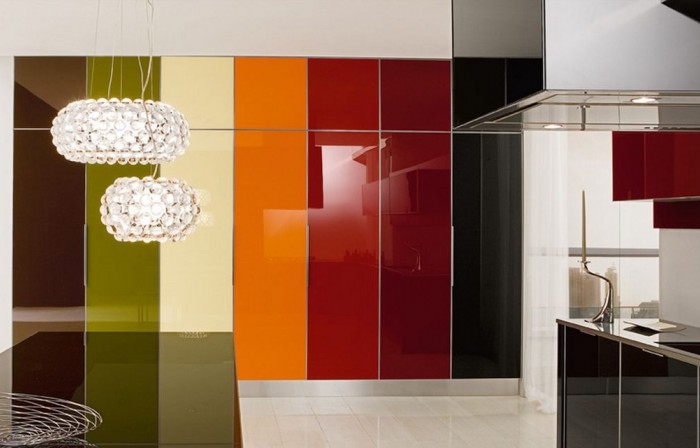
Glass has become increasingly popular among interior designers and architects – in modern interior and architectural projects. Among other members of the glass family, it is back-painted glass that stands out for its aesthetic appeal with its colourful appearance and functional brilliance.
Let’s explore how back-painted glass can transform your kitchen into a stylish and modern space.
1. Enhance Your Kitchen with Back-Painted Glass
A well-designed kitchen can significantly enhance the overall feel of a home. But what if the heart of your home is limited in space? Does that mean you have to compromise on style? Not at all. With the simple addition of back-painted glass, you can transform your kitchen into the stylish culinary space you’ve always envisioned.
2. Upgrade Kitchen Countertops with Back-Painted Glass
While pure white or marble kitchen countertops offer a timeless appeal, they are also a traditional design choice. Plus, maintaining spotless countertops – especially the kitchen island—can be time-consuming. Thankfully, back-painted glass offers a practical alternative. Not only does it provide a sleek, glossy finish, but it is also easy to maintain. You can even let your little ones join your baking sessions without worrying about the mess, as back-painted glass can be cleaned effortlessly with a simple wipe.
3. Use Back-Painted Glass for Stylish Kitchen Backsplashes
If there’s one area in your kitchen that offers endless design possibilities, it’s the backsplash. After all, even routine chores like washing the dishes can feel more enjoyable when you’re greeted by a colourful, visually appealing backdrop and a wide casement window overlooking a garden in full bloom. If you don’t prefer a monochromatic look, there is plenty of room to experiment. Choose glass panels in different colours and sizes to create a striking geometric pattern, or opt for two complementary shades for a cohesive design – the choice is entirely yours.
Moreover, because back-painted glass is low-maintenance and moisture-resistant, you don’t have to worry about spills, stains, or the humidity commonly found in kitchens.
4. Stylish Kitchen Cabinets with Back-Painted Glass
Whether you prefer a sleek, traditional, elegant, or contemporary kitchen, back-painted glass cabinets can complement almost any design style. Available in a wide range of colours, they help you organise your kitchen essentials while enhancing the overall aesthetics of the space. You can choose a shade that complements your backsplash or countertops or opt for contrasting colours to create a bold visual statement. Additionally, the non-porous surface promotes better hygiene and requires minimal effort to keep clean.
5. Add Functional Glass Boards to Your Kitchen
Always juggling your to-do list? With busy schedules becoming the norm, a back-painted glass magnetic board can be a practical addition to your kitchen. Simply mount one near your cooking area to jot down reminders, grocery lists, meal plans, family recipes, or menus for special occasions. Best of all, you can stay organised without disrupting the overall design and aesthetics of your space.
Looking for premium back-painted glass solutions? Choose AIS, one of the top back-painted glass manufacturers in India and an integrated glass company known for high-performance architectural and interior glass solutions. AIS Décor is a premium back-painted glass designed to combine aesthetics with functionality. Manufactured using high-quality lacquer, it is eco-friendly, durable, resistant to humidity and UV rays, and exceptionally easy to maintain. Available in 34 vibrant shades, AIS Décor complements a wide range of interior design styles, from classic and elegant to modern and minimalist.
Whether you’re designing kitchen backsplashes, cabinets, wall panels, or other interior spaces, AIS offers customised back-painted glass solutions to suit your requirements. Get in touch with our experts today to explore the complete AIS Décor range and find the perfect glass solution for your project.
“A green
building should create delight when entered, serenity and health when
occupied, and regret when departed.”
Conceptually speaking, a green building is any building designed
to eliminate or lower the negative impacts, on both the built and natural
environment. Green buildings typically use non-toxic building materials, while
the building designs are in response to the specific climatic needs.
Most importantly, green buildings are designed to have a positive impact on the
natural environment as well. Even in construction and operation, these
buildings focus on improving the quality of life by harnessing natural
elements. Put simply – sustainability is at the heart of greenbuilding concept.
Origins
of Green Building Concept
Besides, sustainability was a significant
part of architectural designs in ancient India. The Vedic philosophy even lists five methods which can maximise the use
of Panch Mahabhuta or the five basic
elements of nature, including – Agni (Fire), Vayu (Air), Avkash (Space), Jal (Water), and Prithvi (Earth)– without
causing any harm to nature.
Our ancient builders tried to create a
harmony between the five elements when planning buildings and construction, a
science they called Vastushastra. The
science emphasised open spaces in the centre of the building to promote
daylighting and cross-ventilation. Builders usually constructed kitchens in the
south-east portion, which received a lower degree of sunrays to avoid high
temperatures.
At the same time, ancient builders did not
compromise on aesthetics or style, as evident from our rich architectural
heritage. Incidentally, the forgotten traditions have witnessed a surprising
revival in the emergence of ‘green’ buildings recently. But awareness around green buildings is relatively
inadequate while the myths remain in abundance.
Below, we look at six myths about green buildings that you should not
believe in.
Myth
#1 Green Buildings Are Inefficient in Comparison to Traditional Buildings
Contrary to popular belief, ‘green’
buildings are as efficient as traditional buildings. They are made with far
superior technologies and modern practices to ensure sustainable, reliable, and
efficient design. Occupants also enjoy comparatively better energy-efficiency
and healthier living environment in green buildings.
Moreover, the building materials and
techniques employed in construction focus on optimised resource allocation and
reduced construction waste. As a result, green
buildings cut down operation costs significantly.
Myth
#2 Green Buildings are Expensive
Perhaps the most common myth about green buildings, especially amongst the
common man. But in truth, sustainability is achievable and affordable. If you
consider the overall life-cycle costs, a green
building does not cost more than a traditional building.
In fact, green buildings typically have a payback period of one or two
years. Your initial investments will let you enjoy reduced energy costs, better
indoor air quality, enhanced durability, and healthier indoors. Best of all, green buildings usually have a
comparatively higher resale value.
Myth
#3 Green Buildings Lack Visual Appeal
The idea of ‘green’ architecture is merely
limited to building practices, principles, and methodologies. There is no
specific ‘look’ or ‘feel’ to a green
building. Nonetheless, most people assume green buildings look wacky and lack visual appeal.
On the contrary, occupants can choose any
style or aesthetic they wish to incorporate in the building design. Like any
conventional building, green buildings can be absolute head-turners, from both the outside and inside.
Myth
#4 “Green” Materials are Not Easily Accessible
Unlike popular opinion, green building materials are available
in abundance. Easily accessible, these materials are also affordable, costing
no more than the typical building materials. Green products mostly comprise
recycled materials and Agri-based products, which can cut down construction
costs considerably.
However, such misconceptions continue to
arise because of misinformation about green
buildings. But with more awareness, the development and demand for ‘green’
raw materials will only increase. Markets for recycled content and sustainable
materials will increase steadily.
Myth
#5 Green Buildings are Only Trends, Not the Future
Many consider green buildings to be mere trends which arose in response to
increasing environmental concerns, primarily because, green buildings became a part of the mainstream quite recently.
However, the practice of building ‘green’ has been around for centuries, as exemplified
by the introduction to this article.
Presently, as builders face acute resource
and waste management crisis, the necessity for greenbuildings has only
grown. Especially as the need for sustainability has increased, green buildings are gaining fast
traction in India. Most importantly, as green materials become readily
available in local markets, green
buildings are sure to take precedence over conventional ones.
To
Sum Up
Today, green buildings are becoming popular, sustainable alternatives to conventional ones and residential spaces are no exception. If you are looking for green solutions for your home or office remodels, AIS Glass should be your top pick.
We offer a wide variety of glazing
solutions for energy-efficiency and premier aesthetics. Get our unique range of high-performance glass solutions, which are equally secure, stylish, and
durable.
From shining skyscrapers to contemporary co-ops, and from luxurious villas to swanky offices, glass has become a staple element in modern architecture and design. Not only does it lend a sleek and sophisticated appeal to any space, but it is also engineered to deliver exceptional functionality.
Meeting the diverse and evolving needs of today’s consumers, glass solutions have become a top choice across projects. Whether it is safety and durability, acoustic insulation, or energy efficiency, glass offers versatile performance benefits – all while maintaining an elegance that is truly timeless.
At the heart of all modern glass innovations lies float glass – the foundation upon which today’s advanced glass solutions are built. As one of the topglass manufacturers in India, AIS Glass continues to pioneer high-quality float glass and innovative glass solutions for modern architectural needs.
What is Float Glass?
Float glass is a smooth, distortion-free glass that serves as the base material for manufacturing other glass products such as laminated glass, toughened glass, and more. With its natural greenish hue and translucent appearance, it can transmit approximately 87% of incident light. Unlike traditional sheet glass, float glass provides exceptional optical clarity and a crystal-clear view.
The term “float glass” originates from its manufacturing process. In this process, molten glass is poured onto a bath of molten tin, where it floats freely and spreads evenly, resulting in a uniform thickness and a perfectly flat surface.
History of Float Glass
Float glass is the original form of glass – the progenitor of an endless generation of glass solutions. Before learning how it is made, it is important to understand its history. With its invention dating back at least 3,600 years, glass has been a timeless material that has served many generations. However, it was not until the late 19th century that float glass came into existence.
In earlier centuries, glass was made using the blowing and disc methods. Since glass was primarily used for creating windows in those days, flat glass was produced from large discs of crown glass or by blowing glass bottles. The discs were usually cut into pieces, flattened, and then shaped to create windowpanes from the larger surface.
Between 1953 and 1957, Sir Alastair Pilkington introduced the idea of manufacturing float glass to the world. Although Henry Bessemer, a UK engineer, patented early advances in automated glass manufacturing, it was Sir Pilkington who perfected the production of float glass. Bessemer’s original process used a continuous ribbon of flat glass formed between rollers. In contrast, the Pilkington method developed a ribbon of float glass using molten tin, over which molten glass would flow freely under the influence of gravity.
Bessemer’s version was expensive; however, with the efficiency of the Pilkington method, Sir Alastair was able to achieve profitable full-scale sales of float glass by 1960.
Float Glass Manufacturing Process
As the most widely used form of glass in today’s world, it is essential to understand the float glass manufacturingprocess. It begins with a mixture of raw materials such as sand, limestone, dolomite, soda ash, and salt cake. These materials are melted in a furnace until they fuse together to form molten glass.
In float glass production, molten glass from the furnace is poured into a chamber containing a bed of molten tin. The tin bath is approximately 4 to 8 metres wide and up to 60 metres long. During the manufacturing process, the atmosphere inside the chamber is carefully controlled to ensure proper production of float glass. If you are wondering how float glass is made, tin is used because it has a high density and remains stable and non-reactive in its liquid state at the temperatures required for float glass production, allowing the molten glass to spread evenly and form a smooth, uniform surface.
The glass floating on the tin gradually spreads out and takes a uniform shape, typically ranging from 90 to 140 inches in width, with thickness determined during the manufacturing process.
Once the glass achieves its desired shape, it is polished by fire. It is important to note that only the upper surface – known as the air side or score side – is fire-polished, while the lower surface (the tin side) is left to cool.
For the cooling process, the glass moves from the chamber to a temperature-controlled oven called a lehr. In this kiln, the glass is cooled slowly at a controlled rate in a process known as annealing. Annealing relieves internal stresses, resulting in a strong, uniform, and smooth sheet of float glass. Establishing the correct cooling rate is crucial, as improper temperature control can lead to air bubbles and internal stresses.
Once removed from the lehr, the glass emerges as a continuous ribbon at room temperature. It is flat, has a fire-finished top surface, and features smooth, parallel faces. The glass is then finished using automatic cutters that trim the edges and cut it to the desired length. Float glass can range in thickness from 0.4 mm to 25 mm, depending on specific requirements.
Advantages of Installing Float Glass
Now that we have explored the manufacturing process of float glass, let’s look at some of the key advantages of float glass.
1. Durability
As mentioned earlier, float glass is annealed to relieve internal stress. Although it has a similar thickness to plate glass, it is denser and more uniform, making it a superior choice for both interior and exterior applications.
2. Environment-Friendly
Energy efficiency refers to the ability of glass to regulate indoor temperatures by keeping interiors cooler during summers and warmer during winters. Float glass can also be processed into low-E glass by applying a coating of metal oxides to improve thermal performance.
At AIS Glass, we offer high-performance, energy-efficient glass solutions designed to reduce energy consumption in homes and offices while supporting environmental conservation. AIS Clear Float Glass is 100% recyclable and non-toxic, helping minimise environmental impact. It is also copper- and lead-free, further supporting sustainability efforts.
3. Multitude of Options
As the base material for many glass products, float glass can be further processed into a wide variety of solutions. It is available in different thicknesses, shades, and sizes to meet diverse architectural and consumer requirements.
Various processing techniques – including insulating, glazing, laminating, thermal toughening, silk-screen printing, sandblasting, bending, and acid-etching – can be applied to AIS Clear Float Glass to achieve the desired aesthetic and functional outcomes.
Applications and Uses of Float Glass
From domestic housing to commercial spaces, float glass is a versatile material that serves numerous purposes. Now that we understand the many benefits of installing float glass, let’s explore some of the creative ways it can be used in residential and commercial environments.
1. Displays
Owing to its crystal-clear transparency, float glass is an ideal choice for display applications. It is commonly used for showroom display cases, retail shop windows, and countertops to protect valuable items such as watches and jewellery, while still showcasing them effectively. AIS Clear Float Glass offers brilliant lustre and a crystal-clear finish, enhancing the aesthetic appeal of spaces with its luminosity.
2. Facades
Nothing conveys affluence and sophistication quite like towering, glistening glass skyscrapers. Float glass, when processed with glazing, becomes both aesthetically appealing and highly functional. Glazing enhances the strength and efficiency of the glass, while float glass itself provides superior clarity and visual charm.
3. Wall Panels
Whether used for creating partitions at home or personal cabins in offices, wall panels are an excellent way to enhance décor and elevate visual appeal. Tinted float glass panels can add a vibrant splash of colour and bring new life to any room. At AIS Glass, we manufacture international-quality tinted float glass with heat-reflective properties using advanced CVD technology. We also offer customisable options, including lacquered and frosted finishes, to help create stylish and dynamic spaces.
And there you have it – a comprehensive overview of float glass. One of the most versatile types of glass available, float glass is an excellent choice for decorating homes and offices. As India’s leading integrated glass manufacturer, AIS Glass strives to go beyond the ordinary and create luxurious spaces. We provide expert guidance from the initial selection process through final installation to help our clients achieve their ideal, picture-perfect spaces. Get your expert consultation today.
The art of manufacturing glass is an old one. It is a process that has been refined for thousands of years. With technology becoming increasingly advanced, glass manufacturers have begun producing float glass that is much sturdier, durable, and compatible with glass processing procedures such as lamination, tempering, acid etching, sandblasting, etc. Skyscrapers shining with glass windows can be seen everywhere today. Homes with large French windows are in-trend. Glass partitions and shower walls are common in almost all homes today. Glass is used in everything from cars to mobile phones.
The History of How Glass is Made
The art of making glass can be traced back to 2600 BC in Mesopotamia. The Egyptians practised making glass around 2500 BC. Artificial glass first appeared in the Egyptian or Mesopotamian civilisation, whereas they used tools made out of volcanic glass obsidian in the Stone Age. Ancient China, however, discovered how to make glass a little later.
Glass beads are known to be one of the earliest products made out of glass. Their creation is thought to be primarily accidental. In the later Bronze Age, glassmaking declined temporarily. Glass was a luxury material back then.
Archaeological excavations suggest the use of glass in England during the Middle Ages. In the 10th century, stained glass found a place in cathedrals and the windows of palaces. After the Renaissance, architectural methods changed substantially, leading to a decrease in stained glass as a building material. Domestic use of glass increased following the Industrial Revolution.
Vessels, glass windows, and glass beads gained popularity in Europe during this period. During the 19th century, many people preferred glass windows and doors as a decorative option. In the late 19th century, some designers brought back stained glass for decorative windows. It was during this period that Mr. Tiffany discovered several methods to make domed glass handicrafts.People discovered the true versatility of using glass as a building material only in the 20th century. With glassmaking technology receiving an industrial boom, you could produce several different types of glass. Toughened glass, laminated glass, bulletproof glass, and smart glass all boosted the use of glass in buildings. Today, several skyscrapers, small and big homes, and offices use glass in almost all aspects of construction and design.
What are the Different Types of Glass?
Since glass has a wide variety of applications, it is available in different types. Each of these varies in strength and design. In homes and offices, glass is used in everything from large windows to partitions and shower walls. New technology has enabled manufacturers to overcome the typical weaknesses of glass – brittleness, constant transparency, and a complete lack of sound control.
Types of Glass based on Raw Materials
Based on the raw materials used, glass can be classified into the following types:
1. Fused Quartz or Fused Silica Glass
This type of glass is highly resistant to weathering. Its molecules are arranged randomly. This type of glass is used in tube lights and furnaces.
2. Soda-Lime Silica Glass
This type of glass is commonly used in windows and is one of the most prevalent types of glass made anywhere in the world.
3. Sodium Borosilicate Glass
In this type of glass, boron oxide is added. It makes the glass less prone to cracking. It is primarily used to make lab equipment and kitchenware.
4. Lead Oxide Glass
Lead oxide glass has high reflective properties, making it a favourite of jewellery makers. Its crystals reflect light brilliantly.
5. Clear Glass
Also known as float glass, clear glass offers extreme clarity and transparency for unobstructed views, making it the go-to choice for panoramic windows.
6. Tinted Glass
Commonly known as annealed glass, tinted glass is manufactured with a coating or a film to impart its colour and reduce light transmission.
Types Of Value-Added Glass:
Apart from these, ordinary glass has been updated to accommodate various design choices to add value based on your glass needs. Some of the most unique and beneficial value-added glasses include the following:
1. Smart Glass
Smart glass, essentially a privacy solution, is a type of glass that can change its opacity at the click of a button. This type of glass is generally made using ions sandwiched between different glass layers. On the application of electric current, these ions shift positions to change the opacity of glass. Smart glass is widely used in both residential and commercial buildings. Smart glass, like AIS Swytchglass, is also considered to be ecologically efficient due to its ability to prevent/allow lighting and heat in a room.
2. Acoustic Glass
As the name suggests, acoustic glass is used to control sound inside a room, thus taking care of appropriate decibel needs or sound-control needs. It is the trendiest method to soundproof a living space or a commercial office. Acoustic glass is widely used in homes, recording studios, and private offices. This type of glass is ideal for people who do not wish for bulky soundproofing.
3. Frosted Glass
Frosted glass is a privacy-solution value-added glass. It is not entirely transparent, which means it gives the benefit of privacy and partial visibility. It can be used in windows and partitions. Shower screens, doors, cabinet shelves, and false ceilings also employ frosted glass. Frosted glass is used primarily by people desiring privacy, but it can also be a design choice. AIS Krystal Frosted Glass is the perfect way to ensure privacy while adding aesthetic appeal to your living space.
4. Energy Efficient Glass
Energy-efficient glass is used in eco-friendly buildings to maintain a balance between aesthetics and eco-consciousness. It focuses on saving energy as it works by preventing or allowing solar radiation inside a room. AIS Ecosense is an energy-efficient glass curated especially for Indian customers. AIS Ecosense enables a place to stay bright and fresh by limiting the solar energy entering a room. It comes in different varieties and can be used in both exterior and interior architecture.
Apart from these, several other types of glass are frequently used in various industries. These include automotive glass, decorative glass, back-painted glass, and laminated glass. Regardless of the sort, glass is a true blessing to humankind.
How is Glass Made? A Complete Glass Manufacturing Process
At Asahi India Glass Ltd., the highest quality glass manufacturing techniques are used to produce the perfect sheets of float glass. The method used is the PPG process that Sir Alistair Pilkington discovered in 1952 and is still the most trusted float glass manufacturing process. Naturally, it has many steps involved in it, and at each stage, great care is taken to be precise and thorough with the production of glass.
From selecting the right type and ratios of ingredients for glass to assimilating them all scientifically to produce glass as we know it, here we answer the question of how glass is made step by step below:
1. Melting and Refining
To make clear glass, the right set of raw materials is required. This consists of silica sand (SiO2), sodium oxide (Na2O) from soda ash, calcium oxide (CaO) from limestone/dolomite, dolomite (MgO), and feldspar (Al2O3). These ingredients are mixed in the right proportion, and the entire batch is fed into a furnace heated to 1500 degrees Celsius.
To impart colour to the glass, certain metal oxides are also mixed in the batch.
2. Float Bath
The molten material from the furnace flows into the float bath, consisting of a mirror-like surface made from molten tin. This material enters the bath at 1500 degrees Celsius and leaves the bath at around 650 degrees Celsius. Its shape at the exit is like a solid ribbon.
3. Coating for Reflective Glass
After that, if one is producing reflective glass surfaces that help keep indoors cooler, then coating procedures are followed in which either a hard coat or a soft coat is applied to the surface of the glass ribbon at high temperatures.
4. Annealing
Next, a process called annealing is done to remove the internal stresses built up in the glass. This process allows the glass ribbon to pass through a layer that eliminates any pressure on the glass surface and gradually cools it to give it its stress-free, stable form. This makes it easier to cut the glass and shape it accordingly.
5. Inspecting
More than 100 million inspections can be made through acute and advanced inspection technology throughout the glass manufacturing procedure to identify air bubbles, stresses, or grains of sand that refuse to melt. This is essential for quality-proofing the final form of glass.
6. Cutting to Order
Finally, diamond steel is used to trim and cut the glass ribbons into square shapes.
Uses Of Glass in Construction and Architecture
Over the years, glass has become a defining element of modern architecture like no other material. Glass materials distinguish the look and feel of facades and have a crucial involvement in the energy efficiency of buildings.
The usage of glass in the commercial and residential sectors is increasing by leaps and bounds. This versatile material is now considered a symbol of affluence and luxury and has gradually become an architect’s favourite.
Advantages Of Glass in Architecture
Glass can make infrastructure look more stunning and sophisticated. The use of glass in construction enhances the aesthetic appeal of the building. Its use achieves the architectural view for external decoration. When used in interiors, glass saves space too.
Glass cladding in buildings carries out the functional requirements of heat retention, lighting, and energy-saving. It also adds a sense of ingenuousness and harmony to any surroundings.
How are AIS’ Glass Solutions Different from the Rest?
We offer various solutions depending on your project requirements, and we provide customised solutions. to cater to your every need in a glass. We have products that are five times stronger than ordinary glass in the market. allowing architects and contractors to build the best architectural designs.
Why Should You Choose AIS Glass?
Design and durability:
By opting for AIS glass solutions, you are guaranteed to get designs that are durable, aesthetically pleasing, and flexible in nature.
Safety and Security:
Our glass solutions offer better safety and security, making them the best option for use in high-security places.
Noise reduction:
Modern homeowners can also use our solutions to control sound levels and act as an effective insulator. If your office or home is situated near a busy market, railway station, or airport, these solutions can be vital in keeping the sound out.
AIS is India’s leading integrated glass manufacturing company, serving the automotive, architectural, and consumer glass industries with 15 manufacturing plants and 4 sub-assembly units. Our premium-quality glass solutions are crafted with precision and customised to meet the unique requirements of our customers.
We use cookies to help you get the best possible experience of our site. By clicking 'Accept' you agree to our use of cookies.