
Tempered glass has revolutionised the way people think about glass. In contrast to the general perspective that glass is fragile and can be broken at the slightest bit of pressure, tempered glass helped to change this outlook. Today, thanks to their strength and durability, tempered glass is widely used across several industries. This includes construction projects, vehicle windows, and shower doors, to name a few (we’ll talk about its applications in detail in the latter part of this article).
Before jumping into the specifics, such as the types of tempered glass, their properties and their applications, it is important to know how they are made. First, using a special furnace, annealed glass is heated evenly and uniformly to a high temperature of 620 °C. To better understand the base material used in this process, learn more about what is annealed glass before exploring how tempered glass is manufactured. As soon as it reaches the desired level, it is immediately removed from the furnace and rapidly cooled using high-pressure air jets. This process induces compression in the glass while the core remains in tension.
Now that we know about the basics of how tempered glass is made, let us move on to the types of tempered glass:
Types of tempered glass
There are primarily five kinds of tempered glass, classified based on their appearance, functionality and application:
- Clear Tempered Glass – Standard transparent glass known for strength and durability.
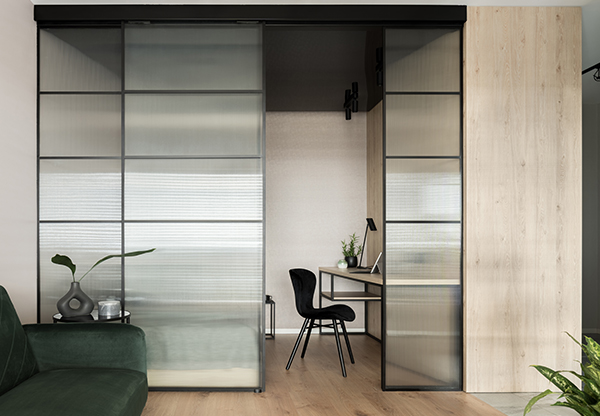
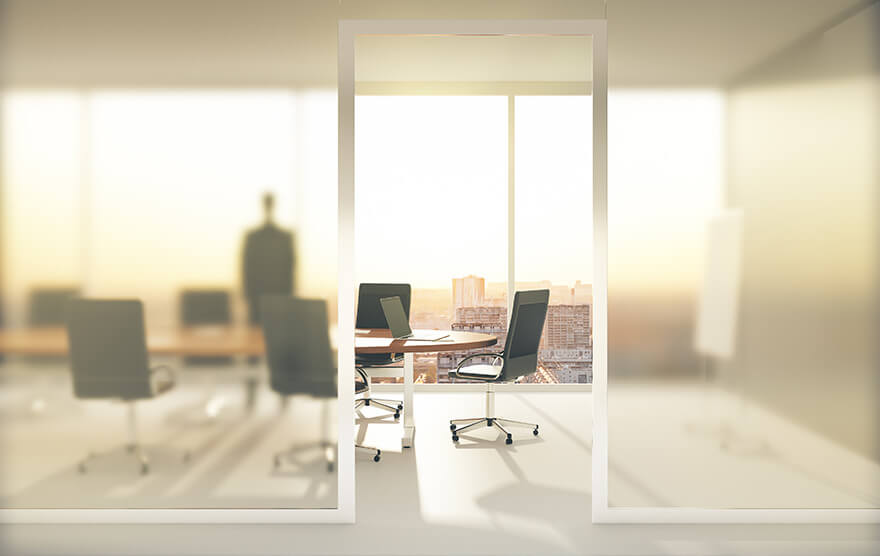
- Frosted Tempered Glass – Offers privacy by diffusing light, commonly used in bathrooms and partitions.
- Tinted Tempered Glass – Reduces glare and heat while enhancing aesthetics.
- Laminated Tempered Glass – Combines tempered glass with an interlayer for added safety and sound insulation.
- Reflective Tempered Glass – Helps reduce solar heat and glare, often used in commercial buildings and facades.
Every tempered glass types mentioned above carries the virtues of strength and durability. However, they differ from one another, and the difference in their visual effect is a major one. For instance, the frosted type of tempered glass scatters the light that passes through it, giving it a translucent effect. In contrast, the reflective type of tempered glass helps in combating solar glare.
Since we have covered the tempered glass types, let’s now talk about their properties.
Properties of Tempered Glass
Before glass is classified as tempered glass, it must meet several requirements. This includes achieving a minimum compressive stress of 69 megapascals (10,000 psi). You might be wondering, where does tempered glass get its strength from? Well, it derives its strength from surface compressive stress.
When tempered glass breaks, it shatters into smaller, circular pieces instead of sharp shards. This makes it ideal for high-pressure applications. Plus, tempered glass breaks into small, blunt fragments, reducing the risk of injury. To summarise these points concisely, here are the top properties of tempered glass:
- Impact Resistance – Compared to float glass, tempered glass offers higher impact resistance, enabling it to withstand high-stress situations and temperatures.
- Strength – Did you know that tempered glass can be 3 to 7 times stronger than annealed glass? This makes it ideal for applications that involve frequent heavy loads.
- Versatility – Tempered glass can be moulded and shaped into different forms and styles. Hence, it can be used for a wide variety of purposes, ranging from cars to homes and refrigerators.
After covering the types and properties of tempered glass, let us now move on to the applications of tempered glass.
Applications of Tempered Glass
Wherever there is a requirement for safety, resistance, and strength, the first choice that comes to mind is tempered glass. Here are some of the top applications of tempered glass:
1. Passenger Vehicles
Passenger vehicles come equipped with tempered glass. Why? Well, cars are always parked outside and are exposed to regular heating and cooling. Hence, they need optimal thermal resistance, which tempered glass helps deliver seamlessly. Another reason why tempered glass is used in passenger vehicles is that in case of an accident, tempered glass won’t break into sharp shards. This means they won’t pose any threat to the passengers sitting inside!
2. Residential Construction
When it comes to residential construction, tempered glass has a wide range of applications. Thanks to their strength, durability, and thermal resistance, they can be used as glass installed near fireplaces, glass shelves, cabinets, glass tabletops, and frameless shower doors.
3. Commercial Buildings
There are several building codes that state tempered glass must be used under several situations. This includes using them for skylights, stairways, doorways, and elevators. They can also be used for frameless glass doors and facades. In general, we can say that in commercial buildings, tempered glass is used where glass breakage could pose safety risks.
4. Food Service
From refrigerator glass panels to microwaves’ doors, most kitchen appliances today have some form of tempered glass in them. Why? Well, they can hold a lot of pressure and resist high temperatures, hence ensuring there are no glass-related accidents.
Conclusion
From making vehicles safer to enhancing the aesthetics of our homes, tempered glass has become a benchmark of quality. Owing to its high resistance to temperature and pressure, it proves useful across a wide range of applications. If you are looking for the best tempered glass in India, choosing the best tempered glass manufacturer is essential to ensure superior quality, durability and safety standards. Buy premium tempered glass solutions from AIS and experience advanced quality, strength and reliability for every application.