
Heating, ventilation and air-conditioning systems play a major role in keeping commercial buildings comfortable, well ventilated and suitable for everyday use. However, HVAC demand depends not only on the installed equipment but also on the building envelope.
Window and façade glass affects how much solar heat enters a building, how quickly heat moves through the envelope, and how much daylight reaches the interiors. Choosing suitable glazing can therefore help manage cooling and heating requirements while supporting indoor comfort and energy efficiency.
What Is HVAC?
If you are wondering what is heating ventilation and air conditioning, it refers to the interconnected systems designed to regulate temperature, circulate fresh air, manage humidity and maintain indoor air quality. These systems play an important role in creating comfortable indoor environments across offices, hotels, malls and other large commercial spaces.
HVAC stands for Heating, Ventilation and Air Conditioning
Heating systems provide warmth when indoor temperatures fall below the required level. Ventilation supplies fresh air and removes stale indoor air, while air-conditioning cools spaces and manages excess heat and moisture.
HVAC systems may also use filters, ducts, fans and controls to distribute conditioned air efficiently. In offices, malls, hotels and other large buildings, efficient HVAC operation can significantly influence overall energy consumption and occupant comfort.
What Is HVAC Load?
HVAC load is the heating or cooling required to maintain desired indoor conditions. It varies with outdoor climate, building orientation, occupancy levels, lighting and equipment, insulation quality and façade design.
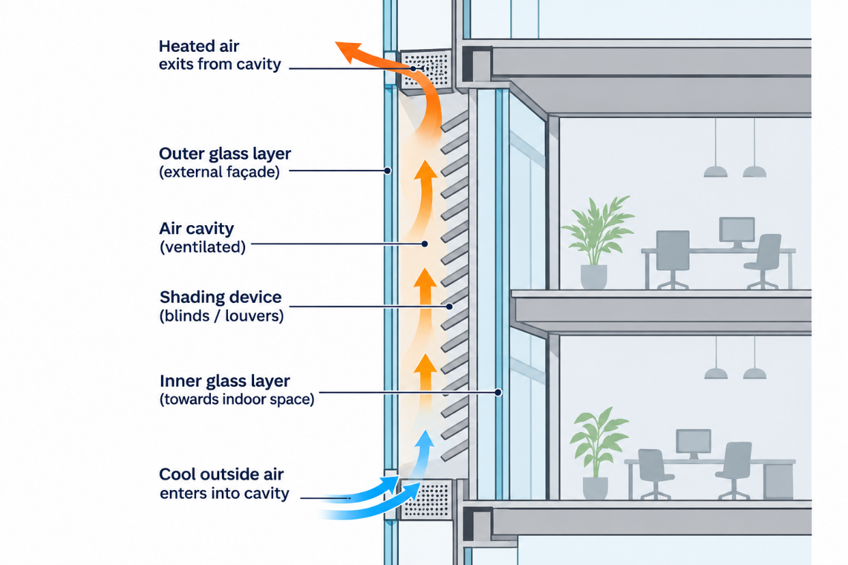
Glazing also matters because large glass areas can affect solar heat gain and heat transfer. Window-to-wall ratio, façade direction and the performance of the selected glass can therefore affect HVAC requirements.
How Does Glass Selection Affect HVAC Load?
The right type of glass can help control how much external heat enters through windows and glazed façades. Glass with suitable solar-control and thermal-insulation properties can reduce unwanted heat gain in warmer conditions and limit heat transfer through the building envelope.
Visible light transmission is another important consideration. The right glazing can allow sufficient natural daylight into the building while limiting unwanted solar heat gain. This can support comfortable interiors and reduce the need for artificial lighting during the day.
Also consider the window-to-wall ratio, building orientation, façade design, and solar exposure.
When evaluating the impact of glass on hvac systems, the right type of glass can help control how much external heat enters through windows and glazed façades. Glass with suitable solar-control and thermal-insulation properties can reduce unwanted heat gain in warmer conditions and limit heat transfer through the building envelope.
To understand how glass affects hvac performance, visible light transmission is another important consideration. The right glazing can allow sufficient natural daylight into the building while limiting unwanted solar heat gain. This can support comfortable interiors and reduce the need for artificial lighting during the day.
Architects and engineers often analyze how does glass affect hvac loads when planning a structure. It is also essential to consider the window-to-wall ratio, building orientation, façade design, and solar exposure.
Glass Properties That Influence HVAC Performance
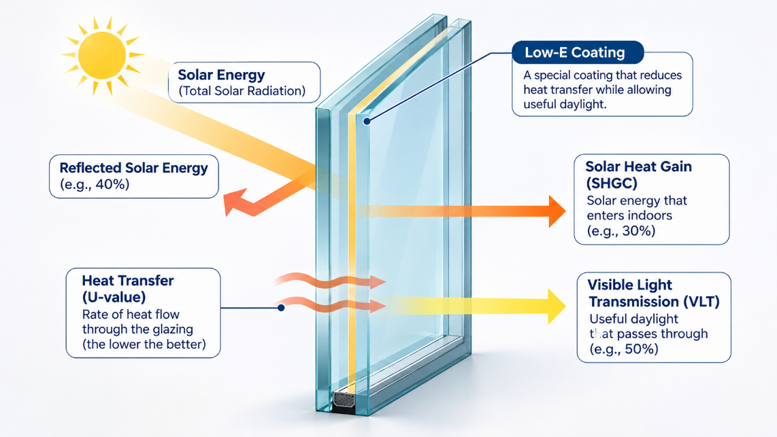
- U-value: Indicates the rate of heat transfer through the glazing. Lower values generally mean better thermal insulation.
- Solar Heat Gain Coefficient (SHGC): Shows how much solar heat passes through the glass. A lower SHGC can help reduce solar heat gain in cooling-dominated buildings.
- Visible Light Transmission (VLT): Indicates how much visible light passes through the glazing and affects daylight availability. A lower U-value generally means better thermal insulation.
- Low-E coatings: Low-emissivity coatings help control heat transfer while allowing useful levels of visible light.
An HVAC solution may need to control solar heat while still allowing useful daylight. Therefore, evaluate these parameters together. Together, they improve a building’s heat absorption and cooling efficiency, ensuring temperature and weather conditions don’t affect the interior environment.
Also Read: What Is SHGC in Glass – Why Does It Matter for Building Design
Types of Glass for Commercial Buildings
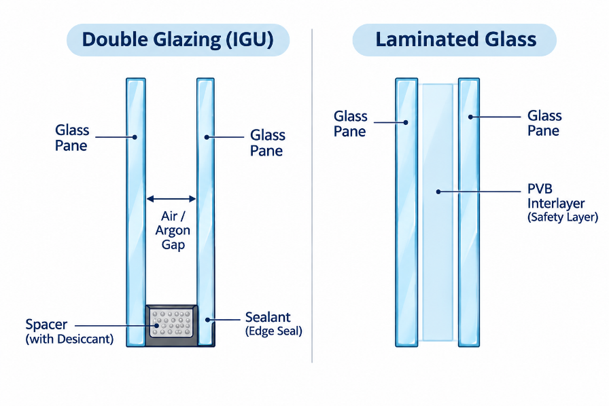
Low-E glass, like AIS Ecosense, can improve thermal performance by reducing heat transfer through glazing. They use two or more panes separated by a sealed air space. This construction reduces heat transfer and improves thermal performance.
Solar-control glass such as AIS Sunshield offers advanced coating technology that restricts solar heat ingress without compromising on aesthetics.
Heat reflective glass solutions such as AIS Opal help reflect the sun’s radiant heat away from your building while still letting in natural light for brighter interiors.
The most suitable solution depends on climate, orientation, façade design, window area and project-specific performance requirements.
How to Choose the Right Glass to Reduce HVAC Load
Consider the building’s climate and location, orientation, façade design, window-to-wall ratio, required thermal performance, solar exposure, daylight needs and overall envelope performance. A south- or west-facing façade may need different solar control from a shaded elevation.
Therefore, coordinate glass selection with the complete building design rather than treating it as a standalone decision.
Conclusion
Glass selection can influence solar heat gain, heat loss, daylight, indoor comfort and the heating or cooling a commercial building requires. The right solution should match the building’s climate, orientation, façade design and energy-performance goals.
As one of India’s leading glass suppliers and glass manufacturers, AIS offers energy-efficient and high-performance glazing solutions for commercial façades and windows, helping project teams select glass that supports design intent and building performance.