Categories

Essential Glass Handling Safety Tips for Manufacturers

Handling glass can be a dangerous task, especially for manufacturers who handle and deliver large quantities of glass. Whether you’re cutting, drilling, or moving glass, certain safety precautions must be followed. In this article, we’ll provide you with 16 tips for glass handling safety for manufacturers.

1. Wear Appropriate Personal Protective Equipment (PPE):

Wearing the right PPE is crucial when working with glass. Safety glasses, gloves and steel-toed boots are some of the essential protective equipment you should always have on hand.

2. Use Proper Lifting Techniques:

When lifting glass, it is essential to use proper lifting techniques to avoid back injuries. Lift with your legs and keep your back straight.

3. Keep the Work Area Clean and Organised:

A clean and organised work area helps prevent accidents and minimises the risk of damage to the glass.

4. Use the Right Tools:

Using the right tools for the job can make all the difference. Ensure that you are using the appropriate tools for the specific task at hand.

5. Secure the Glass Properly:

Before beginning any work, ensure that the glass is securely fastened and will not shift or move during the process.

6. Use Caution When Cutting or Drilling:

When cutting or drilling glass, proceed with caution and take your time to avoid cracking or shattering the surface. The glass manufacturing process can be challenging, which is why it is essential to remain extra cautious during cutting and drilling.

7. Have an Emergency Plan in Place:

It is important to have a proper plan in case of emergencies. Ensure all employees are aware of the emergency plan and know what to do in the event of an accident.

8. Communicate Effectively:

Effective communication is essential when working with glass. Ensure all employees are aligned and understand the task at hand.

9. Train Employees on Proper Glass Handling Techniques:

Proper training is crucial to ensure employees know how to handle glass safely and avoid injuries.

10. Use Caution When Moving Glass:

Moving large glass sheets can be dangerous. Ensure you have a clear path and exercise caution while transporting the glass.

11. Use Proper Storage Techniques:

Proper storage techniques are essential to prevent damage. Store glass in a dry, secure location to minimise the risk of breakage.

12. Inspect Equipment Regularly:

Regular equipment inspections can help prevent accidents and ensure all tools are in good working condition. Inspecting equipment regularly during the glass manufacturing process is essential to maintain workplace safety.

13. Have a First Aid Kit on Hand:

In case of an injury, it is essential to have a first aid kit readily available. Ensure all employees know where the first aid kit is located.

14. Use Caution When Working at Heights:

Working at heights can be dangerous. Exercise caution and ensure that all safety equipment is properly installed and used.

15. Take Breaks as Needed:

Glass handling can be physically demanding. Encourage employees to take breaks when needed to avoid fatigue and reduce the risk of injury.

16. Follow All Safety Guidelines and Regulations:

Finally, it is essential to follow all safety guidelines and regulations when working with glass. This includes adhering to OSHA regulations and any company-specific safety protocols.

Summary:

Handling glass can be dangerous, but following these tips can help prevent accidents and ensure employee safety. By providing proper training, using the right tools and equipment, and adhering to safety guidelines and regulations, manufacturers can help prevent injuries and minimise the risk of glass damage.

Many industry leaders, such as AIS, one of the trusted glass suppliers in India, highlight these practices as part of their commitment to quality and safety, emphasising the importance of responsible glass handling throughout the manufacturing process.

Categories

Benefits of One-way Glass

One-way glass, also known as a two-way mirror or half-silvered mirror, appears to be a mirror from one side but allows light to pass through from the other. One-way glass is created by coating a glass surface with a thin layer of metal, usually silver, which reflects light on one side while allowing it to pass through on the other. This technology has many applications, from privacy and security to architecture and entertainment. Let’s talk about its benefits:

Privacy:

One of the most popular applications for one-way glass is privacy. It’s often used in homes, businesses, and government buildings to maintain privacy while allowing light to enter a space from the outside. For example, one-way glass can be used in interior offices or conference rooms to allow natural light while maintaining confidentiality.

Moreover, they can also be used in cars or buses to create a private space for passengers while still allowing the driver to see through the windshield.

Security:

It’s popularly employed in banks, airports, police stations, prisons, government buildings, and other high-security areas to create a barrier between the public and sensitive areas while still allowing security personnel to see what’s going on.

For example, one-way glass is often used in jewelry stores and other high-end retail establishments to allow security personnel to monitor transactions from a discreet location.

Energy Efficiency:

Allowing natural light in while blocking outside air helps keep buildings cooler in the summer and warmer in the winter. This reduces the need for artificial lighting and heating or cooling systems, resulting in lower utility bills.

It’s also beneficial for green buildings. They help minimize solar gain by blocking direct sunlight from entering a space without sacrificing natural light. This helps create a more comfortable environment with less reliance on electricity or other forms of energy.

Architectural Design:

They can also be used to add a creative and unique touch to any room. Half-silvered mirrors can be used as part of an interesting architectural feature, such as a partition wall or window, to create visual interest while still allowing light to pass through.

Moreover, they are often employed by architects and interior designers to maximize the use of space in homes and businesses. Using one-way glass allows rooms to appear larger than they actually are since it allows for more natural light without reducing privacy. Additionally, one-way glass helps reduce echoes since it absorbs sound.

Medical Applications:

One-way glass has also been used in medical facilities and laboratories for observation purposes. For example, scientists use it to observe experiments without disturbing the environment or affecting results.

It’s also beneficial for hospitals and other healthcare centers since it allows doctors or nurses to monitor patients while maintaining their privacy. Additionally, they are often used on ambulances and other emergency vehicles, allowing paramedics to assess a patient while still being able to see outside.

Conclusion:

In conclusion, one-way glass can be a great asset in many different types of applications due to its privacy, security, and energy efficiency benefits. From homes and businesses to entertainment and medical facilities, one-way glass provides an innovative solution that can help improve efficiency and comfort. With its versatility, one-way glass can be used in countless ways to make a space more secure and energy efficient while still allowing natural light in.

It’s no wonder that one-way glass is becoming increasingly popular around the world. Now more than ever, it’s an essential feature of any modern space.

Categories

Benefits of Fire Resistant Glass

Balancing critical safety upgrades compromising on design aesthetics or structural stability remains pivotal in effectively engineering new-age fire-resilient edifices. Fire resistant glass constitutes a multifunctional material that reconciles durability, strength, and elegance across facets, uplifting constructed atmospherics.  

Here, we will learn the benefits of fire resistant glass, spanning from active flame retardancy and smoke permeability minimisation capabilities alongside passive illumination translucency retention offered by the fire-resistant glass. 

1. Enhanced Fire Resistance 

AIS Pyrobel can be produced to meet all fire resistance classes, offering protection ranging from 20 to 120 minutes for integrity (EW) and from 15 to 60 minutes for integrity and insulation (EI). This range allows designers to choose the appropriate fire resistance level for different building parts.  

2. Tested and Approved for Multiple Frameworks 

This glass has been thoroughly tested and approved for timber, steel, and aluminium framing systems. It’s also been extensively trialled in doors and partitions, ensuring its versatility in various structural contexts. 

3. Compliance with Safety Standards 

AIS Pyrobel adheres to EN 12600, a European standard for glass in buildings, indicating its ability to withstand impacts without compromising on safety. This classification ensures that it meets rigorous safety requirements. 

4. Thermal and Solar Insulation Compatibility 

Fire resistance glass can be used with AIS thermal insulation and solar protection coatings, providing a multifunctional approach to building safety and energy efficiency. 

5. Bi-Directional Fire Resistance 

The glass offers bi-directional fire resistance, ensuring protection from both sides, which is critical in preventing the spread of fire and smoke. 

6. Durability Against Elements

AIS Pyrobel is UV, water, and impact-resistant, increasing its longevity and reducing maintenance needs. It’s also available in large formats (up to 4.5 meters high), allowing for grand design without compromising safety. 

7. Wide Temperature Range Tolerance 

This glass is suitable for use in a range of temperatures, from -10°C to +50°C, making it versatile for different climatic conditions. 

8. Quality Assurance 

Despite the controlled quality and performance of AIS Pyrobel, the production process allows for minor imperfections, such as inclusions or bubbles, which do not affect the overall performance. These are not considered defects if they do not affect more than 5% of the glass, ensuring clarity and integrity. 

Conclusion 

The AIS Pyrobel range offers uncompromising quality and compliance with safety regulations, ensuring that buildings are safer in the event of a fire and maintain their aesthetic and functional integrity. For more information, contact AIS Glass to discuss the specific benefits and applications of AIS Pyrobel fire-resistant glass in building design.

Categories

All You Need to Know About Car Windscreens and its Solutions

As the protective barrier between a vehicle’s cabin and the outside world, windscreens , often known as windshields play a crucial yet often overlooked role in driver safety and experience. Here, we will explore windscreen functionality, potential problems like chips and leaks, maintenance tips to prolong windscreen life, repair solutions for damage, and factors to consider when choosing new windscreen glass and service providers.  

What is a Car Windscreen? 

The windscreen provides a clear line of sight for the driver to see the road ahead and spot potential hazards. It also acts as a structural component, helping to support the vehicle roof during a rollover accident. Additionally, the smoothly contoured windscreen assists with passing airflow over and around the vehicle to reduce drag and turbulence. 

Types of Car Windscreens 

The two main types of auto glass are laminated and tempered. Laminated glass consists of two sheets of glass bonded together by a thin plastic interlayer, typically made of vinyl. The vinyl holds the layers of glass together even when broken, helping prevent shards from spraying occupants. Tempered glass does not have an interlayer.  

Instead, it is heat-treated to increase strength and cause it to crumble into small rounded pieces rather than large sharp shards if it breaks. While laminated glass is required by regulations to be used for windscreens in most areas, tempered glass may still be found in some side and rear windows. 

Common Windscreen Problems 

Over their lifespan, windscreens may develop minor damage or more significant issues necessitating repair or replacement: 

1. Chips and Cracks:

Small surface chips or cracks can appear due to impact from flying road debris. If left untreated, they may spread across the windscreen over time or lead to larger cracks. 

2. Pitting:

Constant exposure to road debris and weather can cause pitting – small dings or cavities worn into the surface of the windscreen glass. These do not affect visibility at first but grow over time, increasingly scattering light and impairing driver vision.   

3. Water Leakage:

The rubber seals surrounding a windscreen may wear out or become misaligned, allowing water to drip inside the vehicle during rain or when going through a car wash. Water leakage can lead to electrical issues and corrosion within the dashboard and interior. 

4. Delamination:

Over many years of heat/cold cycles and exposure to the sun’s UV rays, the vinyl interlayer holding together a laminated glass windscreen can begin to separate or delaminate. This significantly weakens the windscreen structure. 

Maintenance Tips for Windscreens 

While windscreen damage is often unavoidable, drivers can take measures to help prolong their windscreen’s lifespan: 

  • Park in shaded areas when possible  
  • Have small chips repaired as soon as feasible with resin injection 
  • Inspect windscreen seals regularly and reseat/replace them if letting water or air inside 
  • Consider applying a high-quality glass sealant that repels water and contains UV blockers 

Windscreen Repair Solutions   

Windscreen repair provides a cost-effective alternative to full replacement for minor chips and cracks up to several inches long. Trained auto glass technicians use specialised injection resin and equipment to fill damaged areas, preventing the further spread of cracks. The repairs restore integrity, strength, and visibility to the windscreen. 

More extensive damage necessitating replacement calls for a high-quality replacement windscreen properly bonded into place around the entirety of the window frame. Reliable auto glass providers like AIS Glass offer OEM and aftermarket laminated and tempered replacement glass windscreens for nearly all makes and models. Value-added options such as tint bands that block UV rays and water-repelling rain guards are also available.  

When faced with windscreen damage, partnering with experienced service centres helps ensure any repairs meet strict safety standards. They can access factory glass manufactured to precise curvatures and thicknesses for proper fit and function. 

How to Choose the Right Glass and Service Provider 

With something as important as driver visibility and occupant protection involved, it pays to select replacement windscreens from reputable manufacturers and work with established local auto glass shops. Key factors to consider include: 

a. Certified Technicians –

Confirm technicians undergo regular training in the latest industry procedures and standards to remove old windscreens and keep new units in place properly.  

b. Warranties-

Quality windscreen replacements should come with at least 1-year workmanship/installation warranties. The glass itself may also carry extended warranties against defects.   

c. Positive Reviews –

Check what current customers say about the clarity, fit, timely delivery, and overall service levels of different auto glass replacement providers under consideration. 

Conclusion 

As one of the most pivotal yet vulnerable exterior components on vehicles, windscreens deserve close attention when problems develop. Understanding common issues, preventative care, repair options, and factors guiding windscreen choice allows drivers to quickly address any visibility or leakage concerns. Partnering with reliable glass and service providers ensures any fixes uphold the highest safety and performance standards.

Categories

The Importance of Tempered Glass Replacement for Safety and Efficiency

Compared to regular glass, tempered or toughened glass is extraordinarily stronger and safer. When eventually cracked, it bluntly shatters into tiny pieces rather than dangerous shards. Upgrading older glass to the latest tempered versions greatly improves building, vehicle, and product safety while enabling lighter, sleeker designs impossible with annealed or laminated glass. Here we will learn the importance of tempered glass for safety and efficiency. 

Why Tempered Glass is Better 

Tempered glass is about 4-5 times stronger than annealed glass. It is produced by a heating and rapid cooling process that creates balanced internal stresses, allowing it to withstand much higher loading and impacts from both side pressure and temperature differences. The tempering process also causes it to safely “dice” into small cubes when it eventually breaks or cracks.  

For these reasons, many jurisdictions’ building codes and safety standards now recommend or require tempered glass to be used in locations with a high risk of human impact, such as doors, sidelights, structural glass fences and railings, vehicle glass, and more. 

Safety Benefits 

There are numerous safety benefits to tempered glass. The most significant advantage is how it breaks safely compared to non-safety glass. When shattered or cracked, tempered glass immediately crumbles into small, relatively harmless pieces. This helps prevent severe cuts from sharp glass shards. Blunt cube pieces are also less likely to cause deep puncture wounds. The dice pattern breakage means the glass pieces interlock well, helping the glass remain in the opening even when cracked.  

This reduces the risk of people accidentally falling through or accessing broken glass openings before repair. Temperature glass significantly improves safety for windows, doors, partitions, furniture, appliances, and vehicles. 

Efficiency and Performance  

Beyond safety, tempered glass also provides efficiency and performance benefits compared to annealed or laminated glass: 

  • Increased strength and impact resistance 
  • Withstands temperature differences and thermal stresses 
  • Thinner than laminated for weight savings 
  • Better optics and clarity 
  • Smooth edge truncation options 
  • Customizable for insulation, security, aesthetics 

Architects, automakers, and product designers rely on these advantages to create structures and items that are impact-resistant, durable, and high-performing while still being slim and lightweight. Ultra-strong glass allows more open, transparent building designs and thinner, larger vehicle and electronics glass components, which are impossible with regular glass types. 

Signs Replacement is Needed 

Some visible signs and symptoms indicate when older glass needs to be replaced with new tempered glass: 

  • Visible cracks, scratches, chips or dings 
  • Cloudiness, bubbles, discoloration indicating seal failure  
  • Failure during product testing and quality checks 
  • Glass breakage history or repeated cracking 
  • Building code or insurance requirements updating 
  • New improved tempered glass options available 
  • The desire for better noise control, security, solar performance  

Monitoring glass for any cracks or imperfections and replacing it as soon as issues appear ensures new tempered glass can prevent safety problems before they occur. 

Maintenance Tips 

To maximize the working life of tempered glass once installed: 

  1. Use soft cleaning materials like rubber squeegees to avoid scratches 
  1. Clean on a regular schedule with approved glass cleaners 
  1. Never use abrasive pads or powders  
  1. Inspect for cracks, chips, and seal failure indicators  
  1. Be aware of glass strength limitations  
  1. Get expert help from AIS glass for repairs as soon as any concern appears 

With proper care and maintenance, today’s high-quality tempered glass provides lasting safety, optical clarity, strength, and durability, increasing its useful lifetime. 

Conclusion 

Upgrading older glass to the latest tempered safety glass technology provides substantial safety, efficiency, and performance improvements for buildings and products people use daily. Tempered glass is stronger, more damage-resistant, and breaks safely to help prevent serious injuries. Architectural, automotive, and consumer product designers rely on tempered glass to enable lightweight yet durable designs, which is impossible with regular annealed or laminated glass. Moreover, if you’re looking for tempered glass replacement service, getting help from AIS Glass would be best. 

Categories

What is Insulated Glass?

With sustainability gaining prominence in all areas of the global economy, infrastructure sectors must develop with intelligence by utilising materials sciences to significantly boost energy conservation. Insulated glass (IG) technology constitutes one such evolutionary innovation displaying immense potential to lower electricity costs. 

This article covers the benefits of insulated glass units, highlighting their growing popularity in contemporary construction and their significant role in promoting energy conservation.

Understanding of Insulated Glass Unit

Insulated glass units (IGUs) comprise two or more panels sandwiched internally using perimeter spacers, creating insulating air chambers that minimise heat transfer optimally. The panels get sealed utilising vital, long-lasting dual adhesive barriers preventing moisture risks over 30 years, improving viability across harsh climate zones.

The Advantages of Insulated Glass for Energy Efficiency

The following are the advantages of insulated glass for energy efficiency:


I. Exceptional Thermal Insulation

This innovative solution consists of two or more panes of glass separated by a spacer and sealed together, with the space filled with air or inert gases like argon. This structure acts as a robust barrier against heat transfer, keeping indoor spaces warm in the winter and cool in the summer. The result is a comfortable living environment all year round, with reduced dependence on heating and cooling systems. Therefore, this not only lowers energy bills but also contributes to a smaller carbon footprint.

II. Substantial Energy Cost Savings

The energy cost savings offered by insulated glass are among its most lauded benefits. By stabilising indoor temperatures, it significantly reduces the demand for heating and cooling systems, which are among the largest energy consumers in a household. Over time, the savings generated by this reduction can be substantial, making insulated glass an investment that pays for itself and continues to yield financial benefits long into the future.

III. Ease of Condensation

Another advantage of insulated glass is its ability to mitigate condensation, which is often an indicative sign of energy inefficiency in windows. By maintaining a more consistent temperature on the inner pane of glass, insulated glass reduces the likelihood of moisture condensation. Hence, this not only improves visibility but also prevents the growth of mould and decay, protecting both your health and the structural integrity of your home.

IV. Superior Sound Insulation

In addition to its thermal benefits, insulated glass also serves as an effective sound barrier. The combination of multiple glass layers and the intervening air or gas space significantly reduces noise penetration. This feature is particularly beneficial for those living in noisy neighbourhoods or near busy streets, as it helps create a more calm and peaceful indoor environment.

V. Enhanced Property Value

Investing in energy-efficient features like insulated glass can also enhance a property’s value. Homes equipped with such technologies are often more attractive to prospective buyers, who are willing to pay a premium for the promise of lower utility costs and improved comfort. As a result, insulated glass not only saves money on current expenses but can also provide a financial return when it comes time to sell.

VI. Environmental Responsibility

Choosing insulated glass is not just a financially smart decision; it’s also an environmentally responsible one. By reducing the need for heating and cooling, insulated glass lowers the amount of energy consumed, thereby decreasing greenhouse gas emissions associated with electricity generation. This commitment to reducing energy usage supports the global effort to combat climate change and promotes a more sustainable future.

VII. Protection Against UV Radiation

The benefits of insulated glass extend to protecting your home’s interior from the sun’s harmful ultraviolet (UV) rays, which can fade and damage furniture, carpets, and artwork over time. Insulated glass effectively blocks these damaging rays, allowing you to enjoy natural light without worrying about UV-related damage to your possessions.

Conclusion

Insulated glass is an indispensable element in the quest for enhanced energy efficiency in both new construction and renovations. Its advantages are various, from lowering energy costs and boosting property value to improving comfort and supporting environmental sustainability. For those looking to incorporate insulated glass into their construction projects, AIS Glass offers a range of solutions designed to improve energy efficiency, comfort, and aesthetics of buildings.

Categories

What is Glass Flooring and Its Benefits?

One of the most interesting innovations in modern interior design that combines material science with architectural creativity is glass flooring. Sturdy, layered clear glass sheets create a unique way to transmit light while supporting heavy loads, giving the illusion of defying gravity. This makes it possible to rethink fluidity and openness within structural spaces. Here, we will explain the fundamentals of glass flooring and highlight the advantages of glass flooring.

What is Glass Flooring?

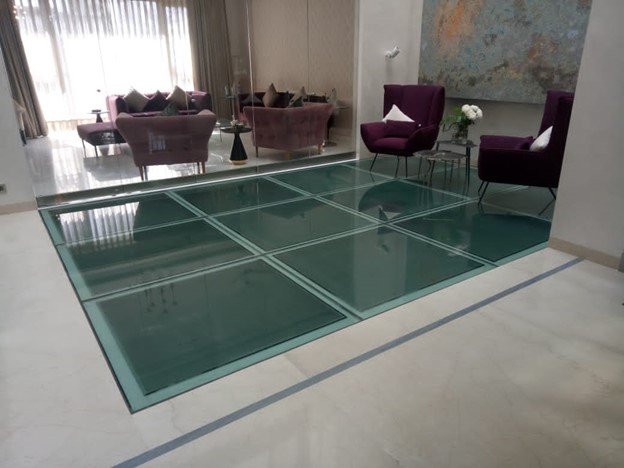
Glass flooring refers to floors made entirely or partially from glass panels. These panels are not made of ordinary glass but are crafted from strengthened materials, often tempered glass or laminated glass, to ensure durability and safety. The use of glass in flooring allows natural light to pass through, creating a sense of openness and enhancing the overall ambience of a space.

Benefits of Glass Flooring 

The glass flooring benefits are explained below: 

1. Aesthetic Appeal 

One of the most compelling benefits of glass flooring is its aesthetic appeal. Glass floors offer a sleek, modern look that can transform any room into a more spacious and luxurious area. They provide a unique visual experience, allowing light to flow naturally and creating mesmerising effects through refraction and reflection. 

2. Durability and Strength 

Contrary to what some might assume, glass flooring is incredibly durable and robust. The glass used in these floors is specifically engineered to bear heavy loads, resist scratches, and withstand impacts. This makes glass floors not only beautiful but also a practical choice for high-traffic areas. 

3. Easy Maintenance 

Non-porous smooth sheen resists dust accumulation, enabling effortless wipe cleaning using standard glass cleaners for spotless clarity and longevity, retaining pristine, transparent visibility, sparkling beautifully daily without needing periodic restorations faced otherwise. 

4. Maximising Natural Light 

One of the unique advantages of glass flooring is its ability to enhance the natural light in a space. By allowing light to pass through, glass floors can illuminate lower levels or basements, reducing the need for artificial lighting and contributing to energy efficiency. 

5. Space Enhancement 

Glass flooring can create an illusion of more space, making it ideal for smaller rooms or areas with limited natural light. The transparency of glass adds depth to a room, offering a clever solution to make spaces feel larger and more open. 

6. Design Versatility 

Glass floors offer incredible versatility in design. They can be customised in various textures, colours, and patterns to match any decor style. Whether you’re looking for a subtle elegance or a bold statement piece, glass flooring can be tailored to meet specific design needs. 

7. Fading and Staining Prevention 

By blocking UV light, glass floors shield interior furnishings like furniture or rugs underneath against photochemical bleaching, yellowing or physical ageing degradation efficiently over decades, improving assets’ longevity and sustaining quality. 

8. Safety Features 

Safety is a key consideration in glass flooring design. Modern glass floors are designed with numerous safety features, including anti-slip surfaces and the ability to retain shattered pieces within a laminated layer in the unlikely event of breakage. These features ensure that glass floors are safe for everyday use. 

9. Hygienic Surface 

The hygienic benefits of glass flooring are especially relevant. Glass does not trap dust, allergens, or mites, making it an ideal flooring solution for those with allergies or asthma. Its non-porous surface does not support the growth of mould and bacteria, ensuring a healthier living environment. 

Conclusion 

Glass flooring represents a fusion of beauty, durability and innovation. It offers a range of benefits, from enhancing the aesthetic appeal of a space to improving natural light and ensuring easy maintenance. With advancements in safety and design versatility, glass flooring is becoming an increasingly popular choice for those looking to add a touch of sophistication to their homes or businesses. As one of the top glass manufacturers in India, AIS offers customised and structurally safe glass flooring solutions tailored to your space. To explore more benefits, learn why everyone is preferring glass flooring for homes.

Categories

Know Everything About Smart Glass & its Benefits

Smart glass represents a groundbreaking innovation of materials science, merging the functionality of traditional glass with the dynamic adaptability of modern technology. This revolutionary product can change its properties, such as light transmission, in response to external stimuli, offering a blend of privacy, energy efficiency, and aesthetic appeal. Here we will cover the complexities of smart glass, including its operation, types, and the multitude of benefits it brings to various sectors. 

What Is Smart Glass? 

Smart glass can change its properties based on external stimuli, such as electricity, light, or heat. This transformation allows the glass to switch between transparent and opaque states, providing privacy, shading, or glare reduction as needed. Smart glass technology has evolved significantly in recent years, with various methods used to achieve the desired switching effect. 

How Does Smart Glass Work? 

The functionality of smart glass depends on the specific technology employed. In general, smart glass contains a layer of material that can alter its transparency or colour when an external stimulus is applied. For example, electrochromic smart glass utilises a thin coating of electrochromic materials that change colour in response to an electrical voltage. This voltage triggers a chemical reaction within the glass, causing it to darken or lighten depending on the polarity of the applied voltage. 

Applications of Smart Glass 

1. Architecture and Construction 

Smart glass is revolutionising the architecture and construction industries by offering innovative solutions for windows, skylights, and partitions. In office buildings and residential spaces, smart glass windows can adjust their tint to control sunlight and heat, reducing energy consumption for heating, cooling, and lighting. Additionally, smart glass partitions provide privacy on demand, transforming open spaces into private meeting areas with the flick of a switch. 

2. Healthcare Facilities 

In healthcare, smart glass offers privacy and comfort for patients while maintaining a connection to the outside environment. Smart glass partitions in hospital rooms and clinics can switch between opaque and transparent modes, allowing medical staff to maintain visibility when needed while providing patients with privacy during examinations or procedures. 

Benefits of Smart Glass 

The several benefits of smart glass are the following: 

I. Energy Efficiency 

One of the primary benefits of smart glass is its contribution to energy efficiency in buildings and vehicles. By controlling sunlight and heat gain, smart glass reduces the need for artificial lighting and air conditioning, leading to lower energy consumption and utility costs. 

II. Privacy and Security 

Smart glass provides an effective solution for privacy and security in both residential and commercial settings. With the ability to switch between transparent and opaque states, smart glass windows and partitions offer privacy on demand, reducing the need for curtains, blinds, or other window treatments. 

III. Enhanced Aesthetics 

Smart glass adds a touch of sophistication and modernity to architectural designs and automotive interiors. The sleek, minimalist appearance of smart glass windows and partitions complements contemporary aesthetics, creating visually appealing spaces that are both functional and stylish. 

IV. Sound Insulation 

Certain smart glass variants also exemplify sound-dampening properties, cutting external noise infiltration appreciably and aiding building insulation needs, particularly near airports or city centres. Some editions absorb interior echoes for improved conferencing voice clarity, too. 

Conclusion 

Smart glass technology is reshaping the way we perceive and interact with glass surfaces in our built environment. From energy-efficient buildings to comfortable and stylish vehicles, the applications of smart glass are diverse and far-reaching. By offering benefits such as energy efficiency, privacy, improved comfort, enhanced aesthetics, and increased productivity, smart glass is poised to become an integral component of modern architecture, transportation, and design. 

For more information on Smart glass and the highest quality available, get in touch with AIS Glass. 

Categories

Understanding the Different Types of Fire-Resistant Glass: A Guide

With the increasing prevalence of fires and natural disasters, the need for fire-resistant glass has become more important than ever. Understanding the various types of fire-resistant glass available is vital for making an informed decision while purchasing this lifesaving material.  

Read this guide to understand the various kinds of fire-resistant glass, their characteristics, and how they can protect against potential hazards.  

An Overview of Fire-Resistant Glass

Fire-resistant glass is a type of safety glass designed to withstand high temperatures and contain the spread of flames. It can be used in buildings, cars, trains, and other applications where fire protection is critical. Fire-resistant glass comes in various types with different benefits to suit various needs. 

Types of Fire-Resistant Glass: 

Here are the different types of fire-resistant glass: 

1. Wired Glass:

This fire-resistant glass is reinforced with wires embedded into the structure. It is much stronger than regular tempered glass and offers fire resistance and shatter protection. It also has noise reduction qualities, making it a popular choice for establishments such as schools and hospitals that require extra security from potential intruders or blasts. It is commonly used in interior partitions, stairwell doors, and walls.  

However, because the wire mesh slightly reduces its transparency, it’s unsuitable for large, windowed areas. 

2. Laminated Glass:

Laminated glass is fire-resistant glass composed of layers of glass and plastic. It has excellent strength and durability for buildings, homes, or other applications where safety and security are paramount. The plastic layer helps hold the shattered pieces together in a fire or other disaster, ensuring occupants have time to escape if needed.  

Laminated glass also does not break easily when exposed to high temperatures, meaning it can provide long-lasting protection against fires. 

3. Tempered Glass:  

Tempered glass is fire-resistant glass that has been heat treated to make it stronger and more impact resistant than regular glass. It provides good fire protection but may not withstand extreme temperatures for long periods like other fire-resistant types of glass. The heat treatment process causes the outer surfaces of the glass to expand more quickly than the inner layer, creating a strong tension between them.  

This product reduces the chances of the glass breaking or shattering when exposed to extreme temperatures or impacts. It also helps to prevent splintering, which reduces the risk of injury if the glass is broken. 

4. Insulated Glass Units (IGUs): 

Insulated glass units (IGUs) are made up of two or more individual panes with an insulating spacer material between them. They are designed to help reduce heat loss and minimize condensation while providing superior sound insulation.  

The IGUs also provide superior fire resistance due to the thickness of the glass and the use of a special intumescent sealant that expands when exposed to extreme temperatures, forming an airtight seal for enhanced protection against flames and smoke. In addition, these units can be laminated or tempered to further increase their fire-resistant qualities. This type of fire-resistant glass is often used in commercial buildings where safety is paramount. 

The Bottom Line 

Various types of fire-resistant glass available on the market can provide functional protection in the event of a fire. Depending on your location’s building specs, you may need to consider one type. Understanding the differences between them is significant for making an informed decision on which type suits your needs the best.  

Fire-resistant glass is necessary for keeping buildings safe and protecting lives and property against flame damage. With some knowledge, you can be confident in selecting the right fire-resistant glass for your home or business. 


Categories

Modern Interior Glass Doors for Home & Offices

Interior glass doors are growing in popularity for both residential and commercial spaces as per their stylish look and practical benefits. With various styles and options now available, glass doors can transform any room by letting in natural light while providing privacy, security, and energy efficiency. In the section below, we’ll explore the latest trends in interior glass doors and key factors to consider for your home or office. 

1. Safety and security with Modern Glass Doors 

Unlike classic wood or solid core doors, glass interior doors allow light to filter through while obscuring clear views into the room. However, contrary to popular belief, glass doors are quite secure when made of tempered or laminated glass.  

Tempered glass is treated with extreme heat to withstand more pressure and impact without shattering. When it does break, it fractures into small rounded chunks rather than dangerous sharp shards, making it a safer choice. 

2. Preserving Privacy with Frosted & Tinted Glass 

Tinted glass doors have special coatings or films for colour and privacy. Gray, bronze, green, and other hues can match your décor while preventing people from quickly seeing inside. Tints can be light to moderately dark, depending on the level of privacy desired. Consider the tint’s opacity and desired light transmittance for each room. 

3. Low Emissivity Glass Doors for Energy Efficiency  

Low emissivity (Low-E) glass is specially coated with a microscopically thin metallic layer to reflect interior heat back inside. This creates an insulating effect for energy efficiency. Low-E glass reduces heat loss in cold weather and reflects solar heat gain in warm weather. 

Low-E coatings are often added to one glass surface facing the sealed airspace between panes on modern dual-pane glass doors. This acts as a thermal buffer zone, slowing heat flow for improved insulation. Some glass doors even have Low-E layers on both inner surfaces for further efficiency. 

Key Factors When Selecting Interior Glass Doors 

With many styles and customization options now available for interior glass doors, it’s important to consider key factors for your home or office’s specific needs: 

  • Desired aesthetics – Browse modern interior glass doors like French, room dividers, bi-fold, sliding, swing, or full-lite doors to find the right visual look. Also, decide on framing finishes and hardware styles. 
  • Functionality – Consider access, openings, and traffic flow through the space. 
  • Room lighting needs – Clear glass doors beautifully illuminate rooms with natural light. Frosted glass diffuses light softly while still allowing brightness through. Tinted glass controls glare and heat gain if there is too much direct sunlight. 
  • Noise control & privacy – Glass material, seals, gas fills, dual panes, gaskets, and installation quality all play a part in sound transmission if noise management is important. Privacy levels vary widely depending on glass opacity.  
  • Durability – Assess door location, likelihood of damage, and ongoing use levels. Tempered safety glass is very durable and required for glass near floor level. 
  • Energy efficiency – High-performance Low-E glass makes a difference in climates with cold winters and hot summers. Look for ENERGY STAR ratings to indicate good U-values, R-values, and solar heat gain performance. 
  • Price range – Interior glass doors are pricier than solid doors but provide beautiful looks, natural light, and good insulation over time. Set a budget while factoring in long-lasting quality to match your needs. 
  • Accessibility and safety code compliance – If needed, ensure doors and hardware selected meet accessibility standards and fire codes for commercial spaces or multi-family residential buildings. 

Conclusion 

Take time to analyse the above factors when choosing interior glass doors carefully. This ensures the perfect custom fit functionally and aesthetically for your residential or commercial space. The right glass doors can enhance any room with style, light, and innovative use of space for years to come. You can reach out to AIS Glass to get the top-quality glass for your home or office.

Categories

A Comprehensive Guide to Fire-Resistant Glass

In building safety, the risk of fire is a big concern. That’s where fire-resistant glass steps in as a smart solution. The danger grows as buildings get more complex, calling for something that can handle high temperatures and stop the fire from spreading. This fire-resistant glass guide dives into the details of fire-resistant glass, providing a crucial answer to protect spaces from the constant threat of fire. It’s all about ensuring safety and giving you peace of mind. 

An Overview of Fire-Resistant Glass

Fire-resistant glass, also called fire-protection glass, is like a superhero in the construction world. It’s crafted to tackle high temperatures and does a remarkable job of defying the odds. What it does best is stop the glass from shattering and the fire from spreading within a certain time. It’s like a protective shield that keeps everything in check when things get hot. 

How is Fire-Resistant Glass Made? 

The trick lies in what goes into making it. When assembling fire-resistant glass, they mix specific chemicals and coatings during manufacturing. This transforms regular glass into a tough shield against the fierceness of fire. It’s not just about surviving; this special mix stops flames from spreading, adding an invaluable layer of protection. 

Why Choose Fire-Resistant Glass? 

1. Smart Choices for Safety 

As building safety standards advance, the adoption of fire-resistant glass follows suit. Its remarkable ability to impede the spread of fire aligns seamlessly with the escalating demand for robust safety measures. Opting for fire-resistant glass isn’t just a choice; it’s a strategic investment in a safer, more secure future. 

2. Critical Considerations 

Choosing to install fire-resistant glass involves a judicious evaluation of various factors. The glass type—be it annealed, heat-strengthened, or tempered—must harmonize with the unique demands of your project. This discernment ensures not only compliance with building regulations but also optimal performance. 

Unveiling the Mechanism: How Chemicals Make It Tough 

What sets fire-resistant glass apart? It’s all about carefully mixing chemicals and coatings during its creation. This special process turns ordinary glass into a superhero that can handle high temperatures. And it doesn’t stop there—it actively prevents the fire from spreading, making it a real hero in times of danger. 

Beyond surviving, fire-resistant glass excels under duress. Understanding the prescribed timeframe for it to endure high temperatures is pivotal—this knowledge becomes the linchpin for safeguarding lives and mitigating property damage during a fire incident. 

Installation Excellence: Where Safety Meets Aesthetics 

Choosing the Right Variant 

Not all fire-resistant glass is cut from the same cloth. Selecting the right variant—wired, ceramic, or laminated—hinges on the specific needs of your project. Each variant presents distinct advantages; a nuanced understanding ensures an informed decision. 

The Art of Installation 

Installing fire-resistant glass is a craft. Entrust this task to seasoned professionals who comprehend the intricacies of this specialized glass. Precise installation not only maximizes efficacy but also contributes to the aesthetic allure of your space. 

Navigating Regulations: The Cornerstone of Safety 

Regulatory Compliance 

Fire-resistant glass isn’t just a safety feature; it’s a regulatory imperative. Adhering to building codes and standards isn’t negotiable—deviation jeopardizes safety and invites legal ramifications. 

Collaboration with Architects and Builders 

Early collaboration with architects and builders is paramount. Their expertise ensures seamless integration, where fire-resistant glass becomes an intrinsic element of the overall design, maximizing safety without compromising on aesthetics. 

Innovations in Fire-Resistant Glass 

Constant Evolution 

The journey of fire-resistant glass is far from over. Continuous research and development promise innovations that transcend current efficacy and versatility. The future holds exciting prospects for enhanced safety in the built environment. 

Conclusion 

Fire-resistant glass becomes a reliable option as we search for safe homes and workplaces. Knowing how it’s made and installed empowers us to prioritize safety without compromising style. It’s not only a safety feature—it’s a promise for a safer & stronger future. So, when we pick fire-resistant glass, we’re not just adding a feature; we’re committing to a better tomorrow. Choose AIS Glass to get the best fire-resistant glass. 


Categories

Laminated Safety Glass Window: How it Will Be Helpful for Your Space

In terms of home architecture and design, the role of windows is often underestimated. Windows are not just portals to the outside world but integral elements that shape a space’s safety, aesthetics, and overall ambience. In this blog, we’ll explore the transformative qualities of laminated safety glass windows—how they go beyond conventional solutions, fortifying your space with an amalgamation of safety, security, and sophisticated style. 

An Overview of Laminated Safety Glass 

Laminated safety glass, often termed as laminated glass, is a testament to modern engineering brilliance. Its core structure comprises two or more layers of glass bonded with an interlayer, mainly polyvinyl butyral (PVB). This seemingly simple construction is a powerhouse of benefits that redefine what a window can offer. 

Laminated Safety Glass Uses 

1. Enhanced Safety in Shattered Moments 

The primary hallmark of laminated safety glass lies in its ability to hold itself together even when shattered. In the unfortunate event of breakage, the glass fragments adhere to the interlayer, preventing the formation of sharp, dangerous shards. This property reduces the risk of injuries during accidents or break-ins, making it a go-to choice for spaces prioritizing safety. 

2. Security Beyond the Surface 

Beyond safety, laminated safety glass serves as a formidable deterrent against intruders. Its robust construction makes breaking harder, providing additional protection against forced entry. Whether used in homes or commercial spaces, this enhanced security feature adds an invaluable layer of defense. 

3. Guardian Against UV Intrusion 

Laminated safety glass doesn’t just guard against physical intrusion—it also shields against the invisible threat of ultraviolet (UV) rays. The interlayer acts as a UV filter, protecting your interior furnishings, artwork, and valuables from the detrimental effects of sun exposure. This added layer of protection ensures the longevity and vibrancy of your interior decor. 

4. Silencing the Outside World 

In the hustle and bustle of urban living, noise reduction becomes a luxury. With its sound-dampening properties, laminated safety glass becomes a silent guardian against external noise. This feature creates a serene and peaceful indoor environment, making it the perfect option for spaces in busy urban areas or near high-traffic zones. 

Installation Insights: Elevating Safety with Professionalism 

1. Precision Matters: Professional Installation 

Professional installation is paramount to extracting the full benefits of laminated safety glass. Certified technicians ensure the windows are precisely fitted and adhere to safety standards. This meticulous approach guarantees that your investment in advanced glass technology yields optimal results. 

2. Tailored Elegance: Customization Options 

Laminated safety glass offers a lot of flexibility. Laminated glass comes in many customizable styles. You can choose clear, tinted, textured, or opaque glass. Pick whatever matches your home’s decor. 

Why Laminated Safety Glass: A Choice Beyond Conventional Windows 

Laminated safety glass transcends the ordinary, offering a unique combination of safety, security, and aesthetic appeal. Choosing this advanced glass solution is not merely a practical decision; it’s a commitment to creating a space that prioritizes safety without compromising on elegance. 

Conclusion

Laminated safety glass is a multifaceted gem in window solutions, transforming your windows from mere openings to guardians of safety and style. Elevate your space with the advanced technology of laminated safety glass, where enhanced security, UV protection, and noise reduction become more than features—they become integral components of a space designed for safety and sophistication. Invest in laminated safety glass windows for a living or working environment that not only meets but exceeds expectations—a harmonious blend of safety and style that resonates with the essence of modern living. 

Choose AIS Glass, if you’re looking to get the best Laminated Safety Glass Window for your home or office. 


Categories

What Not to Do After Windshield Replacement

Driving with a newly replaced windscreen offers clarity and peace of mind. However, the journey doesn’t end with the replacement – it begins. In the midst of this newfound clarity, it’s easy to overlook common mistakes that can impact the effectiveness of your new windscreen. From improper curing to neglecting edge seals, this guide serves as a roadmap to help you steer clear of post-windscreen replacement pitfalls.

10 Mistakes to Avoid After Windshield Replacement

1. Skipping the Curing Time

Mistake: Impatience is a common culprit. Skipping the curing time recommended during installation can weaken the bond between the windscreen and the vehicle.

Solution: Follow the recommended curing time diligently. This may require avoiding car washes or rough driving conditions for a short period, but allowing the adhesive to set properly ensures a secure and lasting bond.

2. Ignoring the Seal Around the Edges

Mistake: Overlooking the importance of a well-sealed windscreen can lead to water leaks, air seepage, and potential structural issues.

Solution: Regularly inspect the seal around the edges of the windscreen. Any wear, gaps, or damage signs should be addressed promptly to prevent further complications.

3. Subjecting the Windscreen to Extreme Conditions Immediately

Mistake: Exposing the newly replaced windscreen to harsh conditions, such as high-pressure car washes, or extreme temperatures too soon can compromise its integrity.

Solution: Exercise caution in the first few days after replacement. Avoid intense weather conditions and high-pressure cleaning to allow the adhesive ample time to cure and achieve optimal bonding strength.

4. Neglecting Proper Cleaning Techniques

Mistake: Using abrasive materials or harsh chemicals during cleaning can scratch or damage the surface of the windscreen.

Solution: Use mild, automotive-approved glass cleaners and soft materials like microfiber cloths. Gently wipe away dirt and debris to maintain a clear and scratch-free surface.

5. Not Addressing Small Chips and Cracks Immediately

Mistake: Ignoring small chips or cracks post-replacement might seem harmless, but they can quickly escalate into more significant issues.

Solution: Address any chips or cracks promptly. Swift action helps prevent them from spreading and compromising the structural integrity of the windscreen.

6. Heavy Slamming of Car Doors

Mistake: Slamming car doors with excessive force can transmit unnecessary vibrations to the newly replaced windscreen, impacting its stability.

Solution: Close car doors gently to minimize vibrations. This simple habit can help maintain long-term durability of your windscreen.

7. Using the Windscreen as Support

Mistake: Leaning on the windscreen or using it for support while entering or exiting the vehicle can put undue pressure on the edges.

Solution: Use proper support points when getting in or out of your vehicle. Avoid putting unnecessary pressure on the windscreen, which could lead to stress on the edges and sealing.

8. Delaying Windscreen Wiper Replacement

Mistake: Overlooking worn-out wiper blades can cause scratches on the new windscreen, impairing visibility.

Solution: Regularly inspect and replace worn wiper blades to ensure they glide smoothly across the surface without causing damage.

9. Ignoring Professional Advice

Mistake: Ignoring advice from professionals who replaced the windscreen can lead to avoidable complications.

Solution: Pay attention to any specific instructions or recommendations provided by the technicians. Their expertise ensures a successful replacement, and following their guidance is key to maintaining the integrity of your new windscreen.

10. Neglecting Regular Maintenance Checks

Mistake: Assuming that a new windscreen requires no maintenance can lead to unforeseen issues.

Solution: Incorporate regular checks of your windscreen into your vehicle maintenance routine. Simple inspections can catch potential problems early on, preserving the longevity of your windscreen.

Conclusion

A newly replaced windscreen is an investment in both safety and aesthetics. Avoiding these common mistakes ensures that your new windscreen remains a reliable and durable vehicle component. Following proper care practices will help you enjoy clear views on the road ahead for miles to come. If you are looking for a trusted car windscreen replacement service, choose AIS, one of the best windscreen glass manufacturers in India, for high-quality automotive glass solutions and expert installation services.

Categories

A Guide to Different Types of Window Glass for Home & Office

When choosing new windows for your home or office, one of the most important decisions is the type of glass. The glass in your windows impacts aesthetics, insulation, noise reduction, security, and even functionality. In the section below, we’ll discuss the most popular window glass options to consider.

1. uPVC Windows 

uPVC (unplasticized polyvinyl chloride) is a popular low-cost synthetic material used for window frames and glass panels. uPVC windows offer exceptional insulation, soundproofing, and weather resistance. They require little maintenance, as the uPVC material is highly durable and resists corrosion and rotting over time.  

The glass itself is usually double-glazed or triple-glazed for enhanced thermal efficiency. Multiple layers trap air between them, acting as an insulator against heat transfer. This keeps your home or office warmer in winter and cooler in summer, saving significantly on energy bills. The gap between glass layers also reduces noise from outside traffic, construction, and other noise. 

2. Aluminium Windows   

Aluminium windows boast slim, sleek frames, allowing maximum light exposure. Structural aluminium delivers an incredibly strong yet lightweight frame that resists corrosion, rotting, and warping even in harsh weather conditions. This makes aluminium one of the most durable and longest-lasting window frame materials. 

Like uPVC windows, aluminium frames incorporate double or triple-layered glass for thermal insulation and noise reduction. Speciality glass like tinted or Low-E coatings can also be added further to augment insulation capabilities, visibility, or privacy. 

3. Casement Windows 

Casement windows are hinged vertically along one side of the frame so the window panel opens outward like a door. This allows full and unobstructed ventilation, which allows fresh exterior breezes inside. Casement windows can incorporate nearly any glass from double-glazed Low-E glass for insulation to speciality decorative window glass types

The outward swinging orientation does make casement windows prone to getting caught in heavy winds or storms. But minor drawback aside, casement windows lend an aesthetically appealing look with their large unbroken glass expanses while facilitating excellent ventilation flow. 

4. Sliding Windows  

Sliding windows move side-to-side on tracks within the window frame. This facilitates opening and closing in confined spaces where a swinging motion isn’t feasible. Sliding windows are popular for balconies, basements, attics, and above kitchen counters or sinks. 

Most sliding windows incorporate double or triple-layered glass. While they don’t facilitate ventilation as freely as swinging casement windows, sliding windows can still gap slightly open for moderate airflow. The sliding panes make them easy to open or close in small spaces. But they can jam occasionally or get knocked off noisy tracks. Proper installation is key for keeping sliding windows functioning smoothly long-term. 

5. French Windows 

French windows, open with double side-by-side swinging doors. They combine windows and doors into one beautiful portal linking indoor and outdoor spaces. The row of many full-length glass windowpanes provides a bright and welcoming flow of sunlight ideal for living rooms, dens, or master bedrooms. 

The French window style imparts elegance while facilitating easy passage to adjoining outdoor decks or patios. Their swinging side-by-side design adapts well to variable widths. And the materials can incorporate double pane glass or interesting decorative touches like curved transoms. Keeping the glass clean, hardware lubricated, and weatherstrips snug and French windows will be ultra-functional and stylish portals for decades. 

Conclusion 

Deciding on the perfect glass windows for your home or office involves considering various factors like space, style, natural light, ventilation, and insulation. Whether you’re leaning towards cost-effective uPVC, sturdy aluminium, breezy casements, convenient sliders, or elegant French windows, each option has its advantages and disadvantages. Choosing based on your needs and lifestyle ensures comfort in any room and weather. AIS Glass experts provide the best quality glass windows that you must consider. 

Categories

What Is One-Way Glass?

Glass is one element that may turn simple structural concepts into sleek, attractive, and sophisticated works of art. The adaptability of glass can bring so many variations to your designs. Numerous glass types are available that can meet all of your architectural requirements.
Glass has undergone numerous alterations as technology has advanced. You can now have this material custom-processed to meet your specifications. This has greatly increased the sturdiness and efficacy of our designs.
One-way glass is a prime example of such innovation in glass solutions.

What Exactly Is One-Way Glass?

One-way glass is also known as two-way reflection glass or half-silvered mirror glass. In contrast to conventional glass, which is visible on both sides, one-way glass is visible on one side and reflected on the other. One of the surfaces of the glass has a thin, nearly transparent metallic layer on it. This allows more light to pass down the coated surface than the tiny portion of light it reflects.
However, to function properly, a single side of the mirror needs twice the quantity of light that the opposite side receives. In this manner, the dark side can see through the effectively illuminated side but not vice versa.

One-Way Glass Varieties

Tinted glass

This glass has a layer or coating that limits light transmission through it. The coating thickness is adjustable and can be tailored to your specifications. The covering blocks damaging UV radiation while also controlling solar glare.

Tinted glasses may absorb 30-40% of the solar heat and provide thermal comfort. It also shields against glare and is available in various color styles.

The Use of One-Way Glass

As shown below, one-way glass has an extensive list of applications.

Privacy Is Important

Large glass windows dominate modern designs. And privacy is frequently compromised when your home has extensive glass windows.

The one-way glass will let you balance privacy concerns without sacrificing the pleasures of fresh air, sunlight, and ventilation. Because one side of the glass is a mirror, the half-silvered side may be applied to the exterior. Outsiders cannot see inside, whereas you will have a good view of the world outside. One-way glass windows are ideal for one-way viewing.

Automotive Low-E Windows

One-way glass is frequently used to manufacture car windows using low-E coatings to protect against damaging ultraviolet rays and prevent heat. Automobiles can become exceptionally hot when exposed to the sun. This can result in significant pain and dependency on the air conditioner. Automobiles use one-way window glass to avoid this.
One-way glass windows protect against damaging UV radiation while blocking outward visibility. You can easily dance and sing along to your soundtrack while driving without anyone peeping into your vehicle. Waiting at traffic lights is also going to become less annoying.

Partitions made of one-way glass

More efforts are being made in modern interior designs to instill an atmosphere of spaciousness. Using one-way glass for cabin dividers or walls is a fantastic approach to enhancing openness while providing a broad perspective of what exists across the glass partition. This allows you to follow activities in your office environment without making your staff aware.

Glass Sliding Doors

Designers and architects utilize glass sliding doors that open directly to a garden or patio to create a sense of extension. Sliding glass doors with one-way glass are ideal for this. You will get plenty of light without having to expose your living space. Because the material itself is also extremely durable, it will be long-lasting. 

Conclusion

One-way glass is an excellent choice for security and privacy. There is, however, a vast range of glass to pick from. Before you decide, determine which glass will complement your style of architecture.

AIS Glass should be your first choice if you seek superior-quality one-way glass solutions. We offer expert consultations, efficient delivery, and outstanding customer service as the trusted name in comprehensive glass solutions. You can choose from various trendy and beautiful glass solutions to meet your structural needs.

Categories

Benefits of Solar Control Glass for Commercial Buildings

Solar control glass is a façade glass specially designed for commercial buildings. It provides numerous advantages over traditional windows, including improved energy efficiency, greater protection from ultraviolet (UV) rays, and glare reduction. This post will uncover the benefits of using solar control glass in commercial structures. 

We’ll explore how it improves energy efficiency, reduces UV damage, and helps reduce glare to make a more comfortable workspace. With this information, you could decide if investing in solar control glass for your office is the right choice.

So, let’s take a look at these benefits.

  1. Cost Savings

Solar control glass helps reduce the energy required to maintain comfortable temperatures. This can lead to considerable savings on cooling and heating bills, particularly in hot climates or during times of higher energy costs. Additionally, solar control glass can help reduce glare and improve air quality inside the building, adding further cost-saving benefits.

  • Improved Comfort

Solar control glass helps reduce the temperature fluctuations between sunny days and cloudy days by blocking out most of the sun’s heat but still allowing natural light into the building. This can contribute to a more pleasant living environment for occupants and increase productivity due to improved concentration and comfort levels.

  • Reduces Solar Heat Gain

Solar control glass helps minimize the heat that enters the building from sunlight, thus reducing the need for excessive air conditioning and lowering energy consumption and costs. This type of glass’s efficiency can be improved by using low-emissivity (Low-E) coatings, which help reduce heat transfer while still allowing for optimal visible light transmittance. 

This effective combination helps keep a building at a comfortable temperature year-round, reducing energy expenses during the warm months.

  • Enhances Energy Efficiency

By reducing solar heat gain, solar control glass helps improve the overall energy efficiency of a commercial building, resulting in lower utility bills and reduced carbon emissions. It also increases indoor comfort levels and reduces the need for air conditioning, making it a great way to improve thermal performance in any building. 

Solar control glass is available in multiple tints and coatings, allowing you to customize the amount of sunlight allowed into your space while maintaining visibility.

  • Protects Interior Furnishings

Solar control glass blocks a significant portion of harmful UV rays, which can fade and damage furniture, carpets, artwork, and other interior finishes over time. This helps to preserve the longevity and aesthetics of the building’s interior.

  • Enhances Daylighting

Solar control glass allows natural light to enter the building while reducing solar heat gain, which promotes a brighter and more open interior space. This contributes to a more productive and pleasant working environment for occupants.

The Bottom Line

When constructing or renovating a commercial building,solar control glass is an attractive and beneficial option that should be strongly considered. Solar control glass can bring numerous advantages, such as energy savings, improved comfort, UV protection, and reduced glare, allowing for enhanced working conditions while providing the necessary energy efficiency measures to help reduce carbon emissions. 

In other words, this investment pays off in more ways than one. With its long-term cost savings and environmental impact, solar control glass is an excellent choice for any modern commercial building.

Categories

The Benefits of Using Opaque Glass for Home and Office Interiors

Benefits of Using Opaque Glass for Home and Office Interiors

Opaque glass has become a popular design choice for modern home and office interiors due to its versatile look and ability to provide privacy. This versatile material offers a variety of shades, textures, and finishes, making it possible to design stylish and functional spaces with unique characteristics. Most business owners and homeowners prefer to use opaque glass because of its many advantages.

This post will state the benefits of opaque glass for home and office interiors. From improved privacy to increased natural light, there are various reasons why you should consider adding this versatile material to your interior design.

So, let’s look at the advantages of incorporating opaque glass into your space.

Privacy:

Opaque glass provides a high level of privacy by obscuring the view and preventing people from seeing inside. This makes it suitable for bathrooms, conference rooms, and private offices where discretion is required. Opaque glass is a versatile material that can be used to create partition walls and enclosures, providing a clear separation between spaces while still allowing some natural light to pass through.

Versatility:

Both indoor and outdoor settings can utilize opaque glass due to its versatility. It can be shaped into any design, perfect for custom projects like partitions or window treatments. Moreover, opaque glass is effortless to clean and maintain, which means you can forget about the hassle of keeping it in good condition. Its versatility provides numerous design options for both home and office decor.

Natural light diffusion:

Opaque glass allows natural light to enter the space while diffusing it, reducing glare and creating a soft, pleasant ambiance. This helps to create a well-lit environment without compromising privacy. Diffusing the light also reduces energy costs as less artificial lighting is required for illumination. Additionally, opaque glass can be tinted to further optimize light diffusion, creating a comfortable atmosphere perfect for both home and office interiors.

Noise reduction:

Opaque glass has sound insulation properties, reducing external noise and creating a quieter environment. This is particularly beneficial for office spaces located in noisy areas or homes near busy streets. It also keeps internal noise levels lower, ensuring a disruption-free environment. For instance, in a business setting, opaque glass walls provide privacy between meeting rooms while preventing sound from traveling throughout the office space.

Easy maintenance:

Opaque glass is relatively easy to clean and maintain. It can be wiped down with regular glass cleaning solutions or mild soapy water, making it a convenient choice for busy home and office environments. The material’s smooth surface allows dirt to be quickly and easily removed using a damp cloth or sponge, meaning that keeping glass furniture and surfaces sparkling clean doesn’t need to be time-consuming.

The Bottom Line

Opaque glass is great for any home or office interior design project. It provides a stylish and modern look while offering the benefits of privacy, insulation, and natural light regulation. It is an ideal choice for any space due to its durability and low maintenance. With its versatility and affordability, opaque glass can be an excellent option to spruce up your space.

We use cookies to help you get the best possible experience of our site. By clicking 'Accept' you agree to our use of cookies.