Categories

The Importance of Tempered Glass Replacement for Safety and Efficiency

Compared to regular glass, tempered or toughened glass is extraordinarily stronger and safer. When eventually cracked, it bluntly shatters into tiny pieces rather than dangerous shards. Upgrading older glass to the latest tempered versions greatly improves building, vehicle, and product safety while enabling lighter, sleeker designs impossible with annealed or laminated glass. Here we will learn the importance of tempered glass for safety and efficiency. 

Why Tempered Glass is Better 

Tempered glass is about 4-5 times stronger than annealed glass. It is produced by a heating and rapid cooling process that creates balanced internal stresses, allowing it to withstand much higher loading and impacts from both side pressure and temperature differences. The tempering process also causes it to safely “dice” into small cubes when it eventually breaks or cracks.  

For these reasons, many jurisdictions’ building codes and safety standards now recommend or require tempered glass to be used in locations with a high risk of human impact, such as doors, sidelights, structural glass fences and railings, vehicle glass, and more. 

Safety Benefits 

There are numerous safety benefits to tempered glass. The most significant advantage is how it breaks safely compared to non-safety glass. When shattered or cracked, tempered glass immediately crumbles into small, relatively harmless pieces. This helps prevent severe cuts from sharp glass shards. Blunt cube pieces are also less likely to cause deep puncture wounds. The dice pattern breakage means the glass pieces interlock well, helping the glass remain in the opening even when cracked.  

This reduces the risk of people accidentally falling through or accessing broken glass openings before repair. Temperature glass significantly improves safety for windows, doors, partitions, furniture, appliances, and vehicles. 

Efficiency and Performance  

Beyond safety, tempered glass also provides efficiency and performance benefits compared to annealed or laminated glass: 

  • Increased strength and impact resistance 
  • Withstands temperature differences and thermal stresses 
  • Thinner than laminated for weight savings 
  • Better optics and clarity 
  • Smooth edge truncation options 
  • Customizable for insulation, security, aesthetics 

Architects, automakers, and product designers rely on these advantages to create structures and items that are impact-resistant, durable, and high-performing while still being slim and lightweight. Ultra-strong glass allows more open, transparent building designs and thinner, larger vehicle and electronics glass components, which are impossible with regular glass types. 

Signs Replacement is Needed 

Some visible signs and symptoms indicate when older glass needs to be replaced with new tempered glass: 

  • Visible cracks, scratches, chips or dings 
  • Cloudiness, bubbles, discoloration indicating seal failure  
  • Failure during product testing and quality checks 
  • Glass breakage history or repeated cracking 
  • Building code or insurance requirements updating 
  • New improved tempered glass options available 
  • The desire for better noise control, security, solar performance  

Monitoring glass for any cracks or imperfections and replacing it as soon as issues appear ensures new tempered glass can prevent safety problems before they occur. 

Maintenance Tips 

To maximize the working life of tempered glass once installed: 

  1. Use soft cleaning materials like rubber squeegees to avoid scratches 
  1. Clean on a regular schedule with approved glass cleaners 
  1. Never use abrasive pads or powders  
  1. Inspect for cracks, chips, and seal failure indicators  
  1. Be aware of glass strength limitations  
  1. Get expert help from AIS glass for repairs as soon as any concern appears 

With proper care and maintenance, today’s high-quality tempered glass provides lasting safety, optical clarity, strength, and durability, increasing its useful lifetime. 

Conclusion 

Upgrading older glass to the latest tempered safety glass technology provides substantial safety, efficiency, and performance improvements for buildings and products people use daily. Tempered glass is stronger, more damage-resistant, and breaks safely to help prevent serious injuries. Architectural, automotive, and consumer product designers rely on tempered glass to enable lightweight yet durable designs, which is impossible with regular annealed or laminated glass. Moreover, if you’re looking for tempered glass replacement service, getting help from AIS Glass would be best. 

    Categories

    The Future is Now: How Car Head-Up Displays Are Revolutionizing Driving

    The driving experience is evolving rapidly thanks to innovative automotive technologies. One fascinating development is the rise of car head up displays. These smart displays transform how we interact with our vehicles by projecting critical data onto the windshield. In this article, we’ll explore how head-up displays are revolutionizing driving.  

    From enhanced safety and navigation to reduced eyestrain, discover how the future of the in-car experience is already here with the help of this cool new tech. 

    Let’s take a look at these benefits. 

    1. Driving Safer 

    Staying focused on the road is important for safe driving. But it can be tough not to look away when checking speeds, maps or alerts. Luckily, HUDs lessen distractions. With speed, directions, and warnings shown right in front, you don’t need to glance down as much. Having extra seconds looking up ahead helps spot problems sooner.  

    2. Convenience on Wheels 

    As great as technology is, taking your eyes off the road to check something is only sometimes convenient. With HUDs, all the important information, like your speed or turn-by-turn directions, is right in your view without diverting your focus. The best part is that newer models are so intuitive and respond to voice commands. Your drives become more relaxing knowing what you need is projected helpfully on the windshield.  

    3. Easier Navigation 

    Getting turned around in unfamiliar areas can be stressful. Thankfully, HUDs take the guesswork out of direction. Rather than hunting through screens, your next moves appear right on the windshield. Advanced systems even overlay arrows onto the actual road using augmented reality. It feels like you’re playing a video game but navigating real streets. With directions helpfully highlighted in front, following the turns couldn’t be simpler. 

    4. Less Eye Strain 

    We’ve all been there—long drives where your eyes feel heavy from checking different screens. HUDs help by keeping related info in your direct line of sight. Rather than peeking down lots, you can focus ahead more. Over time, this consistent viewing is nicer on the eyes. Trips feel less draining thanks to reduced strain. At the end of a long day, HUDs help keep you feeling fresh for the important thing—safely navigating the roads. 

    Future of Driving 

    The continuous evolution of HUD technology will lead to an even more immersive and interactive driving experience in the future. Innovations such as full-windshield HUDs, which could display a wide array of information and interactive features across the entire windshield, are on the horizon. These advancements could transform windshields into interactive displays, providing drivers with unparalleled access to information and vehicle controls while maintaining an unobstructed view of the road. 

    Moreover, as autonomous driving technologies advance, HUDs could play a crucial role in the transition period where human drivers and autonomous systems share control responsibilities. By seamlessly providing real-time information and feedback, HUDs can ensure that drivers remain informed and ready to take over when necessary, fostering trust and confidence in autonomous systems. 

    Conclusion 

    Head-up displays are more than just a novel feature in modern vehicles; they represent a significant leap forward in automotive technology, with profound implications for safety, convenience, and the future of driving. By seamlessly integrating vital information into the driver’s line of sight, HUDs minimize distractions, enhance navigation, reduce eye fatigue, and improve overall safety. As this technology continues to evolve and integrate with other advanced driving systems, the potential for HUDs to revolutionize driving is boundless. 

    To learn more about the installation and revolution of car head-up displays, get in contact with AIS Glass. 

      Categories

      Enhancing Your Driving Experience with Car Head-Up Displays: Features and Benefits

      Car head-up displays (HUDs) are an emerging technology redefining the modern automotive experience. HUDs project essential driving data and alerts directly in the driver’s line of sight on the windshield. This enables checking critical information like vehicle speed, navigation directions, and collision warnings without looking away from the road. HUD technology is rapidly improving with augmented reality overlays and a range of safety, awareness, and convenience features now available. Here, we’ll discuss the benefits of the car head-up display. 

      So, let’s get started. 

      An Overview of Car Head-Up Displays 

      A head-up display is a clear screen that projects important driving information onto your windshield right before the steering wheel. It shows information like speed, directions, and safety alerts so you can see it without taking your eyes off the road. That helps you drive safer. The technology makes driving less stressful, too. You won’t have to struggle to glance down at the dashboard. Just look ahead and the info will be in your line of sight, almost like it’s floating on the road! Car Head up display keeps you focused ahead so you’re always aware of what’s happening around your vehicle. 

      Importance of HUDs in Modern Driving 

      Driving today is more distracting than ever with all the technology packed into cars. So, head-up displays help big time. Having your speed and navigation pop up right on the windshield makes driving less stressful and safer. You avoid taking your eyes off the road to check the info on the dashboard.  

      Head-up displays also give alerts about potential hazards to improve awareness. They allow you to focus on driving itself instead of constantly peeking around the cockpit. The technology meshes perfectly with the modern world by putting key data conveniently in your vision. Head-up displays are a must today, with everything else fighting for a driver’s attention. 

      Key Features of Car Head-Up Displays 

      HUDs are characterized by several standout features: 

      1. Enhanced Safety 

      Speed display –

      Constantly monitors your vehicle speed so you can easily match it to speed limits without glancing away from the road. 

      Collision alerts –

      Detects when you are dangerously close to the vehicle in front and flashes bright warnings on the windshield to prevent potential crashes. 

      2. Improved Awareness 

      Navigation guidance –

      Overlays turn-by-turn directions on the windshield so you always stay focused on the changing road conditions ahead. 

      3. Driver Convenience 

      Vehicle information display –

      Presents essential data like fuel level, gear indicator, and tyre pressure right in your field of vision so you don’t have to glance around the cockpit. 

      Advantages of Heads-Up Display 

      The advantages of integrating a HUD into your driving experience are manifold: 

      a. Eyes on the Road –

      Having speed and directions right on the windshield means you spend less time staring away from traffic to check the dashboard. 

      b. Avoid Neck Strain –

      No more craning your neck down to squint at tiny gauges behind the steering wheel. Just glance up quickly for data projected eye level. 

      c. Increased Alertness –

      Warnings that pop up immediately grab your attention to hazards you may have missed, like a vehicle in your blindspot or slippery road ahead. 

      d. Reduced Distraction –

      Key info is displayed peripherally so you stay focused on driving. You don’t need to hunt around the cockpit, taking focus away from the road. 

      f. Customisable –

      Ability to calibrate display position or brightness to your exact preferences and needs. Dial it in perfectly for your height, seat position, etc. 

      Choosing the Right Head-Up Display for Your Vehicle 

      Selecting the perfect HUD involves considering several factors: 

      Compatibility:

      Ensure the HUD is compatible with your vehicle’s make and model. 

      Display Quality:

      Look for clear, bright displays that are easily visible in all lighting conditions. 

      Features:

      Consider which features are most important to you, such as navigation assistance, safety alerts, or connectivity options. 

      Ease of Installation:

      Some HUDs can be easily installed with minimal tools, while others might require professional installation. 

      Conclusion 

      Car head-up displays represent a significant leap forward in integrating technology with the driving experience. They offer a compelling blend of safety, convenience, and futuristic technology that can significantly enhance our interactions with our vehicles. As this technology evolves, we can expect HUDs to become a standard vehicle feature, making driving safer and more enjoyable for everyone. With the vast potential for innovation in this space, the future of driving looks bright through the windshield of technology. 

      Get in touch with AIS Glass to learn more about car head-up display benefits and installation. 

        Categories

        Types of Annealed Glass

        Annealed glass is one of the most widely used glass forms seen throughout buildings in windows, doors, partitions, and display cases. While often overshadowed by advanced glass products, this fundamental type offers unmatched affordability and customization through an array of aesthetic options and fabrication methods. This guide will explore the types of annealed glass, the advantages it brings to the table, and how to keep it looking pristine over the years. 

        There are a few main types of annealed glass defined by their aesthetic finish: clear, tinted, and frosted. Each variety has its unique characteristics and applications. 

        1. Clear Glass 

        Clear annealed glass is transparent and colorless. Over 90% of visible light can pass through this type of glass unhindered. Optical clarity and lack of tinting provide full visibility, making clear annealed glass ideal for applications like windows and doors with desired unobstructed views. This glass is easy to cut and fabricate into end products.  

        2. Tinted Glass 

        Tinted annealed glass has colour integrated directly into the glass. Different metal oxides are added to the molten glass to create bold or subtle tints ranging from grey and bronze to shades of blue, green, or amber. Tints mainly serve an aesthetic purpose but can also help reduce glare and heat gain Tinted glass sets a stylish tone when used in architectural accents, cabinet doors, and furnishings. 

        3. Frosted Glass  

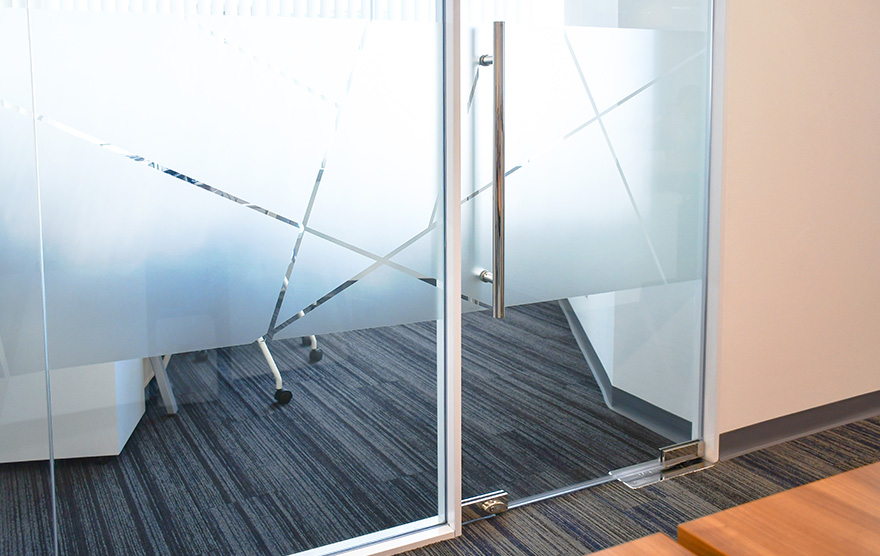
        Frosted annealed glass has an etched, matte finish that obscures visibility and diffuses light. Acid etching or sandblasting methods are used to erode the surface to different degrees of translucency. Frosted glass provides privacy while still transmitting daylight. It is popularly used in bathroom windows and interior partitions to allow light while obscuring the view. The soft, muted appearance of frosted glass lends well to modern interior design. 

        Advantages of Annealed Glass 

        There are several notable advantages to using annealed glass: 

        Cost-Effectiveness:

        Due to its basic manufacturing, annealing process, and lack of extra treatments, annealed glass is more economical than other glass types. Its affordability makes it a practical choice for various residential, commercial, and industrial applications. 

        Versatility in Applications:

        The fundamental qualities of annealed glass, like optical clarity, easy cutting, and lamination properties, allow it to be adapted into many end-use fabrications. Annealed glass can be found in products like tabletops, cabinet doors, wall mirrors, shelf displays, and appliance covers throughout homes and buildings. 

        Best Practices for Maintaining Annealed Glass 

        While annealed glass is durable and reliable when properly handled, chipping and cracked panes are not uncommon. Following best practices will help ensure the safety and longevity of the glass: 

        • Perform regular inspections of existing annealed glass and remediate any damage immediately. Failing to address cracks can lead to the glass fracturing spontaneously. 
        • Exercise caution when cleaning to avoid scraping, scratching, and applying excess pressure. Use soft cleaning materials like microfiber cloths with mild detergent and warm water. 
        • During renovations and new construction, protect glass panes from debris, tools, and chemical contact. Cover panes as needed and outline professional glass handling protocols.   
        • For replacements and new installations, consult glass specifications and codes to select suitable annealed glass thicknesses and dimensions for each unique application. 

        Conclusion  

        With its affordable pricing and reliable performance, annealed glass remains ubiquitous in residential and commercial settings despite shifts toward more advanced glass technologies. While typical annealed glass lacks additional capabilities like tempering, coatings, and embedded wire meshes, its diverse aesthetics and highly customizable nature with tints, etches, and laminations ensure it continues meeting endless needs.  

        When annealed glass is properly selected for intended use cases and cared for over time, it provides lasting safety, energy savings, and unique design expressions. If you’re thinking of installing the annealed glass at your home, contact AIS Glass. 

          Categories

          Navigating Through Tempered Glass Replacements for Car Head-Up Displays

          Head-up displays, or HUDs, have become integral driving aids that project valuable vehicle data directly onto the windshield for easy viewing. A key component is the specialised tempered glass that serves as a transparent display. Through years of use this glass can gradually decline or sustain damage. This article explores why tempered glass is ideal for HUDs when replacement is needed, and what to look for when selecting new windshield display glass to maintain safety and effectiveness. 

          The Role and Value of HUDs in Vehicles 

          HUDs project essential driving data like speed, directions, and hazard notices directly in your line of sight on the windshield glass so that eyes can stay focused on the road. This hugely minimises driving distractions that lead to accidents. Car head up display with navigation information, and safety warnings significantly improves reaction capabilities. Studies confirm HUDs dramatically enhance driving awareness, reduce stress, and prevent collisions. 

          Why Tempered Glass Works Best HUDs   

          The tempering production process makes the glass extremely resistant to shattering and safer if it breaks by causing it to crumble into small granular pieces. Tempered glass also offers terrific optical clarity essential for distortion-free projection of HUD data points onto the display surface. Protection, strength, and transparency make tempered automotive glass the standard for HUDs. 

          Advantages of Tempered Glass for Safety and Durability 

          When it comes to car head up display (HUD) systems in automobiles, the type of glass used for the display is critical for both safety and performance. Tempered glass has become the standard for HUDs due to several key benefits: 

          a. Impact Resistance-

          The tempering process makes the glass incredibly resistant to blunt force trauma and hard impacts. Rather than cracking into jagged shards when the windshield breaks, tempered glass fractures into small rounded pellets. This prevents dangerous lacerations and injuries from occurring in the event of a collision or debris strike. 

          b. Chemical Stability-

          Tempered glass stands up very well to chemical exposure from fluids like wiper fluids and oils from hands touching the glass over time. This prevents stains, cloudiness, and blemishes that would degrade the crispness of the projected HUD imagery. 

          c. Surface Hardness-

          Microscopic imperfections are polished out during the tempering procedure, creating an ultra-smooth surface on both sides of the glass. This allows for the sharp focus needed for HUD lasers to generate clear, undistorted data points on the display area. 

          d. Thermal Stability-

          Tempered glass retains optical stability across a broad thermal range, from frigid winter mornings with icy windshields to blazing hot summer days with intense sun beating down. Rapid temperature changes that can shatter normal glass won’t faze it. 

          e. UV Protection-

          The tempering process also bakes in resistance to UV light rays over decades of exposure to sunlight. This forestalls fading, yellowing, or any glass degradation that would diminish HUD visuals. 

          By enhancing impact resistance, chemical/heat/UV tolerance, and surface smoothness, tempered glass delivers both superior safety and the optical precision needed for sharp, accurate HUD displays over years of driving. It’s the ideal automotive glass for this application. 

          Indicators That Your HUD Glass Needs Replacement   

          Here are the signs your HUD Glass needs to be replaced: 

          1. Scratches Happen 

          Even little scratches right in front of your eyes can make the HUD images fuzzy and hard to read. All those miles of road debris leave their mark. 

          2. Warped Visuals 

          If the arrows or numbers look bent or squeezed, then the light from the display is bending. That points to worn-out glass that can’t project straight. 

          3. Fading to Yellow 

          Over time, the images might get a yellowish tint or fade out. Vibrant colours turning stale means the glass optic quality is declining. 

          4. Flickering Images 

          When the speed or navigation directions flutter, blink, or cut out, the laser beams struggle to shine the images due to microscopic scratches interfering. 

          5. Safety Sensor Issues 

          Collision detectors rely on unobstructed sensors to alert you. Damaged glass might block their view, delaying alerts. 

          6. Laggy Performance 

          Display information that drags, freezes, or responds sluggishly indicates that glass imperfections obstruct the hardware processing. 

          Conclusion 

          The proper functioning of vehicle HUD systems is vital for safe driving. Though durable, tempered windshield glass slowly degrades over years of use. Attention to the telltale signs of display quality decline outlined here makes timely replacement possible. Investing in a fresh high-grade tempered glass HUD component maintains that crystal clarity that is essential for roadway hazard awareness and accident prevention. 

          If you want to replace tempered Glass for Car Head-Up Displays contact AIS Glass. 

            Categories

            Learn More about Privacy Glass

            Privacy glass is a modern window covering option that provides you with the privacy you need while allowing natural light to flow into your space. It works by using a special film that can be applied to existing windows, so there’s no need for construction or remodeling. The tint of the film is designed to block visibility from the outside and look opaque when viewed looking inward; however, it will still allow natural light to filter through and illuminate your room.

            Here are all the details you need to know about privacy glass, including its types, applications, benefits, and drawbacks.

            Types of Privacy Glass:

            There are four main types of privacy glass, each with its unique features and advantages:

            Electrochromic Glass:

            As the name suggests, it uses electric current to change its tint from opaque to clear and vice versa, so you can adjust the level of privacy in your space at any time. This type of privacy glass can be used to control the amount of light that comes through. So, they are commonly used in windows, skylights, and partitions.

            Thermochromic Glass:

            This type is designed to change its tint in response to temperature changes. The level of privacy will increase as the temperature rises and decrease as the temperature cools. It’s a great option for people who want adjustable privacy without electricity. You can use this glass in car windows, greenhouses, and residential windows.

            Suspended Particle Device (SPD) Glass:

            SPD uses a film containing suspended particles that can be aligned or dispersed using an electric current. When the particles are aligned, the surface becomes opaque, providing privacy. When the particles are

            dispersed, the surface becomes clear, allowing light to pass through. SPD glass is commonly used in skylights, windows, and doors.

            Liquid Crystal Glass:

            This type of surface uses a liquid crystal film to change the tint of the glass. The liquid crystals align when there is an electric current which makes the surface opaque. When the current is turned off, the liquid crystals return to their random state, making it clear. It is ideal to use in conference rooms, offices, and partitions.

            Applications of Privacy Glass:

            It has many applications across various industries. Some of the most common applications include:

            Commercial Buildings:

            They are often used in commercial buildings to provide privacy in conference rooms, offices, and other areas where privacy is essential. Residential Buildings:

            They are increasingly being used in residential buildings to provide privacy in bathrooms, bedrooms, and other areas of the house.

            Healthcare:

            One can use them in healthcare settings, such as hospitals and clinics, to provide privacy in patient rooms, exam rooms, and other areas.

            Automotive:

            They can be used in cars and other vehicles to provide privacy for passengers.

            Benefits of Privacy Glass:

            Privacy glass has many benefits, including:

            Privacy:

            They provide a high level of privacy, making them an excellent choice for areas where privacy is essential.

            Energy Efficiency:

            They can help reduce energy costs by blocking out sunlight and heat, reducing the need for air conditioning.

            Safety and Security:

            They can enhance safety and security by providing a barrier against intruders and preventing broken glass from spreading.

            Aesthetic Appeal:

            They can enhance the aesthetic appeal of a building or vehicle, making it an attractive option for architects and designers.

            Drawbacks of Privacy Glass:

            Privacy glass also has some drawbacks, including:

            Cost:

            They are more expensive than traditional glass, making them a less affordable option.

            Maintenance:

            Some of its types require more maintenance than traditional ones, such as electrochromic types, which require regular cleaning to maintain their effectiveness.

            Limited Transparency:

            They are often not fully transparent, which can reduce natural light and views.

            Reliance on Technology:

            They rely on technology to change their tint, which can malfunction or fail if there is a power outage or technical issues.

            Limited Availability:

            They may not be available in all sizes, shapes, or colors, limiting design options.

            Installation:

            Some types require professional installation, which can add to the overall cost.

            Summary:

            Overall, privacy glass has many benefits and applications, but it is vital to consider the potential drawbacks before deciding to use it. If privacy, energy efficiency, safety, and aesthetic appeal are important considerations, they may be a great option. However, if cost, maintenance, limited transparency, reliance on technology, limited availability, installation, and health concerns are major concerns, it may be better to consider alternative options.

              Categories

              Different Ways Smart Glass Design Has Changed Architecture

              The popularity of glass as a construction material stems mainly from the relief it provides from rigid  opaque materials that block vision. Glass helps connect a building to its surrounding environment while at the same time, offering protection from the elements. But, what about matters of privacy? Does glass overlook such needs? Of course not! Quite the opposite!

              Modern-day glass solutions not only take care of permanent privacy needs in the form of frosted and tinted glass, but even on-demand privacy needs in the form of smart glass. Let us find out the different ways in which smart glass is redefining architecture.

              What is Smart Glass?

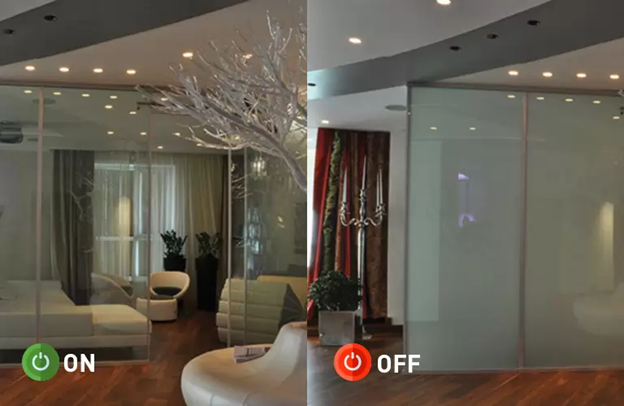
              Smart glass is an innovative glass solution that comes with adjustable opacity. The opacity levels of smart glass can be controlled using electrical voltage, heat, or light stimuli. Smart glass can change its light transmission properties, based on external stimuli. It can easily turn from transparent to opaque, or translucent and vice-versa by the flick of a remote-control switch. Due to this unique quality, smart glass is also commonly known as privacy glass, switchable glass, and light control glass (LCG).

              Uses of Smart Glass in Architecture

              With its advent in the market, smart glass has become quite a sensation amongst both interior designers and architects. Incorporating smart glass into an architectural project, whether residential or commercial can add an elegant oomph factor. Given below are some of the ways smart glass is being used today.

              • Hospitals and Healthcare Facilities

              When it comes to designing hospitals, more than the design elements and aesthetics, the functionality of the building plays a crucial role. The architectural design can enhance the functionality of the building so that patients can have a more comfortable stay. This is the principal reason why smart glass is being widely used in hospitals. 

              Patient privacy is essential for both check-ups and recovery, and smart glass is much better at this job than curtains. In modern hospitals, smart glass is being used as room partitions to create better isolated single-bed units which enhance patient privacy and create another layer of confidentiality. It is also being incorporated in examination areas, ICUs, X-ray rooms, ERs, etc. Smart glass provides privacy on demand, which allows practitioners to select opacity levels as per their needs. They are also being included as partition systems and as double doors so that monitoring patients becomes easier.

              Smart glass is also easier to clean and a more hygienic option than blinds or curtains. This helps to provide better protection against infection for neighbouring patients and healthcare personnel.

              • Commercial Buildings

              When it comes to commercial buildings, one of the best ways that smart glass has been incorporated in architectural design is through their use in entrances. A building’s entrance incorporating smart glass adds a modern aesthetic touch and makes the building more distinguishable than its neighbours in the vicinity.

              Smart glass is also being used in commercial spaces in windows, cabins, partitions, room dividers, etc. It is the optimal choice to create private spaces in offices. Smart glass partitions in offices also work quite brilliantly with flexible open-floor plans. They maintain privacy while maximising space in a modern office. Smart glass is also an ideal choice for conference rooms. Apart from providing privacy, smart glass partitions work great as projection screens during meetings. Moreover, smart glass adds a touch of style and modernity to an office space.

              • Hotels

              Hoteliers are always looking for ways to incorporate the latest technologies and design features to enhance their guests’ experiences. This has prompted the usage of smart glass in hotels quite widely. Smart glass partitions are being used in hotel rooms for a seamless transition between the bedroom and the bathroom. These smart glass partitions also provide adequate privacy with the flick of a switch whenever needed by the guests. This amalgamation of the bathroom and bedroom in one large space has made open design plans trendy in hotels. Open design plans maximise space, allowing more natural light to enter the room while enhancing the style quotient of the hotel suite. 

              Smart glass is also very commonly used in bathrooms, shower cubicles, and spas in hotels. With a simple click, the guest can transform the privacy glass from clear to translucent and back again. Installing smart glass partitions or facades is a great way to give the interiors of the hotel a minimalist yet sleek look.

              • Residential Buildings

              In recent years, smart glass has become very popular in residential buildings. It is being used in windows, partitions, skylights, and doors. This is because smart glass helps in controlling privacy, excessive light, and heat inflow that enters the interior of the building, ultimately making it more comfortable and livable. Smart glass also eliminates the need for blinds or curtains. Moreover, designers are also using smart glass in bathrooms as shower cubicles to enhance privacy and visual appeal. 

              Conclusion

              Smart glass is advanced functionality wrapped up in unprecedented aesthetic appeal. For premium-quality smart glass solutions, be it for your residence, clinic, or commercial establishment, contact AIS – India’s leading integrated glass manufacturer. We manufacture a range of high-grade architectural glass products and provide our customers with 360-degree glass solutions for all their glass needs. Our smart glass – AIS Swytchglas – is a revolutionary product that offers cutting-edge glass technology that combines the power to control both heat transmission and transparency. Whether it is your home or commercial space, our AIS Swytchglas can help you strike the perfect balance between utility and style.

              So, what are you waiting for? Reach out to us today!

                Categories

                What Is Switchable Glass?

                Have you heard of switchable glass? It’s a game-changing technology that’s revolutionising the way we look at glass. Also known as smart glass, it’s transforming our experience with glass in ways we never thought possible. Here we will discuss what is switchable glass, how switchable glass works, switchable glass benefits, and the numerous applications it is being used for.

                Understanding Switchable Glass 

                Switchable glass has the remarkable ability to switch between transparent and translucent states. It appears similar to ordinary glass but incorporates a specialised interlayer or coating that enables it to change its appearance when activated. This technology allows the glass to switch between transparent and translucent states.

                With the flip of a switch or change in conditions, clear glass can turn translucent, providing privacy while still allowing light to pass through. The transitions happen instantly, giving full control over the glass’s opacity. 

                How Does Switchable Glass Work?

                Switchable glass is a type of glazing that can change its transparency or opacity through various activation methods:

                • Electric Current

                When an electrical current is applied, the glass changes from a translucent state to a transparent state, providing on-demand privacy. This feature can be manually operated with switches or remote controls. 

                • Light Sensitivity

                Certain kinds of switchable glass include photochromic materials that respond to the level of surrounding light. When exposed to bright light, the glass becomes translucent, allowing for shade and privacy. In other conditions, it becomes transparent.

                • Temperature Sensitivity

                Thermochromic glazing technologies respond to temperature changes. It can help manage heat from sunlight by turning translucent when warm to block infrared rays.

                The special glazing gives the glass its smart capabilities to shift states based on the activation conditions. This makes it adjustable, instantly responsive, and gives users dynamic control over privacy, light, and temperature. 

                Benefits of Switchable Glass

                This innovative glass offers many practical benefits: 

                1. Adjustable Privacy     

                With the flip of a switch, the glass can switch from translucent to transparent, providing privacy when required. 

                2. Energy Efficiency 

                Through the regulation of sunlight and heat gain, this technology can help reduce reliance on artificial lighting and cooling systems, resulting in sustainable energy conservation. 

                3. UV Ray Protection 

                Certain switchable glass solutions are designed to protect furniture, artworks, and fabrics from harmful ultraviolet light. These solutions are commonly used in museums and galleries to keep precious items safe and intact. 

                4. Aesthetic Appeal   

                A lot of modern interior designs are going for a minimalist and sleek look. One popular way to achieve this is by having surfaces that can change from looking solid to see-through. It’s a cool feature that adds a modern touch to any space. 

                5. Enhanced Privacy  

                Sometimes, buildings or rooms have special glass that turns frosted, helping maintain visual privacy without the need for blinds or curtains. 

                6. Durability and Ease of Maintenance 

                When properly installed and maintained, switchable glass offers long-term durability and is easy to clean. 

                Applications of Switchable Glass 

                Some prominent applications taking advantage of this technology include:

                • Residential Homes  –  Windows, doors, shower enclosures  
                • Commercial Buildings  –  Partitions, conference rooms, office fronts 
                • Hospitals and Healthcare Facilities  –  Patient rooms, waiting areas   
                • Hotels and Hospitality  –  Bathroom privacy glass, room dividers 
                • Retail Spaces  –  Switchable display cases and storefronts 
                • Transportation  –  Sunroofs, partitions and privacy glazing 
                • Museums and Galleries  –  Display cases, viewing panels, and UV-sensitive exhibit areas 

                The unique characteristics and wide utility of switchable glass are driving increased adoption across industries where adjustability, privacy, energy savings and aesthetics matter. 

                Conclusion 

                Switchable glass provides dynamic control over privacy and visibility while supporting modern architectural design. As one of the top switchable glass manufacturers in India, AIS offers advanced smart glass solutions for homes, offices, stores and vehicles, addressing the growing demand for adjustable privacy, energy efficiency and sleek designs.

                AIS provides switchable solutions with Swytchglass technology, allowing manual and automatic transitions between opaque and crystal-clear states. Experience the future of glass today with AIS.

                  We use cookies to help you get the best possible experience of our site. By clicking 'Accept' you agree to our use of cookies.