
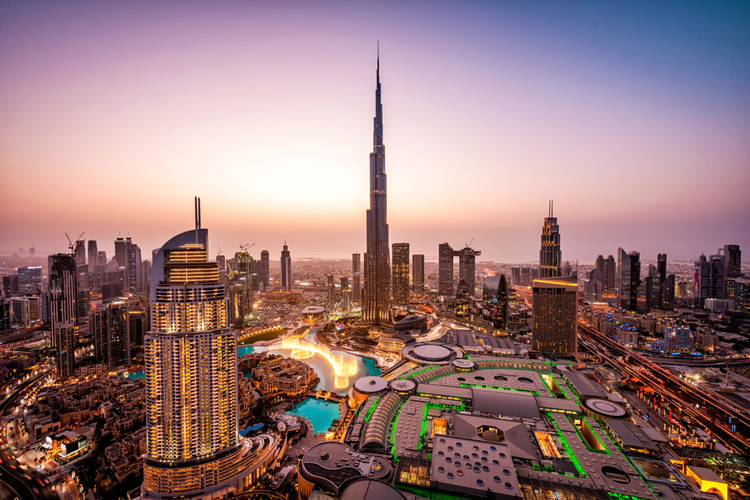
Up until the rapid increase in urbanisation, superstructures such as 100+ floor buildings were a rare sight. Today, fueled by limited land availability and the growing demand for premium high-rise developments that offer the experience of being “on top of the world,” 100-floor skyscrapers are commonplace structures. One can find super-tall, skinny buildings in almost every metropolitan city in the world.
However, designing such colossal edifices means overcoming several challenges, of which wind load is one of the most predominant.
Wind Resistance: A Vital Consideration in Constructing 100-Floor Superstructures
Notwithstanding the demand for buildings with beanstalk proportions, a major architectural challenge in constructing such structures is that the taller a building, the more likely it is to sway at the top owing to high wind loads.
For instance, on a standard breezy day, a building that has 100 floors may sway a couple of inches at the top, according to consulting engineers Rowan Williams Davies and Irwin. Strong wind forces that occur annually and travel at around 50 miles per hour can move a 100-floor superstructure by about half a foot. At least once every 50 years, wind speeds of around 100 miles per hour can cause even greater deflection at the top of the structure.
Now, not only can such swaying movements prove to be a safety hazard, but they can also make the occupants of such superstructures woozy. This is especially a serious matter of consideration if the 100-floor building in question is a residential one. After all, not many people want to feel like they’re living on a giant pendulum!
As a result, architects and construction engineers incorporate damping systems and advanced façade systems that act as shock absorbers, helping protect occupants from high-velocity wind forces at such enormous heights.
While designing buildings with 100+ floors, wind effects such as:
- Uplift pressures on roofs and horizontal surfaces
- Lateral wind loads acting on walls and the primary structural system
- Base shear
- Inter-storey drift
- Overturning moments
must be carefully considered in accordance with IS 875 (Part 3) standards.
Overcoming the Wind-Load Challenge with Glazed Glass Facades
One construction material that has gained popularity as the protective shield of 100-floor edifices has been glass. However, it is important to keep in mind that all glass structures and installations should be designed to withstand project-specific wind pressures based on structural and environmental conditions.
Glass glazing systems, particularly double or triple glazing, are designed to withstand wind forces while maintaining structural performance.
Glass envelopes or glazed glass facades are strong enough to withstand some of the harshest weather elements, be it the sun’s heat, rain, or high-velocity winds. Moreover, since such glass facades do not rust or weather, environmental effects will not damage the aesthetics of huge structures such as 100-floor buildings.
The load-bearing capabilities of glazed glass facades depend on various components, including:
- Required glass thickness
- Framing members
- Size of brackets
All of these are determined by the wind loads in the area. Advanced engineering methods such as wind tunnel testing and Computational Fluid Dynamics (CFD) are used to accurately predict wind pressures, which is critical in designing complex 100-floor superstructures.
If inter-storey drifts are high owing to wind and seismic loads, façade systems may require customisation, such as wider vertical joints or stiffer façade profiles.
Case Study: Port Baku Tower 2
Let’s consider the example of Port Baku Tower 2 in Azerbaijan.
The development features towers of varying heights, including 240 m and 100 m. It uses a complex unitised curtain wall system with a curved southern façade, creating a spectacular skylight over the entrance.
In total, 12 different façade typologies were incorporated to withstand varying wind pressures. Bespoke façade designs were developed to accommodate differential wind pressure in the podium area (4.0 kPa) and the main tower (-7.5 kPa), while also accounting for inter-storey drifts.
Wind-proofing 100-Floor Buildings with AIS
For providing a strong foundation for 100-floor superstructures, AIS provides a comprehensive range of glass façade solutions that are multifunctional – offering resistance against extreme heat, harmful UV rays, rain, and high-velocity wind forces.
These solutions also provide optimal natural lighting while maintaining comfortable indoor temperatures throughout the year.
Discover the benefits in our architect’s guide to glass façades by AIS Glasxperts.
So, what are you waiting for? Enveloping 100-floor buildings against the impact of high-velocity wind forces is easy with AIS. Get in touch today for an expert consultation.