
Heat Strenghtened Laminated – AIS Valuglas
A distortion-free, heat strengthened laminated glass, Valuglas from AIS gives you superior strength and unmatched value-for-money. With a 1.14 mm PVB interlayer for greater stability, it is a highly secure laminated unit that combines pleasing aesthetics with enduring strength.
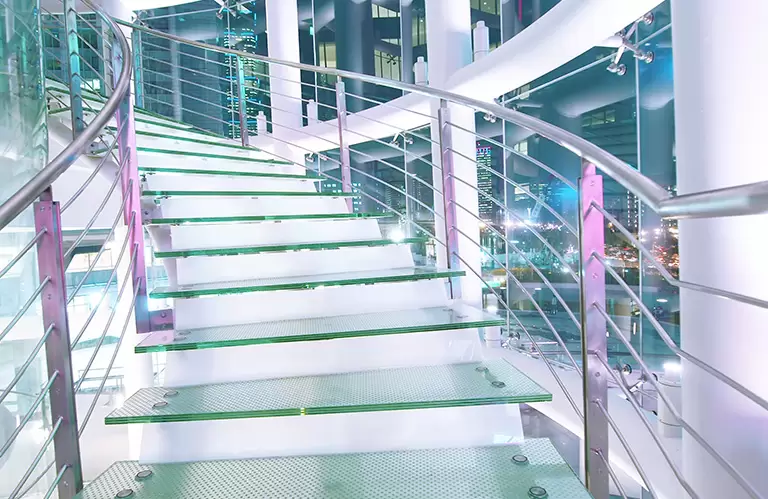
Features and Benefits:
- Long-lasting, heat-strengthened glass with greater stability
- A highly secure laminated unit that eliminates the need for grills and shutters
- Reduces external noise for better acoustic performance
- Unbeatable quality at an unmatched value
Applications:
- Doors and windows
- Roof lights and canopies
- Stairways, glass lift-walls
- Skylights, domes and overhead glazing

Frequently Asked Questions
Heat strengthened laminated glass is a type of processed glass that combines heat strengthened glass sheets with a special interlayer, typically polyvinyl butyral (PVB). This interlayer bonds the glass layers together, providing added safety and durability. Unlike ordinary glass, the heat-strengthening process makes it stronger than annealed glass; know more about what is annealed glass here. At the same time, the lamination ensures that if it breaks, the glass fragments stick to the interlayer instead of scattering. For example, Our glass is an ideal choice for facades, canopies, railings and overhead glazing where both strength and safety are crucial.
The key difference lies in the type of glass used before lamination. In laminated heat-strengthened glass, each glass layer undergoes a controlled heating and cooling process that increases its strength and thermal resistance. Standard laminated glass, on the other hand, uses annealed (non-strengthened) glass sheets bonded with an interlayer. While both types provide safety, heat-strengthened laminated glass offers better impact resistance, higher load-bearing capacity and improved durability against temperature changes and wind pressure. This makes it more suitable for structural and exterior applications, such as facades and canopies, where extra strength is essential.
Our heat strengthened glass offers a combination of strength, safety, and durability, making it ideal for modern buildings. Here are its main benefits:
- Enhanced strength: It’s made using heat-strengthened glass bonded with a 1.14 mm PVB interlayer, which is much stronger than regular annealed glass.
- Improved safety: Even if broken, the interlayer keeps the glass pieces together, which helps in reducing the risk of injury and damage.
- Security advantage: Its tough laminated structure makes it harder to break through. This helps eliminate the need for grills or shutters in many cases.
- Noise reduction: The interlayer helps block outside noise, creating a quieter indoor environment.
- Aesthetic appeal: It combines strength with a smooth, clear finish, ensuring safety without compromising on design.
Heat strengthened laminated glass, is widely used in both architectural and structural applications where safety and durability are paramount. Some common uses include:
- Building facades and curtain walls: Offers strength to withstand wind pressure while maintaining a sleek and modern look.
- Doors, partitions and windows: Enhance security and sound insulation for homes and offices.
- Skylights and canopies: Ensure safety overhead by keeping broken glass fragments bonded to the interlayer.
- Balconies and railings: Provide structural integrity and impact resistance without compromising on transparency.
- Glass floors and staircases: Add an extra layer of protection in high-traffic or elevated areas.
While heat-strengthened laminated glass offers good strength and durability, there are a few points to keep in mind before using it:
- Breakage pattern: When it breaks, heat strengthened glass tends to form larger shards compared to tempered glass, which can pose a safety risk in areas prone to impact.
- Not classified as safety glazing: Since it’s not officially classified as safety glazing , it may not be suitable for critical impact zones like doors, low windows, or areas close to the floor.
- Cost consideration: Due to its safety interlayer and strengthening process, it can be more expensive than standard glass options.
Heat strengthened laminated glass has excellent resistance to temperature variations and thermal stress.
- Handles high temperature differences: It can easily withstand temperature differences of up to 130°C without cracking or breaking.
- Resistant to thermal shocks: The glass is specially processed to endure sudden changes in temperature, making it less likely to break under heat exposure.
- Stable and durable: Its thermal stability ensures consistent performance in areas exposed to sunlight or fluctuating weather conditions.