
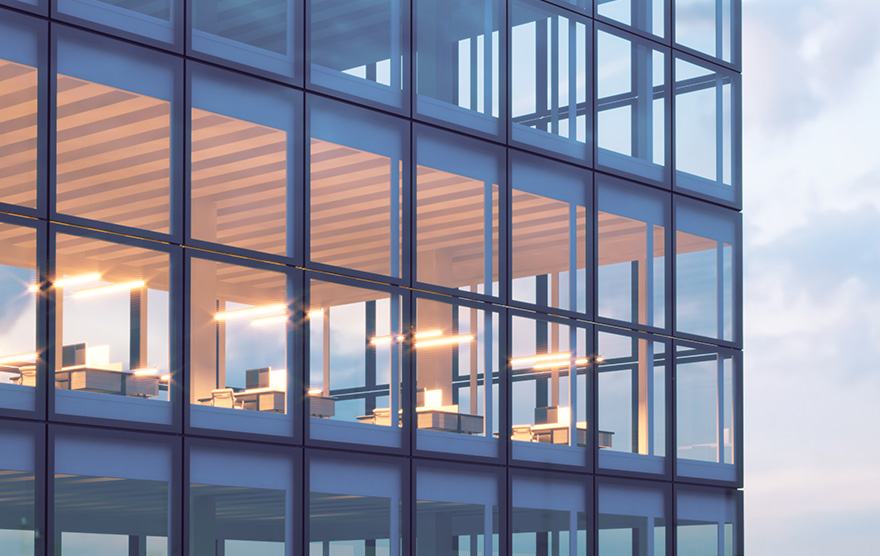
If you’ve always marvelled at tall skyscrapers and corporate parks that use glass for large windows and façade panels, then you might want to know more about float glass.
What is Float Glass?
Manufactured using a specialised melt process, float glass is an architectural glass made by melting and combining silica sand, lime, soda, and potash, which are then floated on a bed of molten tin to create a smooth and uniform surface. After solidification, the glass undergoes an annealing process to remove stresses induced during cooling, ensuring uniform thickness and reducing internal stress. To learn more about float glass, its properties, and applications, explore our guide on what is float glass.
It is one of the most widely used forms of glass in modern times and is used to manufacture various kinds of glass. It has a natural greenish colour and a transparent surface that transmits 87% of the light. Its thickness can range from 0.4 mm to 25 mm and this architectural glass can be coated with different kinds of metal oxides to produce tinted glass also.
Float glass has a strong and rigid structure. It can withstand chemicals and varying weather conditions making it a durable material.
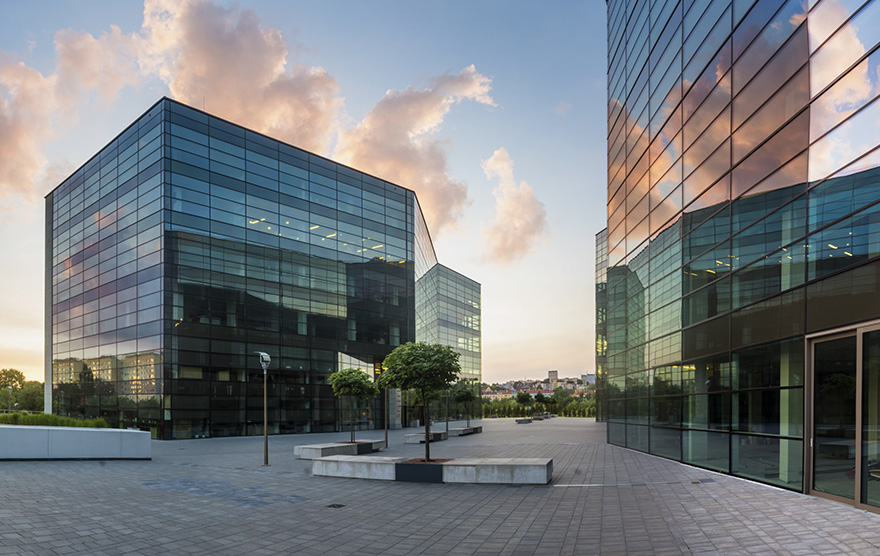
Applications of Float Glass in Commercial Architecture
Float glass has found use in all kinds of industries but is most widely used in commercial architecture (for interior and exterior) as it is a versatile product that offers several benefits like durability, strength and aesthetics. Here are some of the applications of this architectural glass.
1. Displays
Float glass finds its most common application in glass windows and is also known as window glass. Due to its crystal-clear transparent design, it has become an ideal choice to showcase items. It is used in retail shop windows and to display expensive items like jewellery, watches, etc without risking damage to the products, thanks to its durable and strong design that offers a brilliant lustre and smooth finish that enhances the aesthetic appeal with its luminosity. It is easy to clean making maintenance easy.
2. Facades
Facades are the glass structures that wrap the building exterior and are quite common in modern commercial architecture as it is simple, aesthetic and functional. It requires toughened and laminated glass and hence float glass proves to be a great alternative. Due to its toughness and efficiency, coupled with the ability to be glazed, it is widely used to create different types of glass facades like unitized curtain walls, stick glazing, tension system, frameless system, etc.
3. Commercial glazing
Float glass is also becoming popular in commercial applications as it provides strength to the structure and is easy to maintain. Float glass has found use as commercial glazing as it can easily replace large chunks of the wall both in the exterior and interior structure. It is toughened during the manufacturing process and ensures proper light and heat transmittance. It can be used as tinted glass or reflective glass depending on the customer’s requirements.
4. Wall panels
Be it partitions, personal cabins or conference rooms, wall panels can easily serve the purpose while increasing the visual appeal of the space. Tinted float glass can add a splash of colour, regulate inside temperature and offer privacy without breaking your bank account. It also offers heat reflective properties for further energy efficiency and high performance.
While these are some of the major applications of float glass, this architectural glass is also used to produce laminated glass, insulated glass, toughened glass, mirrors etc which means it can also be used to make table tops, and other products.
Variants of Float Glass
Tinted float glass
Tinted float glass is made using colouring agents during the melting process and the most common colours used are grey, bronze, green and blue. While it may seem that these colours, which are obtained by adding different agents like iron, cobalt, selenium, etc, only enhance the aesthetics it is not entirely true. The tinted glass has different properties like heat and light transmission reflectance, ultraviolet transmission and insulation properties. This enables the customers to pick the tinted glass of their choice depending on the external environment for best performance and durability.
Reflective glass
Float glass finds another application as reflective glass which is majorly used on the exteriors of commercial architectures. Light transmittance is an important design factor in this glass form. It is made by applying a metallic coating through two different methods during the manufacturing process. The first is a semi-conductive metal oxide coating and the other is a metal oxide coating. These coatings are applied during the pyrolitic and magnetron processes respectively in a vacuum on the inner sides of the glass panes.
Why Should You Opt for Float Glass?
Now that you have some knowledge about the manufacturing and properties of float glass, it is time to see why it is a favourite among customers. Float glass not only offers a stunning design but also has the following features which make it ideal for use in commercial spaces.
Durable
Due to the advanced manufacturing process, float glass has a strong structure that contributes to its durability. It is treated and cured in an oven for greater strength and has more density despite having the same thickness as that of plate glass. It makes it safe for installation in commercial spaces as it does not break down and shatter easily.
Energy Efficient
Float glass is a favoured alternative as it is an energy-efficient and environment-friendly product. This architectural glass has the ability to regulate the indoor temperature and can also be designed as a low-E glass (by coating with metal oxides). This high-performance glass reduces the carbon footprint as it is copper and lead-free and reduces the load on the heating and cooling systems, thereby reducing electricity consumption.
Versatile
Float glass is quite versatile and can be used in multiple ways with slight modification and processing. It comes in varying shades, thicknesses and sizes to go well with many architectural and consumer requirements. We will be discussing the different glasses obtained from float glass in detail under applications of float glass to know more about how it can be used to achieve the perfect look in your office or commercial space.
Conclusion
Now that you are familiar with the various applications of float glass, it is important to understand a few factors that can help maintain its durability and performance over time.
- Avoid excessive thermal stress: Uneven heating caused by solar radiation or other heat sources can create thermal stress, potentially leading to glass breakage.
- Consider wind direction for high-rise buildings: Before installing float glass in high-rise structures, it is essential to assess wind direction and pressure. Toughened float glass is recommended for enhanced durability and safety in such applications.
If you are looking for the best float glass in India, AIS offers premium-quality float glass solutions designed to meet diverse commercial and architectural requirements. Manufactured using advanced technology, AIS float glass ensures exceptional clarity, durability, strength, and performance for modern construction needs.
Transform your commercial space into an architectural masterpiece with high-quality float glass from AIS. Our experts provide the right guidance during the selection process to help you create a luxurious, functional, and aesthetically appealing space. Get in touch with AIS today to explore the right float glass solution for your project.